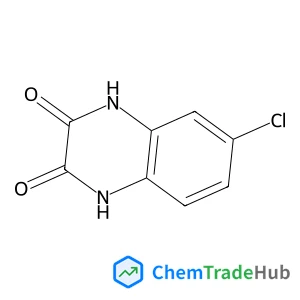
6-CHLORO-2,3-DIOXO-1,2,3,4-TETRAHYDROQUINOXALINE, 97
CAS Number:
169-14-2
Molecular Formula:
C8H5ClN2O2
Daniel Kocsi, Andreas Orthaber, K. Eszter Borbas
Carbostyrils monofluorinated in the 3, 5, or 6 positions were synthesised from olefinic precursors via a photochemical isomerisation-cyclisation route, and incorporated into octadentate cyclen triacetate ligands that formed luminescent complexes with Tb(III) and Eu(III). The photophysical properties of the emitters were strongly dependent on the position of the fluorination.
Tingjie Yin, Jing Wang, Lifang Yin, Linjia Shen, Jianping Zhou, Meirong Huo
DOI: 10.1039/C5PY01355K
Hiroyuki Matsukizono, Takeshi Endo
DOI: 10.1039/C5PY01733E
Chih-Chia Cheng, Jyun-Jie Huang, Adem Ali Muhable, Zhi-Sheng Liao, Shan-You Huang, Shun-Chieh Lee, Chih-Wei Chiu
DOI: 10.1039/C7PY00276A
Mahesh Potnuru, Nandita Madhavan
DOI: 10.1039/C5PY01313E
Birgit Huber, Vanessa Trouillet, Steffen M. Weidner, Leonie Barner, Peter W. Roesky, Jiayin Yuan
DOI: 10.1039/C5PY01320H
Kaikai Ding, Liyan Shi, Ling Zhang, Tian Zeng, Yihua Yin, Ying Yi
DOI: 10.1039/C5PY01690H
Marc Guerre, Bruno Ameduri, Vincent Ladmiral
DOI: 10.1039/C5PY01651G
4-Nitrophenyl phosphate disodium salt hexahydrate is primarily used as a substra...
2-(Trifluoromethyl)-1,3-oxazole-4-carboxylic Acid (CAS: 1060816-01-4) is widely ...
2-Fluoro-4-biphenylcarboxylic acid should be stored in a cool, dry place at room...
Prednisolone-21-Carboxylic Acid is primarily used in the pharmaceutical industry...
4-(Hydrazinomethyl)-1,2,3-benzenetriol (CAS: 3614-72-0) should be stored in a co...
4-Amino-1-methyl-1H-pyrazole-5-carboxylic acid hydrochloride (CAS: 92534-70-8) i...
Dehydropachymic acid (CAS: 77012-31-8) is regulated by various agencies. It fall...
The market and research trends for 6-[(2,2-Dimethylpropanoyl)amino]nicotinic aci...
1,10-Phenanthroline-2,9-dicarbaldehyde should be stored in a cool, dry place awa...
5-Carbamoyl-11-oxo-10,11-dihydro-5H-dibenzo[b,f]azepin-10-yl acetate can be synt...

ChemComm publishes urgent research which is of outstanding significance and interest to experts in the field, while also appealing to the journal’s broad chemistry readership. Our communication format is ideally suited to short, urgent studies that are of such importance that they require accelerated publication. Our scope covers all topics in chemistry, and research at the interface of chemistry and other disciplines (such as materials science, nanoscience, physics, engineering and biology) where there is a significant novelty in the chemistry aspects. Major topic areas covered include: Analytical Chemistry Catalysis Chemical Biology and medicinal chemistry Computational Chemistry and Machine Learning Energy and sustainable chemistry Environmental Chemistry Green Chemistry Inorganic Chemistry Materials Chemistry Nanoscience Organic Chemistry Physical Chemistry Polymer Chemistry Supramolecular Chemistry