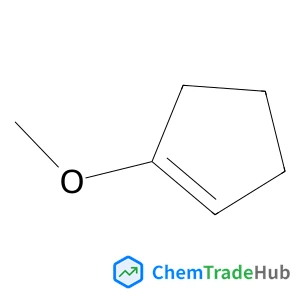
![(2E)-3-(3-Chlorophenyl)-N-{2-[4-(methylsulfonyl)-1-piperazinyl]-2-oxoethyl}acrylamide structure](https://static.chemtradehub.com/structs/250/2505001-54-5-c1e9.webp "(2E)-3-(3-Chlorophenyl)-N-{2-[4-(methylsulfonyl)-1-piperazinyl]-2-oxoethyl}acrylamide structure")
(2E)-3-(3-Chlorophenyl)-N-{2-[4-(methylsulfonyl)-1-piperazinyl]-2-oxoethyl}acrylamide
CAS Number:
2505001-54-5
Molecular Formula:
C16H20ClN3O4S
Min Chen, Fan Fu, Hongwei Zhu, Thomas Feurer, Wenming Tian, Chao Zhu, Ke Zhou, Shengye Jin, Shaik Mohammed Zakeeruddin, Ayodhya N. Tiwari, Nitin P. Padture, Michael Grätzel, Yantao Shi
Carbon-based perovskite solar cells (C-PSCs) are recognized as low-cost stable photovoltaics. However, currently most highly efficient C-PSCs are optically opaque, which means that they can only utilize direct illumination but cannot efficiently utilize the reflected irradiance. Here we propose bifacial C-PSCs incorporating transparent carbon-nanotube (CNT) network films in the rear electrode to efficiently utilize the reflected irradiation. By systematically optimizing the type and size of representative CNTs (including MWCNTs and SWCNTs), we find that the SWCNT-PSCs show a monofacial-power-conversion-efficiency (monofacial-PCE) of up to 21.4%, whereas the SWCNT-PSCs reach a bifacial power output of 24.0 mW cm−2 in natural reflecting surroundings (20% of AM 1.5 G irradiance) and 34.1 mW cm−2 in artificial reflecting surroundings (100% of AM 1.5 G irradiance). The bifacial SWCNT-PSCs also show high operational stability with a loss of 5% under 1000 h full sun continuous illumination. Moreover, we achieved a PCE of 27.1% by using our bifacial device as a top cell together with a CIS bottom cell in a 4-T tandem. These findings point to a promising direction for improving the output power per unit area of PSCs.
Nghia P. Truong, Michael R. Whittaker, John F. Quinn
DOI: 10.1039/C5PY01467K
Ling-Bao Xing, Xiao-Jun Wang, Jing-Li Zhang, Ziyan Zhou, Shuping Zhuo
DOI: 10.1039/C5PY01741F
Philip Hodge, Abdel Chakiri
DOI: 10.1039/C5PY00272A
Helen R. Thomas, Daniel J. Phillips, Neil R. Wilson, Matthew I. Gibson, Jonathan P. Rourke
DOI: 10.1039/C5PY01358E
Di Liu
DOI: 10.1039/C5PY01409C
Yuan-Da Jiu, Cheng-Fang Liu, Jian-Yun Wang, Yi Jiang, Wei-Dong Xu, Xin-Wen Zhang
DOI: 10.1039/C5PY01480H
Martin Schwentenwein
DOI: 10.1039/C5PY01631B
Vasilios Tsanaktsis, Zoe Terzopoulou, Dimitrios N. Bikiaris, Dimitris S. Achilias, Dimitrios G. Papageorgiou, George Z. Papageorgiou
DOI: 10.1039/C5PY01367D
Changkui Fu, Andre Bongers, Ke Wang, Bin Yang, Yuan Zhao, Yen Wei, Hien T. T. Duong, Zhiming Wang, Lei Tao
DOI: 10.1039/C5PY01652E
4-Nitrophenyl phosphate disodium salt hexahydrate is primarily used as a substra...
2-(Trifluoromethyl)-1,3-oxazole-4-carboxylic Acid (CAS: 1060816-01-4) is widely ...
2-Fluoro-4-biphenylcarboxylic acid should be stored in a cool, dry place at room...
Prednisolone-21-Carboxylic Acid is primarily used in the pharmaceutical industry...
4-(Hydrazinomethyl)-1,2,3-benzenetriol (CAS: 3614-72-0) should be stored in a co...
4-Amino-1-methyl-1H-pyrazole-5-carboxylic acid hydrochloride (CAS: 92534-70-8) i...
Dehydropachymic acid (CAS: 77012-31-8) is regulated by various agencies. It fall...
The market and research trends for 6-[(2,2-Dimethylpropanoyl)amino]nicotinic aci...
1,10-Phenanthroline-2,9-dicarbaldehyde should be stored in a cool, dry place awa...
5-Carbamoyl-11-oxo-10,11-dihydro-5H-dibenzo[b,f]azepin-10-yl acetate can be synt...
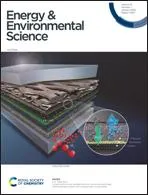
Energy & Environmental Science is an international journal dedicated to publishing exceptionally important and high quality, agenda-setting research tackling the key global and societal challenges of ensuring the provision of energy and protecting our environment for the future. The scope is intentionally broad and the journal recognises the complexity of issues and challenges relating to energy conversion and storage, alternative fuel technologies and environmental science. For work to be published it must be linked to the energy-environment nexus and be of significant general interest to our community-spanning readership. All scales of studies and analysis, from impactful fundamental advances, to interdisciplinary research across the (bio)chemical, (bio/geo)physical sciences and chemical engineering disciplines are welcomed. Topics include, but are not limited to, the following: Solar energy conversion and photovoltaics Solar fuels and artificial photosynthesis Fuel cells Hydrogen storage and (bio) hydrogen production Materials for energy systems Capture, storage and fate of CO2, including chemicals and fuels from CO2 Catalysis for a variety of feedstocks (for example, oil, gas, coal, biomass and synthesis gas) Biofuels and biorefineries Materials in extreme environments Environmental impacts of energy technologies Global atmospheric chemistry and climate change as related to energy systems Water-energy nexus Energy systems and networks Globally applicable principles of energy policy and techno-economics