











Front cover
Literature Information
Publication Date
2021-09-01
DOI
10.1039/D1CP90174E
Impact Factor
3.676
Authors
View Original
Abstract
A graphical abstract is available for this content
Related Literature
The Jahn–Teller effect in the presence of partial isotopic substitution: the 1E′′ state of NH2D and NHD2
Ashim Kumar Saha, Gautam Sarma, Chung-Hsin Yang, Sebastiaan Y. T. van de Meerakker, David H. Parker, Colin M. Western
2015-04-30
Paper
DOI: 10.1039/C5CP01299F
One-pot synthesis and Nb4N5 surface modification of Nb4+ self-doped KNbO3 nanorods for enhanced visible-light-driven hydrogen production
Xia Wang, Zhentao Cui, Bing Liu, Minhua Cao
2015-04-27
Paper
DOI: 10.1039/C5CP01199J
Fullerene recognition with molecular tweezers made up of efficient buckybowls: a dispersion-corrected DFT study
Daniela Josa, Jesús Rodríguez-Otero, Enrique M. Cabaleiro-Lago
2015-03-12
Paper
DOI: 10.1039/C5CP00407A
Perspectives on external electric fields in molecular simulation: progress, prospects and challenges
Niall J. English, Conor J. Waldron
2015-04-23
Perspective
DOI: 10.1039/C5CP00629E
Role of the reaction of stabilized Criegee intermediates with peroxy radicals in particle formation and growth in air
Yue Zhao, Lisa M. Wingen, Véronique Perraud, John Greaves, Barbara J. Finlayson-Pitts
2015-04-16
Paper
DOI: 10.1039/C5CP01171J
Visible-light photocatalysis in Cu2Se nanowires with exposed {111} facets and charge separation between (111) and () polar surfaces
Bin Liu, Lichao Ning, Hua Zhao, Congjie Zhang, Heqing Yang, Shengzhong (Frank) Liu
2015-04-16
Paper
DOI: 10.1039/C5CP00450K
The role of charge transfer in the oxidation state change of Ce atoms in the TM13–CeO2(111) systems (TM = Pd, Ag, Pt, Au): a DFT + U investigation
Polina Tereshchuk, Rafael L. H. Freire, Crina G. Ungureanu, Yohanna Seminovski, Adam Kiejna, Juarez L. F. Da Silva
2015-04-16
Paper
DOI: 10.1039/C4CP06016D
You might also like
Compound Q&A
What are the main uses of 4-Nitrophenyl phosphate disodium salt hexahydrate (CAS: 333338-18-4)?
4-Nitrophenyl phosphate disodium salt hexahydrate is primarily used as a substra...
333338-18-44-Nitrophenyl phosph...
Compound Q&A
What are the main uses of 2-(Trifluoromethyl)-1,3-oxazole-4-carboxylic Acid (CAS: 1060816-01-4)?
2-(Trifluoromethyl)-1,3-oxazole-4-carboxylic Acid (CAS: 1060816-01-4) is widely ...
1060816-01-42-(Trifluoromethyl)-...
Compound Q&A
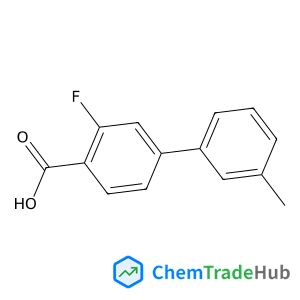
How should 2-Fluoro-4-biphenylcarboxylic acid (CAS: 137045-30-8) be stored?
2-Fluoro-4-biphenylcarboxylic acid should be stored in a cool, dry place at room...
137045-30-82-Fluoro-4-biphenylc...
Compound Q&A
What industries use Prednisolone-21-Carboxylic Acid (CAS: 61549-70-0)?
Prednisolone-21-Carboxylic Acid is primarily used in the pharmaceutical industry...
61549-70-0Prednisolone-21-Carb...
Compound Q&A
How should 4-(Hydrazinomethyl)-1,2,3-benzenetriol (CAS: 3614-72-0) be stored?
4-(Hydrazinomethyl)-1,2,3-benzenetriol (CAS: 3614-72-0) should be stored in a co...
3614-72-04-(Hydrazinomethyl)-...
Compound Q&A
What industries use 4-Amino-1-methyl-1H-pyrazole-5-carboxylic acid hydrochloride (CAS: 92534-70-8)?
4-Amino-1-methyl-1H-pyrazole-5-carboxylic acid hydrochloride (CAS: 92534-70-8) i...
92534-70-84-Amino-1-methyl-1H-...
Compound Q&A
What regulatory guidelines apply to dehydropachymic acid (CAS: 77012-31-8)?
Dehydropachymic acid (CAS: 77012-31-8) is regulated by various agencies. It fall...
77012-31-8Dehydropachymic acid
Compound Q&A
What is the market or research trend for 6-[(2,2-Dimethylpropanoyl)amino]nicotinic acid (CAS: 898561-66-5)?
The market and research trends for 6-[(2,2-Dimethylpropanoyl)amino]nicotinic aci...
898561-66-56-[(2,2-Dimethylprop...
Compound Q&A
How should 1,10-Phenanthroline-2,9-dicarbaldehyde (CAS: 57709-62-3) be stored?
1,10-Phenanthroline-2,9-dicarbaldehyde should be stored in a cool, dry place awa...
57709-62-31,10-Phenanthroline-...
Compound Q&A
How is 5-Carbamoyl-11-oxo-10,11-dihydro-5H-dibenzo[b,f]azepin-10-yl acetate (CAS: 113952-21-9) typically synthesized?
5-Carbamoyl-11-oxo-10,11-dihydro-5H-dibenzo[b,f]azepin-10-yl acetate can be synt...
113952-21-95-Carbamoyl-11-oxo-1...
Source Journal
Physical Chemistry Chemical Physics

CiteScore:
5.5
Self-citation Rate:
10.3%
Articles per Year:
3036
Physical Chemistry Chemical Physics (PCCP) is an international journal co-owned by 19 physical chemistry and physics societies from around the world. This journal publishes original, cutting-edge research in physical chemistry, chemical physics and biophysical chemistry. To be suitable for publication in PCCP, articles must include significant innovation and/or insight into physical chemistry; this is the most important criterion that reviewers and Editors will judge against when evaluating submissions. The journal has a broad scope and welcomes contributions spanning experiment, theory, computation and data science. Topical coverage includes spectroscopy, dynamics, kinetics, statistical mechanics, thermodynamics, electrochemistry, catalysis, surface science, quantum mechanics, quantum computing and machine learning. Interdisciplinary research areas such as polymers and soft matter, materials, nanoscience, energy, surfaces/interfaces, and biophysical chemistry are welcomed if they demonstrate significant innovation and/or insight into physical chemistry. Joined experimental/theoretical studies are particularly appreciated when complementary and based on up-to-date approaches.
Recommended Compounds

Recommended Suppliers






Disclaimer
This page provides academic journal information for reference and research purposes only. We are not affiliated with any journal publishers and do not handle publication submissions. For publication-related inquiries, please contact the respective journal publishers directly.
If you notice any inaccuracies in the information displayed, please contact us at support@chemtradehub.com. We will promptly review and address your concerns.