












Mechanical properties of calcium silicate hydrate under uniaxial and biaxial strain conditions: a molecular dynamics study
Literature Information
Publication Date
2021-12-20
DOI
10.1039/D1CP04474E
Impact Factor
3.676
Authors
Dongyun Liu, Rongjia Wen, Qian Yu, Lennart Elfgren
View Original
Abstract
Calcium silicate hydrate (C-S-H) is the main hydration product of cementitious materials, often experiencing complex stress conditions in practical applications. Therefore, reactive molecular dynamics methods were used to investigate the mechanical response of the atomistic structure of C-S-H under various uniaxial and biaxial strain conditions. The results of uniaxial simulations show that C-S-H exhibits mechanical anisotropy and tension–compression asymmetry due to its layered atomistic structure. By fitting the stress–strain data, a stress–strain relationship that accurately represents the elastoplasticity of C-S-H was developed. The biaxial yield surface obtained from biaxial simulations was ellipsoidal, again reflecting the anisotropy and asymmetry of C-S-H. Four yield criteria (von Mises, Drucker–Prager, Hill, and Liu–Huang–Stout) were further investigated, and it was found that the Liu–Huang–Stout criterion can effectively capture all the major features of the yield surface. During a uniaxial tensile process in the z direction, multi-crack propagation was observed, which was aggravated and weakened by y direction tensile and compressive strains respectively. The results of chemical bond analyses revealed that, for different strain conditions, the CaW–OS and CaS–OS bonds play different roles in resisting deformation.
Recommended Journals
Related Literature
Uranyl adsorption at solvated edge surfaces of 2 : 1 smectites. A density functional study
Alena Kremleva, Sven Krüger
2015-05-05
Paper
DOI: 10.1039/C5CP01074H
A new schematic for poly(3-alkylthiophene) in an amorphous film studied using a novel structural index in infrared spectroscopy
N. Shioya, T. Shimoaka, K. Eda, T. Hasegawa
2015-04-09
Paper
DOI: 10.1039/C5CP01024A
Predicting the degree of aromaticity of novel carbaporphyrinoids
Heike Fliegl, Dage Sundholm
2015-05-11
Paper
DOI: 10.1039/C5CP01306B
Perspectives on the energy landscape of Au–Cl binary systems from the structural phase diagram of AuxCly (x + y = 20)
Longjiu Cheng
2015-04-20
Paper
DOI: 10.1039/C5CP01863C
Borazine: spin blocker or not?
Debojit Bhattacharya, Suranjan Shil, Anirban Misra, Laimutis Bytautas, Douglas J. Klein
2015-04-30
Paper
DOI: 10.1039/C5CP00801H
Modulating the correlation and squeezing of phase-conjugate four-wave mixing via the polarizable dressing states
Ruimin Wang, Yao Guo, Zheng Liu, Jiaqi Ma, Ming Yin, Xiuxiu Wang, Changbiao Li, Yanpeng Zhang
2015-04-24
Paper
DOI: 10.1039/C5CP01875G
Visible-light photocatalysis in Cu2Se nanowires with exposed {111} facets and charge separation between (111) and () polar surfaces
Bin Liu, Lichao Ning, Hua Zhao, Congjie Zhang, Heqing Yang, Shengzhong (Frank) Liu
2015-04-16
Paper
DOI: 10.1039/C5CP00450K
Study of chemical reactivity in relation to experimental parameters of efficiency in coumarin derivatives for dye sensitized solar cells using DFT
Jesús Baldenebro-López, Daniel Glossman-Mitnik
2015-04-27
Paper
DOI: 10.1039/C5CP01387A
You might also like
Compound Q&A
What are the main uses of 4-Nitrophenyl phosphate disodium salt hexahydrate (CAS: 333338-18-4)?
4-Nitrophenyl phosphate disodium salt hexahydrate is primarily used as a substra...
333338-18-44-Nitrophenyl phosph...
Compound Q&A
What are the main uses of 2-(Trifluoromethyl)-1,3-oxazole-4-carboxylic Acid (CAS: 1060816-01-4)?
2-(Trifluoromethyl)-1,3-oxazole-4-carboxylic Acid (CAS: 1060816-01-4) is widely ...
1060816-01-42-(Trifluoromethyl)-...
Compound Q&A
How should 2-Fluoro-4-biphenylcarboxylic acid (CAS: 137045-30-8) be stored?
2-Fluoro-4-biphenylcarboxylic acid should be stored in a cool, dry place at room...
137045-30-82-Fluoro-4-biphenylc...
Compound Q&A
What industries use Prednisolone-21-Carboxylic Acid (CAS: 61549-70-0)?
Prednisolone-21-Carboxylic Acid is primarily used in the pharmaceutical industry...
61549-70-0Prednisolone-21-Carb...
Compound Q&A
How should 4-(Hydrazinomethyl)-1,2,3-benzenetriol (CAS: 3614-72-0) be stored?
4-(Hydrazinomethyl)-1,2,3-benzenetriol (CAS: 3614-72-0) should be stored in a co...
3614-72-04-(Hydrazinomethyl)-...
Compound Q&A
What industries use 4-Amino-1-methyl-1H-pyrazole-5-carboxylic acid hydrochloride (CAS: 92534-70-8)?
4-Amino-1-methyl-1H-pyrazole-5-carboxylic acid hydrochloride (CAS: 92534-70-8) i...
92534-70-84-Amino-1-methyl-1H-...
Compound Q&A
What regulatory guidelines apply to dehydropachymic acid (CAS: 77012-31-8)?
Dehydropachymic acid (CAS: 77012-31-8) is regulated by various agencies. It fall...
77012-31-8Dehydropachymic acid
Compound Q&A
What is the market or research trend for 6-[(2,2-Dimethylpropanoyl)amino]nicotinic acid (CAS: 898561-66-5)?
The market and research trends for 6-[(2,2-Dimethylpropanoyl)amino]nicotinic aci...
898561-66-56-[(2,2-Dimethylprop...
Compound Q&A
How should 1,10-Phenanthroline-2,9-dicarbaldehyde (CAS: 57709-62-3) be stored?
1,10-Phenanthroline-2,9-dicarbaldehyde should be stored in a cool, dry place awa...
57709-62-31,10-Phenanthroline-...
Compound Q&A
How is 5-Carbamoyl-11-oxo-10,11-dihydro-5H-dibenzo[b,f]azepin-10-yl acetate (CAS: 113952-21-9) typically synthesized?
5-Carbamoyl-11-oxo-10,11-dihydro-5H-dibenzo[b,f]azepin-10-yl acetate can be synt...
113952-21-95-Carbamoyl-11-oxo-1...
Source Journal
Physical Chemistry Chemical Physics

CiteScore:
5.5
Self-citation Rate:
10.3%
Articles per Year:
3036
Physical Chemistry Chemical Physics (PCCP) is an international journal co-owned by 19 physical chemistry and physics societies from around the world. This journal publishes original, cutting-edge research in physical chemistry, chemical physics and biophysical chemistry. To be suitable for publication in PCCP, articles must include significant innovation and/or insight into physical chemistry; this is the most important criterion that reviewers and Editors will judge against when evaluating submissions. The journal has a broad scope and welcomes contributions spanning experiment, theory, computation and data science. Topical coverage includes spectroscopy, dynamics, kinetics, statistical mechanics, thermodynamics, electrochemistry, catalysis, surface science, quantum mechanics, quantum computing and machine learning. Interdisciplinary research areas such as polymers and soft matter, materials, nanoscience, energy, surfaces/interfaces, and biophysical chemistry are welcomed if they demonstrate significant innovation and/or insight into physical chemistry. Joined experimental/theoretical studies are particularly appreciated when complementary and based on up-to-date approaches.
Recommended Compounds
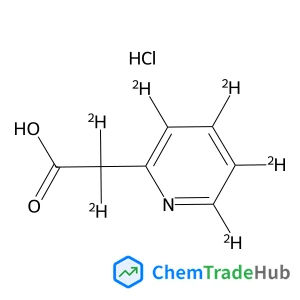
2,2-dideuterio-2-(3,4,5,6-tetradeuterio-2-pyridyl)acetic acid;hydrochloride
CAS Number:
1329799-67-8
Molecular Formula:
C7H2ClD6NO2
![1-[(4-Methylphenyl)sulfonyl]-3-(4,4,5,5-tetramethyl-1,3,2-dioxaborolan-2-yl)-1H-pyrrolo[2,3-b]pyridine-5-carbonitrile structure](https://static.chemtradehub.com/structs/143/1434747-57-5-fc0d.webp "1-[(4-Methylphenyl)sulfonyl]-3-(4,4,5,5-tetramethyl-1,3,2-dioxaborolan-2-yl)-1H-pyrrolo[2,3-b]pyridine-5-carbonitrile structure")
1-[(4-Methylphenyl)sulfonyl]-3-(4,4,5,5-tetramethyl-1,3,2-dioxaborolan-2-yl)-1H-pyrrolo[2,3-b]pyridine-5-carbonitrile
CAS Number:
1434747-57-5
Molecular Formula:
C21H22BN3O4S


Recommended Suppliers







Disclaimer
This page provides academic journal information for reference and research purposes only. We are not affiliated with any journal publishers and do not handle publication submissions. For publication-related inquiries, please contact the respective journal publishers directly.
If you notice any inaccuracies in the information displayed, please contact us at support@chemtradehub.com. We will promptly review and address your concerns.