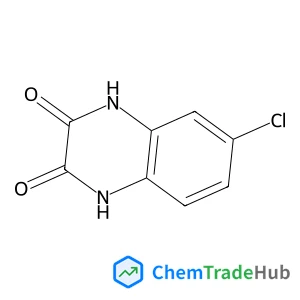
6-CHLORO-2,3-DIOXO-1,2,3,4-TETRAHYDROQUINOXALINE, 97
CAS Number:
169-14-2
Molecular Formula:
C8H5ClN2O2
Arjun Kafle, P. B. Armentrout
Collision-induced dissociation (CID) of [Th,2C,2O]+ with Xe is performed using a guided ion beam tandem mass spectrometer (GIBMS). The only products observed are ThCO+ and Th+ by sequential loss of CO ligands. The experimental findings and theoretical calculations support that the structure of [Th,2C,2O]+ is the bent homoleptic thorium dicarbonyl cation, Th+(CO)2, having quartet spin, which is both thermodynamically and kinetically stable enough in the gas phase to be observed in our GIBMS instrument. Analysis of the kinetic energy-dependent cross sections for this CID reaction yields the first experimental determination of the bond dissociation energy (BDE) of (CO)Th+–CO at 0 K as 1.05 ± 0.09 eV. A theoretical BDE calculated at the CCSD(T) level with cc-pVXZ (X = T and Q) basis sets and a complete basis set (CBS) extrapolation is in very good agreement with the experimental result. Although the doublet spin bent thorium oxide ketenylidene cation, OTh+CCO, is calculated to be the most thermodynamically stable structure, it is not observed in our experiment where [Th,2C,2O]+ is formed by association of Th+ and CO in a direct current discharge flow tube (DC/FT) ion source. Potential energy profiles of both quartet and doublet spin are constructed to elucidate the isomerization mechanism of Th+(CO)2 to OTh+CCO. The failure to observe OTh+CCO is attributed to a barrier associated with C–C bond formation, which makes OTh+CCO kinetically inaccessible under our experimental conditions. Chemical bonding patterns in low-lying states of linear and bent Th+(CO)2 and OTh+CCO isomers are also investigated.
Chun Zhang, Yi-Tao Sun, Xue Yan, Xue-Hui Guo, Ai-Min Ren, Wen-Long Wang
DOI: 10.1039/D1CP04268H
Zhizhou Wu, Liuyang Li, Xuedong Zhou, Xiujian Zhao, Baoshun Liu
DOI: 10.1039/D1CP03135J
DOI: 10.1039/D1CP02524D
Zi Cheng Wong, Liviu Ungur
DOI: 10.1039/D1CP02795F
D. A. Hardy, J. Archer, P. Lemaitre, R. Vehring, J. P. Reid, J. S. Walker
DOI: 10.1039/D1CP02840E
Stefan Milenkovic, Igor V. Bodrenko, Armando Carpaneto
DOI: 10.1039/D1CP02947A
Dominik Legut
DOI: 10.1039/D1CP02754A
Jemma A. Gibbard, Connor J. Clarke, Jan R. R. Verlet
DOI: 10.1039/D1CP03075B
Sharmin Akter, Jorge A. Vargas, Kamal Sharkas, Juan E. Peralta, Koblar A. Jackson
DOI: 10.1039/D0CP06512A
4-Nitrophenyl phosphate disodium salt hexahydrate is primarily used as a substra...
2-(Trifluoromethyl)-1,3-oxazole-4-carboxylic Acid (CAS: 1060816-01-4) is widely ...
2-Fluoro-4-biphenylcarboxylic acid should be stored in a cool, dry place at room...
Prednisolone-21-Carboxylic Acid is primarily used in the pharmaceutical industry...
4-(Hydrazinomethyl)-1,2,3-benzenetriol (CAS: 3614-72-0) should be stored in a co...
4-Amino-1-methyl-1H-pyrazole-5-carboxylic acid hydrochloride (CAS: 92534-70-8) i...
Dehydropachymic acid (CAS: 77012-31-8) is regulated by various agencies. It fall...
The market and research trends for 6-[(2,2-Dimethylpropanoyl)amino]nicotinic aci...
1,10-Phenanthroline-2,9-dicarbaldehyde should be stored in a cool, dry place awa...
5-Carbamoyl-11-oxo-10,11-dihydro-5H-dibenzo[b,f]azepin-10-yl acetate can be synt...

Physical Chemistry Chemical Physics (PCCP) is an international journal co-owned by 19 physical chemistry and physics societies from around the world. This journal publishes original, cutting-edge research in physical chemistry, chemical physics and biophysical chemistry. To be suitable for publication in PCCP, articles must include significant innovation and/or insight into physical chemistry; this is the most important criterion that reviewers and Editors will judge against when evaluating submissions. The journal has a broad scope and welcomes contributions spanning experiment, theory, computation and data science. Topical coverage includes spectroscopy, dynamics, kinetics, statistical mechanics, thermodynamics, electrochemistry, catalysis, surface science, quantum mechanics, quantum computing and machine learning. Interdisciplinary research areas such as polymers and soft matter, materials, nanoscience, energy, surfaces/interfaces, and biophysical chemistry are welcomed if they demonstrate significant innovation and/or insight into physical chemistry. Joined experimental/theoretical studies are particularly appreciated when complementary and based on up-to-date approaches.
phosphoryl}methyl 4-methylbenzenesulfonate structure](https://static.chemtradehub.com/structs/864/864068-45-1-ba7c.webp "{[3-(Hexadecyloxy)propoxy](hydroxy)phosphoryl}methyl 4-methylbenzenesulfonate structure")