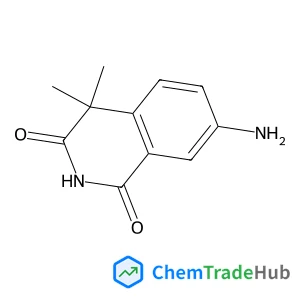
1,3(2H,4H)-Isoquinolinedione, 7-amino-4,4-dimethyl-
CAS Number:
14576-22-8
Molecular Formula:
C11H12N2O2
Kai Guo, Sitong Liu, Haoming Tu, Zhikun Wang, Liang Chen, Haiqing Lin, Maosheng Miao, Jing Xu, Wei Liu
Crown ethers could serve as hosts to selectively incorporate various guest atoms or molecules within the macrocycles. However, the high flexibility of crown ether molecules limits their applications in areas requiring a higher binding strength and selectivity. As an important graphene derivate, graphane, which is composed of entirely sp3 hybridized carbon atoms and possesses the characteristic of non-wrinkle in contrast to graphene, provides an ideal two-dimensional platform to rigidify crown ether molecules. In this work, using first principles calculations, we demonstrate that the embedment of various crown ethers with different cavity sizes in the graphane lattice are thermodynamically and kinetically stable. Compared with the corresponding crown ether molecules, the binding strength for alkali metal cations can be increased by up to ∼14 times, which may provide a good means in the field of alkali metal cation separation. Meanwhile, the electronic properties of graphane could be tuned in a range of 4.43–5.85 eV by controlling the densities of the crown ethers. These crown ether graphanes are also good candidates for the photolysis of water. Therefore, considering the easy synthesis and tunable crystal structures of graphane, we expect that our findings will trigger a new wave of research and applications of both crown ethers and graphane.
Zhizhou Wu, Liuyang Li, Xuedong Zhou, Xiujian Zhao, Baoshun Liu
DOI: 10.1039/D1CP03135J
Shashwat Singh, Valérie Pralong, Prabeer Barpanda
DOI: 10.1039/D1CP01741A
Rabindranath Paul, Sandip Paul
DOI: 10.1039/D1CP01187A
Leandro H. Z. Cocca, Jean-Christophe Mulatier, Delphine Pitrat, Chantal Andraud, Lino Misoguti, Cleber R. Mendonça, Marcelo G. Vivas, Leonardo De Boni
DOI: 10.1039/D1CP02553H
Peipei Jin, Xueli Wang, Haifeng Pan
DOI: 10.1039/D1CP04811B
Shouren Zhang, Huili Liu, Yadan Zhang, Shuaiwei Wang, Baocheng Yang
DOI: 10.1039/D1CP02306C
Chiara Negri, Gabriele Deplano, Kirill A. Lomachenko, Ton V. W. Janssens, Elisa Borfecchia, Gloria Berlier, Silvia Bordiga
DOI: 10.1039/D1CP01754C
Chao Wu
DOI: 10.1039/D1CP02764F
Igor A. Nikovskiy, Dmitry Y. Aleshin
DOI: 10.1039/D1CP04648A
Yulia N. Kalugina, Iouli E. Gordon
DOI: 10.1039/D1CP02161C
4-Nitrophenyl phosphate disodium salt hexahydrate is primarily used as a substra...
2-(Trifluoromethyl)-1,3-oxazole-4-carboxylic Acid (CAS: 1060816-01-4) is widely ...
2-Fluoro-4-biphenylcarboxylic acid should be stored in a cool, dry place at room...
Prednisolone-21-Carboxylic Acid is primarily used in the pharmaceutical industry...
4-(Hydrazinomethyl)-1,2,3-benzenetriol (CAS: 3614-72-0) should be stored in a co...
4-Amino-1-methyl-1H-pyrazole-5-carboxylic acid hydrochloride (CAS: 92534-70-8) i...
Dehydropachymic acid (CAS: 77012-31-8) is regulated by various agencies. It fall...
The market and research trends for 6-[(2,2-Dimethylpropanoyl)amino]nicotinic aci...
1,10-Phenanthroline-2,9-dicarbaldehyde should be stored in a cool, dry place awa...
5-Carbamoyl-11-oxo-10,11-dihydro-5H-dibenzo[b,f]azepin-10-yl acetate can be synt...

Physical Chemistry Chemical Physics (PCCP) is an international journal co-owned by 19 physical chemistry and physics societies from around the world. This journal publishes original, cutting-edge research in physical chemistry, chemical physics and biophysical chemistry. To be suitable for publication in PCCP, articles must include significant innovation and/or insight into physical chemistry; this is the most important criterion that reviewers and Editors will judge against when evaluating submissions. The journal has a broad scope and welcomes contributions spanning experiment, theory, computation and data science. Topical coverage includes spectroscopy, dynamics, kinetics, statistical mechanics, thermodynamics, electrochemistry, catalysis, surface science, quantum mechanics, quantum computing and machine learning. Interdisciplinary research areas such as polymers and soft matter, materials, nanoscience, energy, surfaces/interfaces, and biophysical chemistry are welcomed if they demonstrate significant innovation and/or insight into physical chemistry. Joined experimental/theoretical studies are particularly appreciated when complementary and based on up-to-date approaches.