


Photoelectron photofragment coincidence spectroscopy of aromatic carboxylates: benzoate and p-coumarate
Literature Information
Publication Date
2021-08-16
DOI
10.1039/D1CP02972J
Impact Factor
3.676
Authors
J. A. Gibbard, E. Castracane, A. I. Krylov, R. E. Continetti
View Original
Abstract
Photoelectron–photofragment coincidence spectroscopy was used to study the dissociation dynamics of the conjugate bases of benzoic acid and p-coumaric acid. Upon photodetachment at 266 nm (4.66 eV) both aromatic carboxylates undergo decarboxylation, as well as the formation of stable carboxyl radicals. The key energetics are computed using high-level electronic structure methods. The dissociation dynamics of benzoate were dominated by a two-body DPD channel resulting in CO2 + C6H5 + e−, with a very small amount of stable C6H5CO2 showing that the radical ground state is stable and the excited states are dissociative. For p-coumarate (p-CA−) the dominant channel is photodetachment resulting in a stable radical and a photoelectron with electron kinetic energy (eKE) <2 eV. We also observed a minor two-body dissociative photodetachment (DPD) channel resulting in CO2 + HOC6H4CHCH + e−, characterized by eKE <0.8 eV. Evidence was also found for a three-body ionic photodissociation channel producing HOC6H5 + HCC− + CO2. The ion beam contained both the phenolate and carboxylate isomers of p-CA−, but DPD only occurred from the carboxylate form. For both species DPD is seen from the first and second excited states of the radical, where vibrational excitation is required for decarboxylation from the first excited radical state.
Recommended Journals

Advanced Engineering Materials

Physical Chemistry Chemical Physics

Nature Reviews Drug Discovery

Lab on a Chip

Contact Lens & Anterior Eye

Journal of Medical Biochemistry

European Journal of Organic Chemistry

Environmental Toxicology and Pharmacology

Coloration Technology

Current Pharmaceutical Biotechnology
Related Literature
Hydrogen bonding motifs in a hydroxy-bisphosphonate moiety: revisiting the problem of hydrogen bond identification
Mitra Ashouri, Ali Maghari, M. H. Karimi-Jafari
2015-04-16
Paper
DOI: 10.1039/C5CP00693G
Energies and structures in biradical chemistry from the parametric two-electron reduced-density matrix method: applications to the benzene and cyclobutadiene biradicals
Alison L. McManus, Erik P. Hoy, David A. Mazziotti
2015-04-22
Paper
DOI: 10.1039/C5CP01310K
Predicting the degree of aromaticity of novel carbaporphyrinoids
Heike Fliegl, Dage Sundholm
2015-05-11
Paper
DOI: 10.1039/C5CP01306B
All-optical, polarization-insensitive light tuning properties in silver nanorod arrays covered with photoresponsive liquid crystals
Guangyuan Si, Eunice S. P. Leong, Xiaoxiao Jiang, Jiangtao Lv, Jiao Lin, Haitao Dai, Yan Jun Liu
2015-02-17
Paper
DOI: 10.1039/C5CP00185D
The first UV absorption band for indole is not due to two simultaneous orthogonal electronic transitions differing in dipole moment
2015-04-10
Paper
DOI: 10.1039/C5CP01170A
Electrochemical behavior of thin-film Sm-doped ceria: insights from the point-contact configuration
Tae-Sik Oh, Sossina M. Haile
2015-04-21
Paper
DOI: 10.1039/C4CP05990E
Study of chemical reactivity in relation to experimental parameters of efficiency in coumarin derivatives for dye sensitized solar cells using DFT
Jesús Baldenebro-López, Daniel Glossman-Mitnik
2015-04-27
Paper
DOI: 10.1039/C5CP01387A
Excited state lifetimes and energies of okenone and chlorobactene, exemplary keto and non-keto aryl carotenoids
Dariusz M. Niedzwiedzki, Laura Cranston
2015-04-20
Paper
DOI: 10.1039/C5CP00836K
A study of the relationship between water and anions of the Hofmeister series using pressure perturbation calorimetry
Jordan W. Bye, Robert J. Falconer
2015-04-30
Paper
DOI: 10.1039/C5CP00571J
You might also like
Compound Q&A
What are the main uses of 4-Nitrophenyl phosphate disodium salt hexahydrate (CAS: 333338-18-4)?
4-Nitrophenyl phosphate disodium salt hexahydrate is primarily used as a substra...
333338-18-44-Nitrophenyl phosph...
Compound Q&A
What are the main uses of 2-(Trifluoromethyl)-1,3-oxazole-4-carboxylic Acid (CAS: 1060816-01-4)?
2-(Trifluoromethyl)-1,3-oxazole-4-carboxylic Acid (CAS: 1060816-01-4) is widely ...
1060816-01-42-(Trifluoromethyl)-...
Compound Q&A
How should 2-Fluoro-4-biphenylcarboxylic acid (CAS: 137045-30-8) be stored?
2-Fluoro-4-biphenylcarboxylic acid should be stored in a cool, dry place at room...
137045-30-82-Fluoro-4-biphenylc...
Compound Q&A
What industries use Prednisolone-21-Carboxylic Acid (CAS: 61549-70-0)?
Prednisolone-21-Carboxylic Acid is primarily used in the pharmaceutical industry...
61549-70-0Prednisolone-21-Carb...
Compound Q&A
How should 4-(Hydrazinomethyl)-1,2,3-benzenetriol (CAS: 3614-72-0) be stored?
4-(Hydrazinomethyl)-1,2,3-benzenetriol (CAS: 3614-72-0) should be stored in a co...
3614-72-04-(Hydrazinomethyl)-...
Compound Q&A
What industries use 4-Amino-1-methyl-1H-pyrazole-5-carboxylic acid hydrochloride (CAS: 92534-70-8)?
4-Amino-1-methyl-1H-pyrazole-5-carboxylic acid hydrochloride (CAS: 92534-70-8) i...
92534-70-84-Amino-1-methyl-1H-...
Compound Q&A
What regulatory guidelines apply to dehydropachymic acid (CAS: 77012-31-8)?
Dehydropachymic acid (CAS: 77012-31-8) is regulated by various agencies. It fall...
77012-31-8Dehydropachymic acid
Compound Q&A
What is the market or research trend for 6-[(2,2-Dimethylpropanoyl)amino]nicotinic acid (CAS: 898561-66-5)?
The market and research trends for 6-[(2,2-Dimethylpropanoyl)amino]nicotinic aci...
898561-66-56-[(2,2-Dimethylprop...
Compound Q&A
How should 1,10-Phenanthroline-2,9-dicarbaldehyde (CAS: 57709-62-3) be stored?
1,10-Phenanthroline-2,9-dicarbaldehyde should be stored in a cool, dry place awa...
57709-62-31,10-Phenanthroline-...
Compound Q&A
How is 5-Carbamoyl-11-oxo-10,11-dihydro-5H-dibenzo[b,f]azepin-10-yl acetate (CAS: 113952-21-9) typically synthesized?
5-Carbamoyl-11-oxo-10,11-dihydro-5H-dibenzo[b,f]azepin-10-yl acetate can be synt...
113952-21-95-Carbamoyl-11-oxo-1...
Source Journal
Physical Chemistry Chemical Physics
CiteScore:
5.5
Self-citation Rate:
10.3%
Articles per Year:
3036
Physical Chemistry Chemical Physics (PCCP) is an international journal co-owned by 19 physical chemistry and physics societies from around the world. This journal publishes original, cutting-edge research in physical chemistry, chemical physics and biophysical chemistry. To be suitable for publication in PCCP, articles must include significant innovation and/or insight into physical chemistry; this is the most important criterion that reviewers and Editors will judge against when evaluating submissions. The journal has a broad scope and welcomes contributions spanning experiment, theory, computation and data science. Topical coverage includes spectroscopy, dynamics, kinetics, statistical mechanics, thermodynamics, electrochemistry, catalysis, surface science, quantum mechanics, quantum computing and machine learning. Interdisciplinary research areas such as polymers and soft matter, materials, nanoscience, energy, surfaces/interfaces, and biophysical chemistry are welcomed if they demonstrate significant innovation and/or insight into physical chemistry. Joined experimental/theoretical studies are particularly appreciated when complementary and based on up-to-date approaches.
Recommended Compounds
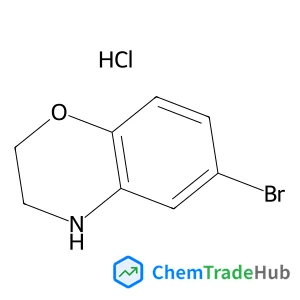
6-Bromo-3,4-dihydro-2H-1,4-benzoxazine hydrochloride (1:1)
CAS Number:
1260803-10-8
Molecular Formula:
C8H9BrClNO
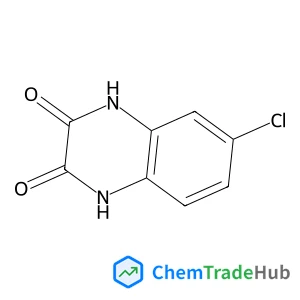
6-CHLORO-2,3-DIOXO-1,2,3,4-TETRAHYDROQUINOXALINE, 97
CAS Number:
169-14-2
Molecular Formula:
C8H5ClN2O2

Recommended Suppliers







Disclaimer
This page provides academic journal information for reference and research purposes only. We are not affiliated with any journal publishers and do not handle publication submissions. For publication-related inquiries, please contact the respective journal publishers directly.
If you notice any inaccuracies in the information displayed, please contact us at support@chemtradehub.com. We will promptly review and address your concerns.