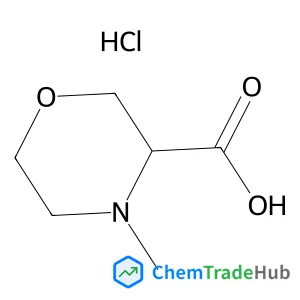
4-Methyl-3-morpholinecarboxylic acid hydrochloride (1:1)
CAS Number:
1240518-90-4
Molecular Formula:
C6H12ClNO3
Stefan Milenkovic, Igor V. Bodrenko, Armando Carpaneto
Subcellular and organellar mechanisms have manifested a prominent importance for a broad variety of processes that maintain cellular life at its most basic level. Mammalian two-pore channels (TPCs) appear to be cornerstones of these processes in endo-lysosomes by controlling delicate ion-concentrations in their interiors. With evolutionary remarkable architecture and one-of-a-kind selectivity filter, TPCs are an extremely attractive topic per se. In the light of the current COVID-19 pandemic, hTPC2 emerges to be more than attractive. As a key regulator of the endocytosis pathway, it is potentially essential for diverse viral infections in humans, as demonstrated. Here, by means of multiscale molecular simulations, we propose a model of sodium transport from the lumen to the cytosol where the central cavity works as a reservoir. Since the inhibition of hTPC2 is proven to stop SARS-CoV2 in vitro, shedding light on the hTPC2 function and mechanism is the first step towards the selection of potential inhibiting candidates.

Molecules

Mini-Reviews in Medicinal Chemistry

Physical Chemistry Chemical Physics

Photochemical & Photobiological Sciences

Environmental Toxicology and Pharmacology

Green Chemistry

Nature Reviews Drug Discovery

Contact Lens & Anterior Eye

Angewandte Chemie International Edition

Journal of Medical Biochemistry
L.-C. Wu, W.-C. Chung, C.-C. Wang, G.-H. Lee, S.-I. Lu, Y. Wang
DOI: 10.1039/C5CP01575H
Yuanyuan Jin, George Maroulis, Xiaoyu Kuang, Liping Ding, Cheng Lu, Jingjing Wang, Chuanzhao Zhang, Meng Ju
DOI: 10.1039/C5CP00728C
Jiameng Qiu, Feilong Wu, Xin Jin, Xinyuan Gu, Wenbin Cai, Dalin Sun, Fang Fang
DOI: 10.1039/C5CP00800J
Niall J. English, Conor J. Waldron
DOI: 10.1039/C5CP00629E
Caleb A. Class, Jorge Aguilera-Iparraguirre, William H. Green
DOI: 10.1039/C4CP05631K
Cunlan Guo, Xian Fan, Hong Qiu, Wenyuan Xiao, Lianchun Wang, Bingqian Xu
DOI: 10.1039/C5CP01305D
Truong Ba Tai, Minh Tho Nguyen
DOI: 10.1039/C5CP01851J
Michael S. Bodnarchuk, David M. Heyes, Angela Breakspear, Samir Chahine, Daniele Dini
DOI: 10.1039/C5CP00428D
4-Nitrophenyl phosphate disodium salt hexahydrate is primarily used as a substra...
2-(Trifluoromethyl)-1,3-oxazole-4-carboxylic Acid (CAS: 1060816-01-4) is widely ...
2-Fluoro-4-biphenylcarboxylic acid should be stored in a cool, dry place at room...
Prednisolone-21-Carboxylic Acid is primarily used in the pharmaceutical industry...
4-(Hydrazinomethyl)-1,2,3-benzenetriol (CAS: 3614-72-0) should be stored in a co...
4-Amino-1-methyl-1H-pyrazole-5-carboxylic acid hydrochloride (CAS: 92534-70-8) i...
Dehydropachymic acid (CAS: 77012-31-8) is regulated by various agencies. It fall...
The market and research trends for 6-[(2,2-Dimethylpropanoyl)amino]nicotinic aci...
1,10-Phenanthroline-2,9-dicarbaldehyde should be stored in a cool, dry place awa...
5-Carbamoyl-11-oxo-10,11-dihydro-5H-dibenzo[b,f]azepin-10-yl acetate can be synt...
Physical Chemistry Chemical Physics (PCCP) is an international journal co-owned by 19 physical chemistry and physics societies from around the world. This journal publishes original, cutting-edge research in physical chemistry, chemical physics and biophysical chemistry. To be suitable for publication in PCCP, articles must include significant innovation and/or insight into physical chemistry; this is the most important criterion that reviewers and Editors will judge against when evaluating submissions. The journal has a broad scope and welcomes contributions spanning experiment, theory, computation and data science. Topical coverage includes spectroscopy, dynamics, kinetics, statistical mechanics, thermodynamics, electrochemistry, catalysis, surface science, quantum mechanics, quantum computing and machine learning. Interdisciplinary research areas such as polymers and soft matter, materials, nanoscience, energy, surfaces/interfaces, and biophysical chemistry are welcomed if they demonstrate significant innovation and/or insight into physical chemistry. Joined experimental/theoretical studies are particularly appreciated when complementary and based on up-to-date approaches.