













The n-type and p-type conductivity mechanisms of the bulk BiOCl photocatalyst from hybrid density functional theory calculations
Literature Information
Publication Date
2021-08-17
DOI
10.1039/D1CP02794H
Impact Factor
3.676
Authors
Bo Kong, Wentao Wang
View Original
Abstract
In this work, the n-type and p-type conductivity mechanisms of bulk BiOCl are systematically investigated using first-principles calculations. Under the O-rich growth conditions, BiOCl presents the intrinsic p-type conductivity, which primarily originates from the contributions of the antisite defects OCl. This is in excellent agreement with the observed p-type conductivity in BiOCl under high oxygen partial pressure or in oxygen-saturated solutions in experiments. While BiOCl displays the intrinsic n-type conductivity under the Bi-rich growth conditions, the vacancy defects VCl are responsible for the character. Nevertheless, the extrinsic means or effects could lead to the production and ionization of the O vacancies, which could contribute to the n-type conductivity in BiOCl. Therefore, the intrinsic n-type conductivity behavior reported in BiOCl in recent experiments is well explained. Under the Cl-rich growth conditions, the major donor defects VCl and the major acceptor defects VBi in BiOCl compensate each other, leading to an intrinsic insulator. However, it is shown that the usual unintentional H impurities HBi could form the p-type conductivity in BiOCl under Cl-rich growth conditions and enhance the p-type conductivity under O-rich growth conditions. This helps to understand the p-type conductivity behavior reported or mentioned in BiOCl in many experiments. At the same time, we found that Group II elements Ca and Sr are superior p-type doping elements for BiOCl under the Cl-rich and O-rich growth conditions. The defect physics in the bulk BiOCl photocatalyst is well understood. This work may inspire more magnificent studies on developing BiOCl-based photocatalysts.
Recommended Journals
Related Literature
Fullerene recognition with molecular tweezers made up of efficient buckybowls: a dispersion-corrected DFT study
Daniela Josa, Jesús Rodríguez-Otero, Enrique M. Cabaleiro-Lago
2015-03-12
Paper
DOI: 10.1039/C5CP00407A
Luminescence studies on SnO2 and SnO2:Eu nanocrystals grown by laser assisted flow deposition
N. F. Santos, J. Rodrigues, T. Holz, N. Ben Sedrine, A. Sena, A. J. Neves, F. M. Costa, T. Monteiro
2015-04-21
Paper
DOI: 10.1039/C4CP06114D
Synergy between TiO2 and CoxOy sites in electrocatalytic water decomposition
Bartłomiej M. Szyja, Rutger A. van Santen
2015-02-25
Paper
DOI: 10.1039/C5CP00196J
Geometries, stabilities and fragmental channels of neutral and charged sulfur clusters: SnQ (n = 3–20, Q = 0, ±1)
Yuanyuan Jin, George Maroulis, Xiaoyu Kuang, Liping Ding, Cheng Lu, Jingjing Wang, Chuanzhao Zhang, Meng Ju
2015-04-23
Paper
DOI: 10.1039/C5CP00728C
Theoretical study of the oxidation mechanisms of naphthalene initiated by hydroxyl radicals: the O2 addition reaction pathways
A. Shiroudi, M. S. Deleuze, S. Canneaux
2015-04-27
Paper
DOI: 10.1039/C5CP01934F
Properties of transition metal substituted zinc sulfide hexamers and dodecamers
Stefano Poggio, Brendan Wang, Ursula J. Gibson, Joseph J. BelBruno
2015-04-30
Paper
DOI: 10.1039/C5CP00574D
Strong field laser control of photochemistry
Ignacio R. Solá, Jesús González-Vázquez, Rebeca de Nalda, Luis Bañares
2015-03-16
Perspective
DOI: 10.1039/C5CP00627A
Atomistic modeling to optimize composition and characterize structure of Ni–Zr–Mo metallic glasses
M. H. Yang, S. N. Li, Y. Li, J. H. Li, B. X. Liu
2015-04-16
Paper
DOI: 10.1039/C5CP00512D
A facile synthesis of high quality nanostructured CeO2 and Gd2O3-doped CeO2 solid electrolytes for improved electrochemical performance
Yu-Lin Kuo, Yu-Ming Su, Hung-Lung Chou
2015-04-27
Paper
DOI: 10.1039/C5CP00735F
A molecular material based on electropolymerized cobalt macrocycles for electrocatalytic hydrogen evolution
Stéphane Rioual, Benoit Lescop, François Quentel, Frederic Gloaguen
2015-04-16
Paper
DOI: 10.1039/C5CP01210D
You might also like
Compound Q&A
What are the main uses of 4-Nitrophenyl phosphate disodium salt hexahydrate (CAS: 333338-18-4)?
4-Nitrophenyl phosphate disodium salt hexahydrate is primarily used as a substra...
333338-18-44-Nitrophenyl phosph...
Compound Q&A
What are the main uses of 2-(Trifluoromethyl)-1,3-oxazole-4-carboxylic Acid (CAS: 1060816-01-4)?
2-(Trifluoromethyl)-1,3-oxazole-4-carboxylic Acid (CAS: 1060816-01-4) is widely ...
1060816-01-42-(Trifluoromethyl)-...
Compound Q&A
How should 2-Fluoro-4-biphenylcarboxylic acid (CAS: 137045-30-8) be stored?
2-Fluoro-4-biphenylcarboxylic acid should be stored in a cool, dry place at room...
137045-30-82-Fluoro-4-biphenylc...
Compound Q&A
What industries use Prednisolone-21-Carboxylic Acid (CAS: 61549-70-0)?
Prednisolone-21-Carboxylic Acid is primarily used in the pharmaceutical industry...
61549-70-0Prednisolone-21-Carb...
Compound Q&A
How should 4-(Hydrazinomethyl)-1,2,3-benzenetriol (CAS: 3614-72-0) be stored?
4-(Hydrazinomethyl)-1,2,3-benzenetriol (CAS: 3614-72-0) should be stored in a co...
3614-72-04-(Hydrazinomethyl)-...
Compound Q&A
What industries use 4-Amino-1-methyl-1H-pyrazole-5-carboxylic acid hydrochloride (CAS: 92534-70-8)?
4-Amino-1-methyl-1H-pyrazole-5-carboxylic acid hydrochloride (CAS: 92534-70-8) i...
92534-70-84-Amino-1-methyl-1H-...
Compound Q&A
What regulatory guidelines apply to dehydropachymic acid (CAS: 77012-31-8)?
Dehydropachymic acid (CAS: 77012-31-8) is regulated by various agencies. It fall...
77012-31-8Dehydropachymic acid
Compound Q&A
What is the market or research trend for 6-[(2,2-Dimethylpropanoyl)amino]nicotinic acid (CAS: 898561-66-5)?
The market and research trends for 6-[(2,2-Dimethylpropanoyl)amino]nicotinic aci...
898561-66-56-[(2,2-Dimethylprop...
Compound Q&A
How should 1,10-Phenanthroline-2,9-dicarbaldehyde (CAS: 57709-62-3) be stored?
1,10-Phenanthroline-2,9-dicarbaldehyde should be stored in a cool, dry place awa...
57709-62-31,10-Phenanthroline-...
Compound Q&A
How is 5-Carbamoyl-11-oxo-10,11-dihydro-5H-dibenzo[b,f]azepin-10-yl acetate (CAS: 113952-21-9) typically synthesized?
5-Carbamoyl-11-oxo-10,11-dihydro-5H-dibenzo[b,f]azepin-10-yl acetate can be synt...
113952-21-95-Carbamoyl-11-oxo-1...
Source Journal
Physical Chemistry Chemical Physics

CiteScore:
5.5
Self-citation Rate:
10.3%
Articles per Year:
3036
Physical Chemistry Chemical Physics (PCCP) is an international journal co-owned by 19 physical chemistry and physics societies from around the world. This journal publishes original, cutting-edge research in physical chemistry, chemical physics and biophysical chemistry. To be suitable for publication in PCCP, articles must include significant innovation and/or insight into physical chemistry; this is the most important criterion that reviewers and Editors will judge against when evaluating submissions. The journal has a broad scope and welcomes contributions spanning experiment, theory, computation and data science. Topical coverage includes spectroscopy, dynamics, kinetics, statistical mechanics, thermodynamics, electrochemistry, catalysis, surface science, quantum mechanics, quantum computing and machine learning. Interdisciplinary research areas such as polymers and soft matter, materials, nanoscience, energy, surfaces/interfaces, and biophysical chemistry are welcomed if they demonstrate significant innovation and/or insight into physical chemistry. Joined experimental/theoretical studies are particularly appreciated when complementary and based on up-to-date approaches.
Recommended Compounds

6-CHLORO-2,3-DIOXO-1,2,3,4-TETRAHYDROQUINOXALINE, 97
CAS Number:
169-14-2
Molecular Formula:
C8H5ClN2O2


4-Methyl-3-morpholinecarboxylic acid hydrochloride (1:1)
CAS Number:
1240518-90-4
Molecular Formula:
C6H12ClNO3
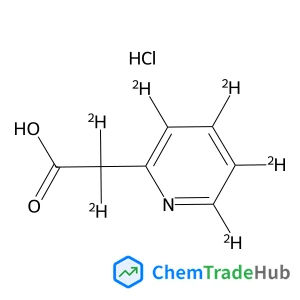
2,2-dideuterio-2-(3,4,5,6-tetradeuterio-2-pyridyl)acetic acid;hydrochloride
CAS Number:
1329799-67-8
Molecular Formula:
C7H2ClD6NO2
Recommended Suppliers





Disclaimer
This page provides academic journal information for reference and research purposes only. We are not affiliated with any journal publishers and do not handle publication submissions. For publication-related inquiries, please contact the respective journal publishers directly.
If you notice any inaccuracies in the information displayed, please contact us at support@chemtradehub.com. We will promptly review and address your concerns.