


First-principles prediction of strain-induced gas-sensing tuning in tin sulfide
Literature Information
Publication Date
2021-08-06
DOI
10.1039/D1CP02770K
Impact Factor
3.676
Authors
Xin Shen, Yinan Bai
View Original
Abstract
A challenge in the application of two-dimensional (2D) SnS in gas-sensing field is that the SnS monolayer is highly sensitive to oxidizing gases, whereas it is naturally deactivated towards reducing gases. The non-sensitivity of SnS to reducing gases is a problem that needs to be solved urgently in an economic and effective manner. Hence, in this work, we propose a strategy of applying strain modulation on the SnS monolayer to optimize its sensitivity and selectivity for reducing gases fundamentally. Generally, the strain modulation applied on a semiconductor gives rise to a change in its band gap (BG). Based on the first-principles calculations, the strain on SnS was found to induce strong degeneracy and energy-level splitting. Unusually, the tensile strain (≥3%) applied could transform the SnS monolayer from indirect-gap semiconductors to direct-gap semiconductors, manifesting a promising optical application prospect but not appropriate for the gas-sensing filed. Comparatively, the compressive strain (≥3%) on SnS could generate new electronic states at the edge of the conduction band of the SnS monolayer, which increases the conductivity and the weak interaction. Thus, the adsorption of reducing gases on the SnS monolayer is enhanced from physisorption to chemisorption, resulting in a considerable increase in the sensitivity performance to the three reducing gas molecules (NH3, H2S, and CO). The induced symmetry breaking of the SnS monolayer under compressive strain leads to much higher surface activation towards reducing gases, which improves its adsorption capability and the ability of screening oxidizing gas molecules. The present work provides key information for novel designs of strain-sensitive dual-function sensors based on SnS.
Recommended Journals

Journal of Enzyme inhibition and Medicinal Chemistry

CrystEngComm

Advanced Engineering Materials

Photochemical & Photobiological Sciences

Environmental Toxicology and Pharmacology

Nature Reviews Drug Discovery

Coloration Technology

Green Chemistry

Current Pharmaceutical Biotechnology

Mini-Reviews in Medicinal Chemistry
Related Literature
Promotion of TH3 (T = Si and Ge) group transfer within a tetrel bond by a cation–π interaction
Na Liu, Qiaozhuo Wu, Qingzhong Li, Steve Scheiner
2021-12-15
Paper
DOI: 10.1039/D1CP05323J
Subtle structure matters: boosting surface-directed photoelectron transfer via the introduction of specific monovalent oxygen vacancies in TiO2
Fei Li, Dong Wang, Xue-Qing Gong
2021-08-18
Paper
DOI: 10.1039/D1CP02787E
Massive dipoles across the metal–semiconductor cluster interface: towards chemically controlled rectification
Dinesh Bista, Turbasu Sengupta, Shiv N. Khanna
2021-08-11
Paper
DOI: 10.1039/D1CP02420E
An overview of hydroxy-based polyanionic cathode insertion materials for metal-ion batteries
Shashwat Singh, Valérie Pralong, Prabeer Barpanda
2021-07-26
Perspective
DOI: 10.1039/D1CP01741A
Covalent photofunctionalization and electronic repair of 2H-MoS2via nitrogen incorporation
Helena Osthues, Christian Schwermann, Johann A. Preuß, Thorsten Deilmann, Rudolf Bratschitsch, Michael Rohlfing, Nikos L. Doltsinis
2021-08-13
Paper
DOI: 10.1039/D1CP02313F
Molecular dynamics simulation of extension-induced crystallization of branched bimodal HDPE: Unraveling the effects of short-chain branches
Yiran Cao, Li Zhao, Jieqi Wang, Yunqi Shao, Xuelian He
2021-08-17
Paper
DOI: 10.1039/D1CP01067K
Theoretical study and application of 2-phenyl-1,3,4-thiadiazole derivatives with optical and inhibitory activity against SHP1
Chun Zhang, Yi-Tao Sun, Xue Yan, Xue-Hui Guo, Ai-Min Ren, Wen-Long Wang
2021-12-02
Paper
DOI: 10.1039/D1CP04268H
Direct evidence for a radiation-induced synthesis of acetonitrile and isoacetonitrile from a 1 : 1 CH4⋯HCN complex at cryogenic temperatures: is it a missing link between inorganic and prebiotic astrochemistry?
Anastasia D. Volosatova, Mariia A. Lukianova, Pavel V. Zasimov, Vladimir I. Feldman
2021-08-10
Paper
DOI: 10.1039/D1CP01598B
One order of magnitude increase of triplet state lifetime observed in deprotonated form selenium substituted uracil
Peipei Jin, Xueli Wang, Haifeng Pan
2021-12-01
Paper
DOI: 10.1039/D1CP04811B
The NV−⋯N+ charged pair in diamond: a quantum-mechanical investigation
Anna Maria Ferrari, Khaled E. El-Kelany, Francesco Silvio Gentile, Maddalena D’Amore, Roberto Dovesi
2021-08-12
Paper
DOI: 10.1039/D1CP02363B
You might also like
Compound Q&A
What are the main uses of 4-Nitrophenyl phosphate disodium salt hexahydrate (CAS: 333338-18-4)?
4-Nitrophenyl phosphate disodium salt hexahydrate is primarily used as a substra...
333338-18-44-Nitrophenyl phosph...
Compound Q&A
What are the main uses of 2-(Trifluoromethyl)-1,3-oxazole-4-carboxylic Acid (CAS: 1060816-01-4)?
2-(Trifluoromethyl)-1,3-oxazole-4-carboxylic Acid (CAS: 1060816-01-4) is widely ...
1060816-01-42-(Trifluoromethyl)-...
Compound Q&A
How should 2-Fluoro-4-biphenylcarboxylic acid (CAS: 137045-30-8) be stored?
2-Fluoro-4-biphenylcarboxylic acid should be stored in a cool, dry place at room...
137045-30-82-Fluoro-4-biphenylc...
Compound Q&A
What industries use Prednisolone-21-Carboxylic Acid (CAS: 61549-70-0)?
Prednisolone-21-Carboxylic Acid is primarily used in the pharmaceutical industry...
61549-70-0Prednisolone-21-Carb...
Compound Q&A
How should 4-(Hydrazinomethyl)-1,2,3-benzenetriol (CAS: 3614-72-0) be stored?
4-(Hydrazinomethyl)-1,2,3-benzenetriol (CAS: 3614-72-0) should be stored in a co...
3614-72-04-(Hydrazinomethyl)-...
Compound Q&A
What industries use 4-Amino-1-methyl-1H-pyrazole-5-carboxylic acid hydrochloride (CAS: 92534-70-8)?
4-Amino-1-methyl-1H-pyrazole-5-carboxylic acid hydrochloride (CAS: 92534-70-8) i...
92534-70-84-Amino-1-methyl-1H-...
Compound Q&A
What regulatory guidelines apply to dehydropachymic acid (CAS: 77012-31-8)?
Dehydropachymic acid (CAS: 77012-31-8) is regulated by various agencies. It fall...
77012-31-8Dehydropachymic acid
Compound Q&A
What is the market or research trend for 6-[(2,2-Dimethylpropanoyl)amino]nicotinic acid (CAS: 898561-66-5)?
The market and research trends for 6-[(2,2-Dimethylpropanoyl)amino]nicotinic aci...
898561-66-56-[(2,2-Dimethylprop...
Compound Q&A
How should 1,10-Phenanthroline-2,9-dicarbaldehyde (CAS: 57709-62-3) be stored?
1,10-Phenanthroline-2,9-dicarbaldehyde should be stored in a cool, dry place awa...
57709-62-31,10-Phenanthroline-...
Compound Q&A
How is 5-Carbamoyl-11-oxo-10,11-dihydro-5H-dibenzo[b,f]azepin-10-yl acetate (CAS: 113952-21-9) typically synthesized?
5-Carbamoyl-11-oxo-10,11-dihydro-5H-dibenzo[b,f]azepin-10-yl acetate can be synt...
113952-21-95-Carbamoyl-11-oxo-1...
Source Journal
Physical Chemistry Chemical Physics

CiteScore:
5.5
Self-citation Rate:
10.3%
Articles per Year:
3036
Physical Chemistry Chemical Physics (PCCP) is an international journal co-owned by 19 physical chemistry and physics societies from around the world. This journal publishes original, cutting-edge research in physical chemistry, chemical physics and biophysical chemistry. To be suitable for publication in PCCP, articles must include significant innovation and/or insight into physical chemistry; this is the most important criterion that reviewers and Editors will judge against when evaluating submissions. The journal has a broad scope and welcomes contributions spanning experiment, theory, computation and data science. Topical coverage includes spectroscopy, dynamics, kinetics, statistical mechanics, thermodynamics, electrochemistry, catalysis, surface science, quantum mechanics, quantum computing and machine learning. Interdisciplinary research areas such as polymers and soft matter, materials, nanoscience, energy, surfaces/interfaces, and biophysical chemistry are welcomed if they demonstrate significant innovation and/or insight into physical chemistry. Joined experimental/theoretical studies are particularly appreciated when complementary and based on up-to-date approaches.
Recommended Compounds
![S-[2,3-Bis(palmitoyloxy)propyl]-N-[(9H-fluoren-9-ylmethoxy)(hydroxy)methylene]cysteine structure](https://static.chemtradehub.com/structs/210/210532-98-2-f6a7.webp "S-[2,3-Bis(palmitoyloxy)propyl]-N-[(9H-fluoren-9-ylmethoxy)(hydroxy)methylene]cysteine structure")
S-[2,3-Bis(palmitoyloxy)propyl]-N-[(9H-fluoren-9-ylmethoxy)(hydroxy)methylene]cysteine
CAS Number:
210532-98-2
Molecular Formula:
C53H83NO8S
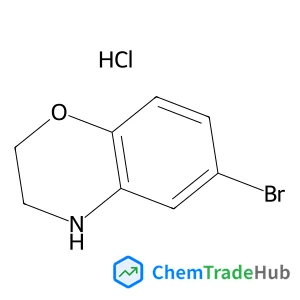
6-Bromo-3,4-dihydro-2H-1,4-benzoxazine hydrochloride (1:1)
CAS Number:
1260803-10-8
Molecular Formula:
C8H9BrClNO
Recommended Suppliers






Disclaimer
This page provides academic journal information for reference and research purposes only. We are not affiliated with any journal publishers and do not handle publication submissions. For publication-related inquiries, please contact the respective journal publishers directly.
If you notice any inaccuracies in the information displayed, please contact us at support@chemtradehub.com. We will promptly review and address your concerns.