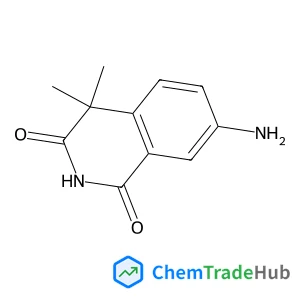
1,3(2H,4H)-Isoquinolinedione, 7-amino-4,4-dimethyl-
CAS Number:
14576-22-8
Molecular Formula:
C11H12N2O2
Yoichi Murakami, Kenji Kamada
This perspective article provides a comprehensive but organized tutorial introduction of the kinetics related to photon upconversion (UC) by triplet–triplet annihilation (TTA) (TTA-UC). The field of TTA-UC is multi-disciplinary and rapidly growing with the involvement of researchers from diverse backgrounds. TTA-UC consists of a series of tangled photophysical processes, so a solid understanding of the kinetic features and consequences is important to develop and evaluate materials for TTA-UC. This tutorial starts with an introduction of the standard model of TTA-UC along with the assumptions used in the model. The essential concept of the spin statistics for TTA and how this concept is related to the singlet branching ratio, which directly affects the efficiency of UC, are then explained through step-by-step analyses. Using these foundations, solutions for the steady-state behaviors are derived, featuring the universal curve that describes the excitation intensity dependence of the UC quantum yield for any sample type. Various useful functions for analyzing experimental data are also introduced and summarized. The transient behaviors of TTA-UC are then discussed along with their equations, and the usefulness for analyzing transient experimental data is explained using examples. In this article, self-consistent derivations and relevant references are provided for an easy understanding of the advanced discussion and analyses.
Na Liu, Qiaozhuo Wu, Qingzhong Li, Steve Scheiner
DOI: 10.1039/D1CP05323J
Mark E. Wolf, Henry F. Schaefer, III
DOI: 10.1039/D1CP03302F
Dongyun Liu, Rongjia Wen, Qian Yu, Lennart Elfgren
DOI: 10.1039/D1CP04474E
DOI: 10.1039/D1CP02632A
Leandro H. Z. Cocca, Jean-Christophe Mulatier, Delphine Pitrat, Chantal Andraud, Lino Misoguti, Cleber R. Mendonça, Marcelo G. Vivas, Leonardo De Boni
DOI: 10.1039/D1CP02553H
Wenjun Kong, Jun Xia
DOI: 10.1039/D1CP01019K
Anastasia D. Volosatova, Mariia A. Lukianova, Pavel V. Zasimov, Vladimir I. Feldman
DOI: 10.1039/D1CP01598B
Chun Zhang, Yi-Tao Sun, Xue Yan, Xue-Hui Guo, Ai-Min Ren, Wen-Long Wang
DOI: 10.1039/D1CP04268H
Zachary Morrow, Hyuk-Yong Kwon, C. T. Kelley, Elena Jakubikova
DOI: 10.1039/D1CP03446D
Jacob J. Kinnun, Horia I. Petrache
DOI: 10.1039/D1CP90155A
4-Nitrophenyl phosphate disodium salt hexahydrate is primarily used as a substra...
2-(Trifluoromethyl)-1,3-oxazole-4-carboxylic Acid (CAS: 1060816-01-4) is widely ...
2-Fluoro-4-biphenylcarboxylic acid should be stored in a cool, dry place at room...
Prednisolone-21-Carboxylic Acid is primarily used in the pharmaceutical industry...
4-(Hydrazinomethyl)-1,2,3-benzenetriol (CAS: 3614-72-0) should be stored in a co...
4-Amino-1-methyl-1H-pyrazole-5-carboxylic acid hydrochloride (CAS: 92534-70-8) i...
Dehydropachymic acid (CAS: 77012-31-8) is regulated by various agencies. It fall...
The market and research trends for 6-[(2,2-Dimethylpropanoyl)amino]nicotinic aci...
1,10-Phenanthroline-2,9-dicarbaldehyde should be stored in a cool, dry place awa...
5-Carbamoyl-11-oxo-10,11-dihydro-5H-dibenzo[b,f]azepin-10-yl acetate can be synt...

Physical Chemistry Chemical Physics (PCCP) is an international journal co-owned by 19 physical chemistry and physics societies from around the world. This journal publishes original, cutting-edge research in physical chemistry, chemical physics and biophysical chemistry. To be suitable for publication in PCCP, articles must include significant innovation and/or insight into physical chemistry; this is the most important criterion that reviewers and Editors will judge against when evaluating submissions. The journal has a broad scope and welcomes contributions spanning experiment, theory, computation and data science. Topical coverage includes spectroscopy, dynamics, kinetics, statistical mechanics, thermodynamics, electrochemistry, catalysis, surface science, quantum mechanics, quantum computing and machine learning. Interdisciplinary research areas such as polymers and soft matter, materials, nanoscience, energy, surfaces/interfaces, and biophysical chemistry are welcomed if they demonstrate significant innovation and/or insight into physical chemistry. Joined experimental/theoretical studies are particularly appreciated when complementary and based on up-to-date approaches.