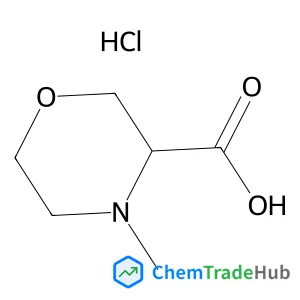
4-Methyl-3-morpholinecarboxylic acid hydrochloride (1:1)
CAS Number:
1240518-90-4
Molecular Formula:
C6H12ClNO3
William A. Elliott, R. John Clark, James G. Sutjianto, Jeremy C. Palmer, Jeffrey D. Rimer
Interactions between organic molecules and inorganic materials are ubiquitous in many applications and often play significant roles in directing pathways of crystallization. It is frequently debated whether kinetics or thermodynamics plays a more prominent role in the ability of molecular modifiers to impact crystal nucleation and growth processes. In the case of nanoporous zeolites, approaches in rational design often capitalize on the ability of organics, used as either modifiers or structure-directing agents, to markedly impact the physicochemical properties of zeolites. It has been demonstrated for multiple topologies that modifier-zeolite interactions can alter crystal size and morphology, yet few studies have distinguished the roles of thermodynamics and kinetics. We use a combination of calorimetry and molecular modeling to estimate the binding energies of organics on zeolite surfaces and correlate these results with synthetic trends in crystal morphology. Our findings reveal unexpectedly small energies of interaction for a range of modifiers with two zeolite structures, indicating the effect of organics on zeolite crystal surface free energy is minor and kinetic factors most likely govern growth modification.
Peng-Cheng Chen, Xiao-Jun Huang, Zhi-Kang Xu
DOI: 10.1039/C5CP00802F
Chuanbao Cao, Zulfiqar Ali
DOI: 10.1039/C5CP01655J
Michael S. Bodnarchuk, David M. Heyes, Angela Breakspear, Samir Chahine, Daniele Dini
DOI: 10.1039/C5CP00428D
Zhiguo Li, Champika N. Weeraman, Md. Shafiul Azam, Eiman Osman, Julianne M. Gibbs-Davis
DOI: 10.1039/C5CP00781J
Chu Chen, Weixing Kong, Haiming Duan, Jun Zhang
DOI: 10.1039/C5CP00357A
Dariusz M. Niedzwiedzki, Laura Cranston
DOI: 10.1039/C5CP00836K
M. Tariq, K. Shimizu, J. M. S. S. Esperança, L. P. N. Rebelo
DOI: 10.1039/C5CP01563D
Heike L. K. S. Mosch, Stephanie Höppener, Renzo M. Paulus, Bernd Schröter, Ulrich S. Schubert, Anna Ignaszak
DOI: 10.1039/C5CP01406A
4-Nitrophenyl phosphate disodium salt hexahydrate is primarily used as a substra...
2-(Trifluoromethyl)-1,3-oxazole-4-carboxylic Acid (CAS: 1060816-01-4) is widely ...
2-Fluoro-4-biphenylcarboxylic acid should be stored in a cool, dry place at room...
Prednisolone-21-Carboxylic Acid is primarily used in the pharmaceutical industry...
4-(Hydrazinomethyl)-1,2,3-benzenetriol (CAS: 3614-72-0) should be stored in a co...
4-Amino-1-methyl-1H-pyrazole-5-carboxylic acid hydrochloride (CAS: 92534-70-8) i...
Dehydropachymic acid (CAS: 77012-31-8) is regulated by various agencies. It fall...
The market and research trends for 6-[(2,2-Dimethylpropanoyl)amino]nicotinic aci...
1,10-Phenanthroline-2,9-dicarbaldehyde should be stored in a cool, dry place awa...
5-Carbamoyl-11-oxo-10,11-dihydro-5H-dibenzo[b,f]azepin-10-yl acetate can be synt...

Physical Chemistry Chemical Physics (PCCP) is an international journal co-owned by 19 physical chemistry and physics societies from around the world. This journal publishes original, cutting-edge research in physical chemistry, chemical physics and biophysical chemistry. To be suitable for publication in PCCP, articles must include significant innovation and/or insight into physical chemistry; this is the most important criterion that reviewers and Editors will judge against when evaluating submissions. The journal has a broad scope and welcomes contributions spanning experiment, theory, computation and data science. Topical coverage includes spectroscopy, dynamics, kinetics, statistical mechanics, thermodynamics, electrochemistry, catalysis, surface science, quantum mechanics, quantum computing and machine learning. Interdisciplinary research areas such as polymers and soft matter, materials, nanoscience, energy, surfaces/interfaces, and biophysical chemistry are welcomed if they demonstrate significant innovation and/or insight into physical chemistry. Joined experimental/theoretical studies are particularly appreciated when complementary and based on up-to-date approaches.
phosphoryl}methyl 4-methylbenzenesulfonate structure](https://static.chemtradehub.com/structs/864/864068-45-1-ba7c.webp "{[3-(Hexadecyloxy)propoxy](hydroxy)phosphoryl}methyl 4-methylbenzenesulfonate structure")