











Effective π-electron number and symmetry perturbation effect on the two-photon absorption of oligofluorenes
Literature Information
Publication Date
2021-08-04
DOI
10.1039/D1CP02553H
Impact Factor
3.676
Authors
Leandro H. Z. Cocca, Jean-Christophe Mulatier, Delphine Pitrat, Chantal Andraud, Lino Misoguti, Cleber R. Mendonça, Marcelo G. Vivas, Leonardo De Boni
View Original
Abstract
Fluorene-based molecules exhibit significant nonlinear optical responses and multiphoton absorption in the visible region, which, combined with the high fluorescence quantum yield in organic solvents, could make this class of materials potentially engaging in diverse photonics applications. Thus, herein, we have determined the two-photon absorption (2PA) of oligofluorenes containing three, five, and seven repetitive units by employing the wavelength-tunable femtosecond Z-scan technique. Our outcomes have shown that the 2PA cross-section in oligofluorenes presents an enhanced value of around 18 GM per Neff, in which Neff is the effective number of π-electrons, for the pure 2PA allowed transition (11Ag-like → 21Ag-like). Furthermore, a weak 2PA transition was observed in the same spectral region strongly allowed by one-photon absorption (11Ag-like → 11Bu-like). This last result suggests a molecular symmetry perturbation, probably induced by the molecular disorder triggered by the increase of moieties in the oligofluorene structure. We have calculated the permanent dipole moment difference related to the lowest-energy transition using the Lippert-Matagaformalism and the 2PA sum-over-states approach to confirm this assumption. Moreover, we have estimated the fundamental limits for the 2PA cross-section in oligofluorenes.
Recommended Journals
Related Literature
Engineering the electronic bandgaps and band edge positions in carbon-substituted 2D boron nitride: a first-principles investigation
Sharmila N. Shirodkar, Umesh V. Waghmare, Timothy S. Fisher, Ricardo Grau-Crespo
2015-04-20
Paper
DOI: 10.1039/C5CP01680K
Single-molecule spectroscopy and femtosecond transient absorption studies on the excitation energy transfer process in ApcE(1–240) dimers
Saran Long, Meng Zhou, Kun Tang, Xiao-Li Zeng, Yingli Niu, Qianjin Guo, Kai-Hong Zhao, Andong Xia
2015-04-23
Paper
DOI: 10.1039/C5CP01687H
Reaction-diffusion degradation model for delayed erosion of cross-linked polyanhydride biomaterials
Sergii Domanskyi, Katie L. Poetz
2015-03-03
Paper
DOI: 10.1039/C5CP00473J
Theoretical study of exciton dissociation through hot states at donor–acceptor interface in organic photocell
2015-04-16
Paper
DOI: 10.1039/C5CP00740B
Time-resolved IR spectroscopy of a trinuclear palladium complex in solution
M. Zimmer, F. Rupp, P. Singer, F. Walz, F. Breher, W. Klopper, R. Diller, M. Gerhards
2015-05-01
Paper
DOI: 10.1039/C5CP00959F
The role of charge transfer in the oxidation state change of Ce atoms in the TM13–CeO2(111) systems (TM = Pd, Ag, Pt, Au): a DFT + U investigation
Polina Tereshchuk, Rafael L. H. Freire, Crina G. Ungureanu, Yohanna Seminovski, Adam Kiejna, Juarez L. F. Da Silva
2015-04-16
Paper
DOI: 10.1039/C4CP06016D
Alcohol-soluble bis(tpy)thiophenes: new building units for constitutional dynamic conjugated polyelectrolytes
Pavla Štenclová-Bláhová, Jan Svoboda, Ivana Šloufová, Jiří Vohlídal
2015-04-20
Paper
DOI: 10.1039/C5CP01000D
Gas-phase chemistry of technetium carbonyl complexes
Zhi Qin, Fang-Li Fan, Hiromitsu Haba, Yukiko Komori, Xiao-Lei Wu
2015-04-21
Paper
DOI: 10.1039/C5CP00979K
You might also like
Compound Q&A
What are the main uses of 4-Nitrophenyl phosphate disodium salt hexahydrate (CAS: 333338-18-4)?
4-Nitrophenyl phosphate disodium salt hexahydrate is primarily used as a substra...
333338-18-44-Nitrophenyl phosph...
Compound Q&A
What are the main uses of 2-(Trifluoromethyl)-1,3-oxazole-4-carboxylic Acid (CAS: 1060816-01-4)?
2-(Trifluoromethyl)-1,3-oxazole-4-carboxylic Acid (CAS: 1060816-01-4) is widely ...
1060816-01-42-(Trifluoromethyl)-...
Compound Q&A
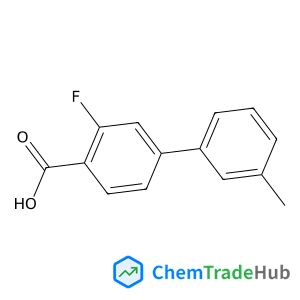
How should 2-Fluoro-4-biphenylcarboxylic acid (CAS: 137045-30-8) be stored?
2-Fluoro-4-biphenylcarboxylic acid should be stored in a cool, dry place at room...
137045-30-82-Fluoro-4-biphenylc...
Compound Q&A
What industries use Prednisolone-21-Carboxylic Acid (CAS: 61549-70-0)?
Prednisolone-21-Carboxylic Acid is primarily used in the pharmaceutical industry...
61549-70-0Prednisolone-21-Carb...
Compound Q&A
How should 4-(Hydrazinomethyl)-1,2,3-benzenetriol (CAS: 3614-72-0) be stored?
4-(Hydrazinomethyl)-1,2,3-benzenetriol (CAS: 3614-72-0) should be stored in a co...
3614-72-04-(Hydrazinomethyl)-...
Compound Q&A
What industries use 4-Amino-1-methyl-1H-pyrazole-5-carboxylic acid hydrochloride (CAS: 92534-70-8)?
4-Amino-1-methyl-1H-pyrazole-5-carboxylic acid hydrochloride (CAS: 92534-70-8) i...
92534-70-84-Amino-1-methyl-1H-...
Compound Q&A
What regulatory guidelines apply to dehydropachymic acid (CAS: 77012-31-8)?
Dehydropachymic acid (CAS: 77012-31-8) is regulated by various agencies. It fall...
77012-31-8Dehydropachymic acid
Compound Q&A
What is the market or research trend for 6-[(2,2-Dimethylpropanoyl)amino]nicotinic acid (CAS: 898561-66-5)?
The market and research trends for 6-[(2,2-Dimethylpropanoyl)amino]nicotinic aci...
898561-66-56-[(2,2-Dimethylprop...
Compound Q&A
How should 1,10-Phenanthroline-2,9-dicarbaldehyde (CAS: 57709-62-3) be stored?
1,10-Phenanthroline-2,9-dicarbaldehyde should be stored in a cool, dry place awa...
57709-62-31,10-Phenanthroline-...
Compound Q&A
How is 5-Carbamoyl-11-oxo-10,11-dihydro-5H-dibenzo[b,f]azepin-10-yl acetate (CAS: 113952-21-9) typically synthesized?
5-Carbamoyl-11-oxo-10,11-dihydro-5H-dibenzo[b,f]azepin-10-yl acetate can be synt...
113952-21-95-Carbamoyl-11-oxo-1...
Source Journal
Physical Chemistry Chemical Physics

CiteScore:
5.5
Self-citation Rate:
10.3%
Articles per Year:
3036
Physical Chemistry Chemical Physics (PCCP) is an international journal co-owned by 19 physical chemistry and physics societies from around the world. This journal publishes original, cutting-edge research in physical chemistry, chemical physics and biophysical chemistry. To be suitable for publication in PCCP, articles must include significant innovation and/or insight into physical chemistry; this is the most important criterion that reviewers and Editors will judge against when evaluating submissions. The journal has a broad scope and welcomes contributions spanning experiment, theory, computation and data science. Topical coverage includes spectroscopy, dynamics, kinetics, statistical mechanics, thermodynamics, electrochemistry, catalysis, surface science, quantum mechanics, quantum computing and machine learning. Interdisciplinary research areas such as polymers and soft matter, materials, nanoscience, energy, surfaces/interfaces, and biophysical chemistry are welcomed if they demonstrate significant innovation and/or insight into physical chemistry. Joined experimental/theoretical studies are particularly appreciated when complementary and based on up-to-date approaches.
Recommended Compounds
![N-[2-(4-Hydroxyphenoxy)-4-nitrophenyl]methanesulfonamide structure](https://static.chemtradehub.com/structs/109/109032-22-6-7c88.webp "N-[2-(4-Hydroxyphenoxy)-4-nitrophenyl]methanesulfonamide structure")
N-[2-(4-Hydroxyphenoxy)-4-nitrophenyl]methanesulfonamide
CAS Number:
109032-22-6
Molecular Formula:
C13H12N2O6S

Recommended Suppliers






Disclaimer
This page provides academic journal information for reference and research purposes only. We are not affiliated with any journal publishers and do not handle publication submissions. For publication-related inquiries, please contact the respective journal publishers directly.
If you notice any inaccuracies in the information displayed, please contact us at support@chemtradehub.com. We will promptly review and address your concerns.