![1-[(4-Methylphenyl)sulfonyl]-3-(4,4,5,5-tetramethyl-1,3,2-dioxaborolan-2-yl)-1H-pyrrolo[2,3-b]pyridine-5-carbonitrile structure](https://static.chemtradehub.com/structs/143/1434747-57-5-fc0d.webp "1-[(4-Methylphenyl)sulfonyl]-3-(4,4,5,5-tetramethyl-1,3,2-dioxaborolan-2-yl)-1H-pyrrolo[2,3-b]pyridine-5-carbonitrile structure")
1-[(4-Methylphenyl)sulfonyl]-3-(4,4,5,5-tetramethyl-1,3,2-dioxaborolan-2-yl)-1H-pyrrolo[2,3-b]pyridine-5-carbonitrile
CAS Number:
1434747-57-5
Molecular Formula:
C21H22BN3O4S
Dinesh Bista, Turbasu Sengupta, Shiv N. Khanna
An interface between a metallic cluster (MgAl12) and a semiconducting cluster (Re6Se8(PMe3)5) is shown to be marked by a massive dipole reminiscent of a dipolar layer leading to a Schottky barrier at metal–semiconductor interfaces. The metallic cluster MgAl12 with a valence electron count of 38 electrons is two electrons short of 40 electrons needed to complete its electronic shells in a superatomic model and is marked by a significant electron affinity of 2.99 eV. On the other hand, the metal-chalcogenide semiconducting cluster Re6Se8(PMe3)5, consisting of a Re6Se8 core ligated with five trimethylphosphine ligands, is highly stable in the +2 charge-state owing to its electronic shell closure, and has a low ionization energy of 3.3 eV. The composite cluster Re6Se8(PMe3)5–MgAl12 formed by combining the MgAl12 cluster through the unligated site of Re6Se8(PMe3)5 exhibits a massive dipole moment of 28.38 D resulting from a charge flow from Re6Se8(PMe3)5 to the MgAl12 cluster. The highest occupied molecular orbital (HOMO) of the composite cluster is on the MgAl12 side, which is 0.53 eV below the lowest unoccupied molecular orbital (LUMO) localized on the Re6Se8(PMe3)5 cluster, reminiscent of a Schottky barrier at metal–semiconductor interfaces. Therefore, the combination can act as a rectifier, and an application of a voltage of approximately 4.1 V via a homogeneous external electric field is needed to overcome the barrier aligning the two states: the HOMO in MgAl12 with the LUMO in Re6Se8(PMe3)5. Apart from the bias voltage, the barrier can also be reduced by attaching ligands to the metallic cluster, which provides chemical control over rectification. Finally, the fused cluster is shown to be capable of separating electron–hole pairs with minimal recombination, offering the potential for photovoltaic applications.

Coloration Technology

European Journal of Organic Chemistry

Journal of Medical Biochemistry

Physical Chemistry Chemical Physics

Lab on a Chip

Journal of Enzyme inhibition and Medicinal Chemistry

Mini-Reviews in Medicinal Chemistry

Current Pharmaceutical Biotechnology

Nature Reviews Drug Discovery

Environmental Toxicology and Pharmacology
Adriana E. Candia, Eduardo A. Albanesi, Gustavo D. Ruano
DOI: 10.1039/D1CP01855H
DOI: 10.1039/D1CP04071E
Fei Li, Dong Wang, Xue-Qing Gong
DOI: 10.1039/D1CP02787E
Zhizhou Wu, Liuyang Li, Xuedong Zhou, Xiujian Zhao, Baoshun Liu
DOI: 10.1039/D1CP03135J
Shun Kataoka, Makoto Harada, Tetsuo Okada
DOI: 10.1039/D1CP01655E
Xin Shen, Yinan Bai
DOI: 10.1039/D1CP02770K
Igor A. Nikovskiy, Dmitry Y. Aleshin
DOI: 10.1039/D1CP04648A
Wenjun Kong, Jun Xia
DOI: 10.1039/D1CP01019K
Yuhang Zhang, Yiqun Hu, Suhang Ding, Fuying Du
DOI: 10.1039/D1CP04970D
Tobias Dickbreder, Ralf Bechstein, Angelika Kühnle
DOI: 10.1039/D1CP01924D
4-Nitrophenyl phosphate disodium salt hexahydrate is primarily used as a substra...
2-(Trifluoromethyl)-1,3-oxazole-4-carboxylic Acid (CAS: 1060816-01-4) is widely ...
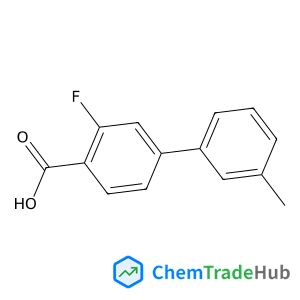
2-Fluoro-4-biphenylcarboxylic acid should be stored in a cool, dry place at room...
Prednisolone-21-Carboxylic Acid is primarily used in the pharmaceutical industry...
4-(Hydrazinomethyl)-1,2,3-benzenetriol (CAS: 3614-72-0) should be stored in a co...
4-Amino-1-methyl-1H-pyrazole-5-carboxylic acid hydrochloride (CAS: 92534-70-8) i...
Dehydropachymic acid (CAS: 77012-31-8) is regulated by various agencies. It fall...
The market and research trends for 6-[(2,2-Dimethylpropanoyl)amino]nicotinic aci...
1,10-Phenanthroline-2,9-dicarbaldehyde should be stored in a cool, dry place awa...
5-Carbamoyl-11-oxo-10,11-dihydro-5H-dibenzo[b,f]azepin-10-yl acetate can be synt...
Physical Chemistry Chemical Physics (PCCP) is an international journal co-owned by 19 physical chemistry and physics societies from around the world. This journal publishes original, cutting-edge research in physical chemistry, chemical physics and biophysical chemistry. To be suitable for publication in PCCP, articles must include significant innovation and/or insight into physical chemistry; this is the most important criterion that reviewers and Editors will judge against when evaluating submissions. The journal has a broad scope and welcomes contributions spanning experiment, theory, computation and data science. Topical coverage includes spectroscopy, dynamics, kinetics, statistical mechanics, thermodynamics, electrochemistry, catalysis, surface science, quantum mechanics, quantum computing and machine learning. Interdisciplinary research areas such as polymers and soft matter, materials, nanoscience, energy, surfaces/interfaces, and biophysical chemistry are welcomed if they demonstrate significant innovation and/or insight into physical chemistry. Joined experimental/theoretical studies are particularly appreciated when complementary and based on up-to-date approaches.