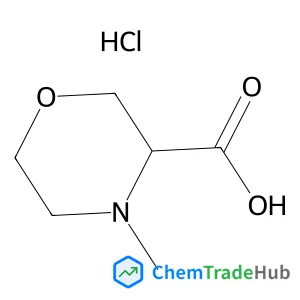
4-Methyl-3-morpholinecarboxylic acid hydrochloride (1:1)
CAS Number:
1240518-90-4
Molecular Formula:
C6H12ClNO3
Shiliang (Johnathan) Tan, D. D. Do
Functional groups (FGs) in porous carbon play a pivotal role in water adsorption by nucleating water clusters followed by their coalescence, the process in which precursors are used for filling the confined space typically in the reduced pressure range of 0.3–0.8. While the general role of FGs is known, different types of FGs and their configurations are expected to critically affect the formation of clusters and they are yet to be clarified. To this end, we conducted a comprehensive Monte Carlo simulation of water adsorption at 298 K in a functionalized graphitic slit pore as a function of types of FGs (acidic and basic) and their configurations. The adsorption mechanism is derived from the analysis of adsorption/desorption isotherms, isosteric heat, and 2D density and compressibility distributions. Our results show that (1) with the increasing density of FGs, the isotherm switches from Type V to Type I and the precursor used for pore filling shifts from clustering to molecular layering, (2) the intra-rotation of atoms around the Sigma bonds in the FGs plays an important role in clustering when the FGs are in proximity and (3) for a given density of FGs, the configurations (interspacing distribution) of FGs dictate the shape and size of the water clusters, affecting the filling and emptying of water molecules from the confined space, which have practical implications in moisture control by solid adsorbents.
Musa Alaydrus
DOI: 10.1039/D1CP02452C
Lei Zhou, Xingmei Lu, Yao Li, Xiaoqian Yao, Shenyu Cheng, Gangwei Chen, Chengsheng Ge
DOI: 10.1039/D1CP02038B
Mark E. Wolf, Henry F. Schaefer, III
DOI: 10.1039/D1CP03302F
C. Emilio Cárdenas, A. Tlahuice-Flores
DOI: 10.1039/D1CP02332B
Shiliang (Johnathan) Tan, D. D. Do
DOI: 10.1039/D1CP02308J
Enrico Benassi, Tamara Vaganova, Evgenij Malykhin, Haiyan Fan
DOI: 10.1039/D1CP02342J
Zhizhou Wu, Liuyang Li, Xuedong Zhou, Xiujian Zhao, Baoshun Liu
DOI: 10.1039/D1CP03135J
Dinesh Bista, Turbasu Sengupta, Shiv N. Khanna
DOI: 10.1039/D1CP02420E
4-Nitrophenyl phosphate disodium salt hexahydrate is primarily used as a substra...
2-(Trifluoromethyl)-1,3-oxazole-4-carboxylic Acid (CAS: 1060816-01-4) is widely ...
2-Fluoro-4-biphenylcarboxylic acid should be stored in a cool, dry place at room...
Prednisolone-21-Carboxylic Acid is primarily used in the pharmaceutical industry...
4-(Hydrazinomethyl)-1,2,3-benzenetriol (CAS: 3614-72-0) should be stored in a co...
4-Amino-1-methyl-1H-pyrazole-5-carboxylic acid hydrochloride (CAS: 92534-70-8) i...
Dehydropachymic acid (CAS: 77012-31-8) is regulated by various agencies. It fall...
The market and research trends for 6-[(2,2-Dimethylpropanoyl)amino]nicotinic aci...
1,10-Phenanthroline-2,9-dicarbaldehyde should be stored in a cool, dry place awa...
5-Carbamoyl-11-oxo-10,11-dihydro-5H-dibenzo[b,f]azepin-10-yl acetate can be synt...

Physical Chemistry Chemical Physics (PCCP) is an international journal co-owned by 19 physical chemistry and physics societies from around the world. This journal publishes original, cutting-edge research in physical chemistry, chemical physics and biophysical chemistry. To be suitable for publication in PCCP, articles must include significant innovation and/or insight into physical chemistry; this is the most important criterion that reviewers and Editors will judge against when evaluating submissions. The journal has a broad scope and welcomes contributions spanning experiment, theory, computation and data science. Topical coverage includes spectroscopy, dynamics, kinetics, statistical mechanics, thermodynamics, electrochemistry, catalysis, surface science, quantum mechanics, quantum computing and machine learning. Interdisciplinary research areas such as polymers and soft matter, materials, nanoscience, energy, surfaces/interfaces, and biophysical chemistry are welcomed if they demonstrate significant innovation and/or insight into physical chemistry. Joined experimental/theoretical studies are particularly appreciated when complementary and based on up-to-date approaches.

![(2E)-3-(3-Chlorophenyl)-N-{2-[4-(methylsulfonyl)-1-piperazinyl]-2-oxoethyl}acrylamide structure](https://static.chemtradehub.com/structs/250/2505001-54-5-c1e9.webp "(2E)-3-(3-Chlorophenyl)-N-{2-[4-(methylsulfonyl)-1-piperazinyl]-2-oxoethyl}acrylamide structure")