











Fluorescence band exchange narrowing in a series of squaraine oligomers: energetic vs. structural disorder
Literature Information
Publication Date
2021-08-12
DOI
10.1039/D1CP02136B
Impact Factor
3.676
Authors
Arthur Turkin, Pavel Malý
View Original
Abstract
The influence of oligosquaraine chain length on the energies and shape of absorption and emission bands and the exciton coherence length is studied in CHCl3 where the oligomers adopt a random coil structure. From the observed fluorescence band narrowing an effective coherence length of Ncoh = 2.5 was estimated for the nonamer. Applying a theoretical Frenkel exciton model the absorption and emission spectra were simulated which confirmed the experimental results. From the relative amplitude of the 00 peak to the vibronic shoulder the coherence length was estimated which yields a somewhat higher saturation value of Ncoh ≈ 3 for the nonamer, which is in very good agreement with the theoretical amplitude ratio. The coherence length is much smaller than the geometrical length because the electronic delocalisation is reduced by structural disorder. Taking into account the energetic (diagonal) and structural (off-diagonal) disorder we observed a different influence on the absorption and fluorescence spectra. For the emission spectra, exciton delocalisation leads to a narrowing of the band caused by averaging over energetic disorder, but for the absorption band the spectra are broadened by excitonic splitting and structural disorder.
Related Literature
On the structure of Au11(SR)9 and Au13(SR)11 clusters
C. Emilio Cárdenas, A. Tlahuice-Flores
2021-08-06
Paper
DOI: 10.1039/D1CP02332B
Massive dipoles across the metal–semiconductor cluster interface: towards chemically controlled rectification
Dinesh Bista, Turbasu Sengupta, Shiv N. Khanna
2021-08-11
Paper
DOI: 10.1039/D1CP02420E
Progress in phase-sensitive sum frequency generation spectroscopy
Shoichi Yamaguchi, Takuhiro Otosu
2021-06-25
Perspective
DOI: 10.1039/D1CP01994E
Electronic structures and properties of dianionic pentacarbonyls [TM(CO)5]2− (TM = Cr, Mo, W)
Gerui Pei, Cong-Cong Shu, Mengyang Li, Zhong-Ming Sun, Tao Yang
2021-08-03
Paper
DOI: 10.1039/D1CP01592C
Mechanical properties of nonstoichiometric cubic titanium carbide TiCy
2021-08-16
Paper
DOI: 10.1039/D1CP02697F
Tunable electronic and optical properties in buckling a non-lamellar B3S monolayer
Shaohua Lu, Yiyuan Cai, Xiaojun Hu
2021-07-30
Paper
DOI: 10.1039/D1CP02286E
DPD simulations on mixed polymeric DOX-loaded micelles assembled from PCL-SS-PPEGMA/PDEA–PPEGMA and their dual pH/reduction-responsive release
Zexiong Yang, Haiqian Zhao, Delin Wang, Li Yin, Kenxiang Cai, Zehua Lin, Tao Chen, Chufen Yang
2021-08-12
Paper
DOI: 10.1039/D1CP02750F
Catalyzed reaction of isocyanates (RNCO) with water
Mark E. Wolf, Henry F. Schaefer, III
2021-08-19
Paper
DOI: 10.1039/D1CP03302F
Effects of strain and electric fields on the electronic transport properties of single-layer β12-borophene nanoribbons
M. Davoudiniya, K. Mirabbaszadeh
2021-08-06
Paper
DOI: 10.1039/D1CP00340B
You might also like
Compound Q&A
What are the main uses of 4-Nitrophenyl phosphate disodium salt hexahydrate (CAS: 333338-18-4)?
4-Nitrophenyl phosphate disodium salt hexahydrate is primarily used as a substra...
333338-18-44-Nitrophenyl phosph...
Compound Q&A
What are the main uses of 2-(Trifluoromethyl)-1,3-oxazole-4-carboxylic Acid (CAS: 1060816-01-4)?
2-(Trifluoromethyl)-1,3-oxazole-4-carboxylic Acid (CAS: 1060816-01-4) is widely ...
1060816-01-42-(Trifluoromethyl)-...
Compound Q&A
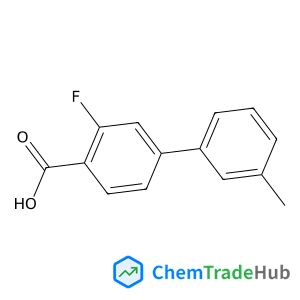
How should 2-Fluoro-4-biphenylcarboxylic acid (CAS: 137045-30-8) be stored?
2-Fluoro-4-biphenylcarboxylic acid should be stored in a cool, dry place at room...
137045-30-82-Fluoro-4-biphenylc...
Compound Q&A
What industries use Prednisolone-21-Carboxylic Acid (CAS: 61549-70-0)?
Prednisolone-21-Carboxylic Acid is primarily used in the pharmaceutical industry...
61549-70-0Prednisolone-21-Carb...
Compound Q&A
How should 4-(Hydrazinomethyl)-1,2,3-benzenetriol (CAS: 3614-72-0) be stored?
4-(Hydrazinomethyl)-1,2,3-benzenetriol (CAS: 3614-72-0) should be stored in a co...
3614-72-04-(Hydrazinomethyl)-...
Compound Q&A
What industries use 4-Amino-1-methyl-1H-pyrazole-5-carboxylic acid hydrochloride (CAS: 92534-70-8)?
4-Amino-1-methyl-1H-pyrazole-5-carboxylic acid hydrochloride (CAS: 92534-70-8) i...
92534-70-84-Amino-1-methyl-1H-...
Compound Q&A
What regulatory guidelines apply to dehydropachymic acid (CAS: 77012-31-8)?
Dehydropachymic acid (CAS: 77012-31-8) is regulated by various agencies. It fall...
77012-31-8Dehydropachymic acid
Compound Q&A
What is the market or research trend for 6-[(2,2-Dimethylpropanoyl)amino]nicotinic acid (CAS: 898561-66-5)?
The market and research trends for 6-[(2,2-Dimethylpropanoyl)amino]nicotinic aci...
898561-66-56-[(2,2-Dimethylprop...
Compound Q&A
How should 1,10-Phenanthroline-2,9-dicarbaldehyde (CAS: 57709-62-3) be stored?
1,10-Phenanthroline-2,9-dicarbaldehyde should be stored in a cool, dry place awa...
57709-62-31,10-Phenanthroline-...
Compound Q&A
How is 5-Carbamoyl-11-oxo-10,11-dihydro-5H-dibenzo[b,f]azepin-10-yl acetate (CAS: 113952-21-9) typically synthesized?
5-Carbamoyl-11-oxo-10,11-dihydro-5H-dibenzo[b,f]azepin-10-yl acetate can be synt...
113952-21-95-Carbamoyl-11-oxo-1...
Source Journal
Physical Chemistry Chemical Physics

CiteScore:
5.5
Self-citation Rate:
10.3%
Articles per Year:
3036
Physical Chemistry Chemical Physics (PCCP) is an international journal co-owned by 19 physical chemistry and physics societies from around the world. This journal publishes original, cutting-edge research in physical chemistry, chemical physics and biophysical chemistry. To be suitable for publication in PCCP, articles must include significant innovation and/or insight into physical chemistry; this is the most important criterion that reviewers and Editors will judge against when evaluating submissions. The journal has a broad scope and welcomes contributions spanning experiment, theory, computation and data science. Topical coverage includes spectroscopy, dynamics, kinetics, statistical mechanics, thermodynamics, electrochemistry, catalysis, surface science, quantum mechanics, quantum computing and machine learning. Interdisciplinary research areas such as polymers and soft matter, materials, nanoscience, energy, surfaces/interfaces, and biophysical chemistry are welcomed if they demonstrate significant innovation and/or insight into physical chemistry. Joined experimental/theoretical studies are particularly appreciated when complementary and based on up-to-date approaches.
Recommended Compounds


2,2-dideuterio-2-(3,4,5,6-tetradeuterio-2-pyridyl)acetic acid;hydrochloride
CAS Number:
1329799-67-8
Molecular Formula:
C7H2ClD6NO2
Recommended Suppliers



Disclaimer
This page provides academic journal information for reference and research purposes only. We are not affiliated with any journal publishers and do not handle publication submissions. For publication-related inquiries, please contact the respective journal publishers directly.
If you notice any inaccuracies in the information displayed, please contact us at support@chemtradehub.com. We will promptly review and address your concerns.