











Wide-angle X-ray scattering and molecular dynamics simulations of supercooled protein hydration water
Literature Information
Publication Date
2021-07-12
DOI
10.1039/D1CP02126E
Impact Factor
3.676
Authors
Maddalena Bin, Rafat Yousif, Sharon Berkowicz, Sudipta Das, Daniel Schlesinger, Fivos Perakis
View Original
Abstract
Understanding the mechanism responsible for the protein low-temperature crossover observed at T ≈ 220 K can help us improve current cryopreservation technologies. This crossover is associated with changes in the dynamics of the system, such as in the mean-squared displacement, whereas experimental evidence of structural changes is sparse. Here we investigate hydrated lysozyme proteins by using a combination of wide-angle X-ray scattering and molecular dynamics (MD) simulations. Experimentally we suppress crystallization by accurate control of the protein hydration level, which allows access to temperatures down to T = 175 K. The experimental data indicate that the scattering intensity peak at Q = 1.54 Å−1, attributed to interatomic distances, exhibits temperature-dependent changes upon cooling. In the MD simulations it is possible to decompose the water and protein contributions and we observe that, while the protein component is nearly temperature independent, the hydration water peak shifts in a fashion similar to that of bulk water. The observed trends are analysed by using the water–water and water-protein radial distribution functions, which indicate changes in the local probability density of hydration water.
Recommended Journals
Related Literature
Photoelectron spectroscopy of the protoporphyrin IX dianion
Jemma A. Gibbard, Connor J. Clarke, Jan R. R. Verlet
2021-08-16
Paper
DOI: 10.1039/D1CP03075B
Kinetic Monte Carlo simulations of self-organization of Ge islands on Si(001)
Paramita Ghosh, Nidhi Gupta, Monika Dhankhar, Madhav Ranganathan
2021-08-09
Paper
DOI: 10.1039/D1CP00069A
Adsorption and reaction mechanisms of single and double H2O molecules on graphene surfaces with defects: a density functional theory study
Zeng Liang, Kejiang Li, Ziming Wang, Yushan Bu, Jianliang Zhang
2021-08-11
Paper
DOI: 10.1039/D1CP02595C
Universal features in the lifetime distribution of clusters in hydrogen-bonding liquids
Martina Požar, Bernarda Lovrinčević, Aurélien Perera
2021-08-10
Paper
DOI: 10.1039/D1CP02027G
Massive dipoles across the metal–semiconductor cluster interface: towards chemically controlled rectification
Dinesh Bista, Turbasu Sengupta, Shiv N. Khanna
2021-08-11
Paper
DOI: 10.1039/D1CP02420E
UVPD spectroscopy of differential mobility-selected prototropic isomers of protonated adenine
Mircea Guna, Bradley B. Schneider, J. C. Yves Le Blanc, Marcel Nooijen
2021-08-30
Paper
DOI: 10.1039/D1CP02688G
Vacancy-triggered and dopant-assisted NO electrocatalytic reduction over MoS2
Chao Wu
2021-08-16
Paper
DOI: 10.1039/D1CP02764F
Adsorption of the amyloid β40 monomer on charged gold nanoparticles and slabs: a molecular dynamics study
Pandurangan Kalipillai, Ethayaraja Mani
2021-08-02
Paper
DOI: 10.1039/D1CP01652K
The key role of the central cavity in sodium transport through ligand-gated two-pore channels
Stefan Milenkovic, Igor V. Bodrenko, Armando Carpaneto
2021-08-11
Paper
DOI: 10.1039/D1CP02947A
Exploring vibronic coupling in the benzene radical cation and anion with different levels of the GW approximation
Zi Cheng Wong, Liviu Ungur
2021-08-07
Paper
DOI: 10.1039/D1CP02795F
You might also like
Compound Q&A
What are the main uses of 4-Nitrophenyl phosphate disodium salt hexahydrate (CAS: 333338-18-4)?
4-Nitrophenyl phosphate disodium salt hexahydrate is primarily used as a substra...
333338-18-44-Nitrophenyl phosph...
Compound Q&A
What are the main uses of 2-(Trifluoromethyl)-1,3-oxazole-4-carboxylic Acid (CAS: 1060816-01-4)?
2-(Trifluoromethyl)-1,3-oxazole-4-carboxylic Acid (CAS: 1060816-01-4) is widely ...
1060816-01-42-(Trifluoromethyl)-...
Compound Q&A
How should 2-Fluoro-4-biphenylcarboxylic acid (CAS: 137045-30-8) be stored?
2-Fluoro-4-biphenylcarboxylic acid should be stored in a cool, dry place at room...
137045-30-82-Fluoro-4-biphenylc...
Compound Q&A
What industries use Prednisolone-21-Carboxylic Acid (CAS: 61549-70-0)?
Prednisolone-21-Carboxylic Acid is primarily used in the pharmaceutical industry...
61549-70-0Prednisolone-21-Carb...
Compound Q&A
How should 4-(Hydrazinomethyl)-1,2,3-benzenetriol (CAS: 3614-72-0) be stored?
4-(Hydrazinomethyl)-1,2,3-benzenetriol (CAS: 3614-72-0) should be stored in a co...
3614-72-04-(Hydrazinomethyl)-...
Compound Q&A
What industries use 4-Amino-1-methyl-1H-pyrazole-5-carboxylic acid hydrochloride (CAS: 92534-70-8)?
4-Amino-1-methyl-1H-pyrazole-5-carboxylic acid hydrochloride (CAS: 92534-70-8) i...
92534-70-84-Amino-1-methyl-1H-...
Compound Q&A
What regulatory guidelines apply to dehydropachymic acid (CAS: 77012-31-8)?
Dehydropachymic acid (CAS: 77012-31-8) is regulated by various agencies. It fall...
77012-31-8Dehydropachymic acid
Compound Q&A
What is the market or research trend for 6-[(2,2-Dimethylpropanoyl)amino]nicotinic acid (CAS: 898561-66-5)?
The market and research trends for 6-[(2,2-Dimethylpropanoyl)amino]nicotinic aci...
898561-66-56-[(2,2-Dimethylprop...
Compound Q&A
How should 1,10-Phenanthroline-2,9-dicarbaldehyde (CAS: 57709-62-3) be stored?
1,10-Phenanthroline-2,9-dicarbaldehyde should be stored in a cool, dry place awa...
57709-62-31,10-Phenanthroline-...
Compound Q&A
How is 5-Carbamoyl-11-oxo-10,11-dihydro-5H-dibenzo[b,f]azepin-10-yl acetate (CAS: 113952-21-9) typically synthesized?
5-Carbamoyl-11-oxo-10,11-dihydro-5H-dibenzo[b,f]azepin-10-yl acetate can be synt...
113952-21-95-Carbamoyl-11-oxo-1...
Source Journal
Physical Chemistry Chemical Physics

CiteScore:
5.5
Self-citation Rate:
10.3%
Articles per Year:
3036
Physical Chemistry Chemical Physics (PCCP) is an international journal co-owned by 19 physical chemistry and physics societies from around the world. This journal publishes original, cutting-edge research in physical chemistry, chemical physics and biophysical chemistry. To be suitable for publication in PCCP, articles must include significant innovation and/or insight into physical chemistry; this is the most important criterion that reviewers and Editors will judge against when evaluating submissions. The journal has a broad scope and welcomes contributions spanning experiment, theory, computation and data science. Topical coverage includes spectroscopy, dynamics, kinetics, statistical mechanics, thermodynamics, electrochemistry, catalysis, surface science, quantum mechanics, quantum computing and machine learning. Interdisciplinary research areas such as polymers and soft matter, materials, nanoscience, energy, surfaces/interfaces, and biophysical chemistry are welcomed if they demonstrate significant innovation and/or insight into physical chemistry. Joined experimental/theoretical studies are particularly appreciated when complementary and based on up-to-date approaches.
Recommended Compounds
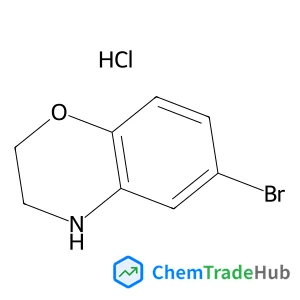
6-Bromo-3,4-dihydro-2H-1,4-benzoxazine hydrochloride (1:1)
CAS Number:
1260803-10-8
Molecular Formula:
C8H9BrClNO

Recommended Suppliers




Disclaimer
This page provides academic journal information for reference and research purposes only. We are not affiliated with any journal publishers and do not handle publication submissions. For publication-related inquiries, please contact the respective journal publishers directly.
If you notice any inaccuracies in the information displayed, please contact us at support@chemtradehub.com. We will promptly review and address your concerns.