











Progress in phase-sensitive sum frequency generation spectroscopy
Literature Information
Publication Date
2021-06-25
DOI
10.1039/D1CP01994E
Impact Factor
3.676
Authors
Shoichi Yamaguchi, Takuhiro Otosu
View Original
Abstract
Sum frequency generation (SFG) spectroscopy is a unique and powerful tool for investigating surfaces and interfaces at the molecular level. Phase-sensitive SFG (PS-SFG) is an upgraded technique that can overcome the inherent drawbacks of conventional SFG. Here we review several methods of PS-SFG developed and reported in 1990–2020. We introduce how and by which group each PS-SFG method was designed and built in terms of interferometer implementation for optical heterodyne detection, with one exception of a recent numerical method that does not rely on interferometry. We also discuss how PS-SFG solved some typical problems for aqueous interfaces that were once left open by conventional SFG. These problems and their solutions are good examples to demonstrate why PS-SFG is essential. In addition, we briefly note a few terminology issues related with PS-SFG to avoid confusion.
Related Literature
Electronic structures and properties of dianionic pentacarbonyls [TM(CO)5]2− (TM = Cr, Mo, W)
Gerui Pei, Cong-Cong Shu, Mengyang Li, Zhong-Ming Sun, Tao Yang
2021-08-03
Paper
DOI: 10.1039/D1CP01592C
Mechanical properties of calcium silicate hydrate under uniaxial and biaxial strain conditions: a molecular dynamics study
Dongyun Liu, Rongjia Wen, Qian Yu, Lennart Elfgren
2021-12-20
Paper
DOI: 10.1039/D1CP04474E
A photoelectron imaging study of the deprotonated GFP chromophore anion and RNA fluorescent tags
Joanne L. Woodhouse, Alice Henley, Ross Lewin, John M. Ward, Helen C. Hailes, Anastasia V. Bochenkova, Helen H. Fielding
2021-08-20
Paper
DOI: 10.1039/D1CP01901E
Adsorption of water in Na-LTA zeolites: an ab initio molecular dynamics investigation
Joharimanitra Randrianandraina, Michael Badawi, Bruno Cardey, Manuel Grivet, Jean-Emmanuel Groetz, Christophe Ramseyer, Freddy Torrealba Anzola, Caroline Chambelland, Didier Ducret
2021-08-06
Paper
DOI: 10.1039/D1CP02624K
Effect of solvent motions on the dynamics of the Diels–Alder reaction
Xiaoyong Zhang, Jeremy N. Harvey
2021-12-13
Paper
DOI: 10.1039/D1CP05272A
Molecular dynamics simulation of extension-induced crystallization of branched bimodal HDPE: Unraveling the effects of short-chain branches
Yiran Cao, Li Zhao, Jieqi Wang, Yunqi Shao, Xuelian He
2021-08-17
Paper
DOI: 10.1039/D1CP01067K
The key role of the central cavity in sodium transport through ligand-gated two-pore channels
Stefan Milenkovic, Igor V. Bodrenko, Armando Carpaneto
2021-08-11
Paper
DOI: 10.1039/D1CP02947A
Universal features in the lifetime distribution of clusters in hydrogen-bonding liquids
Martina Požar, Bernarda Lovrinčević, Aurélien Perera
2021-08-10
Paper
DOI: 10.1039/D1CP02027G
Specific chemical bond relaxation unraveled by analysis of shake-up satellites in the oxygen single site double core hole spectrum of CO2
Anthony Ferté, Francis Penent, Jérôme Palaudoux, Hiroshi Iwayama, Eiji Shigemasa, Yasumasa Hikosaka, Kouichi Soejima, Pascal Lablanquie, Richard Taïeb, Stéphane Carniato
2021-11-22
Paper
DOI: 10.1039/D1CP03947D
Interfacial interactions and structures of protic ionic liquids on a graphite surface: A first-principles study and comparison with aprotic ionic liquids
Yunxiang Lu, Yanmin Xu, Ling Lu, Zhijian Xu, Honglai Liu
2021-08-04
Paper
DOI: 10.1039/D1CP02100A
You might also like
Compound Q&A
What are the main uses of 4-Nitrophenyl phosphate disodium salt hexahydrate (CAS: 333338-18-4)?
4-Nitrophenyl phosphate disodium salt hexahydrate is primarily used as a substra...
333338-18-44-Nitrophenyl phosph...
Compound Q&A
What are the main uses of 2-(Trifluoromethyl)-1,3-oxazole-4-carboxylic Acid (CAS: 1060816-01-4)?
2-(Trifluoromethyl)-1,3-oxazole-4-carboxylic Acid (CAS: 1060816-01-4) is widely ...
1060816-01-42-(Trifluoromethyl)-...
Compound Q&A
How should 2-Fluoro-4-biphenylcarboxylic acid (CAS: 137045-30-8) be stored?
2-Fluoro-4-biphenylcarboxylic acid should be stored in a cool, dry place at room...
137045-30-82-Fluoro-4-biphenylc...
Compound Q&A
What industries use Prednisolone-21-Carboxylic Acid (CAS: 61549-70-0)?
Prednisolone-21-Carboxylic Acid is primarily used in the pharmaceutical industry...
61549-70-0Prednisolone-21-Carb...
Compound Q&A
How should 4-(Hydrazinomethyl)-1,2,3-benzenetriol (CAS: 3614-72-0) be stored?
4-(Hydrazinomethyl)-1,2,3-benzenetriol (CAS: 3614-72-0) should be stored in a co...
3614-72-04-(Hydrazinomethyl)-...
Compound Q&A
What industries use 4-Amino-1-methyl-1H-pyrazole-5-carboxylic acid hydrochloride (CAS: 92534-70-8)?
4-Amino-1-methyl-1H-pyrazole-5-carboxylic acid hydrochloride (CAS: 92534-70-8) i...
92534-70-84-Amino-1-methyl-1H-...
Compound Q&A
What regulatory guidelines apply to dehydropachymic acid (CAS: 77012-31-8)?
Dehydropachymic acid (CAS: 77012-31-8) is regulated by various agencies. It fall...
77012-31-8Dehydropachymic acid
Compound Q&A
What is the market or research trend for 6-[(2,2-Dimethylpropanoyl)amino]nicotinic acid (CAS: 898561-66-5)?
The market and research trends for 6-[(2,2-Dimethylpropanoyl)amino]nicotinic aci...
898561-66-56-[(2,2-Dimethylprop...
Compound Q&A
How should 1,10-Phenanthroline-2,9-dicarbaldehyde (CAS: 57709-62-3) be stored?
1,10-Phenanthroline-2,9-dicarbaldehyde should be stored in a cool, dry place awa...
57709-62-31,10-Phenanthroline-...
Compound Q&A
How is 5-Carbamoyl-11-oxo-10,11-dihydro-5H-dibenzo[b,f]azepin-10-yl acetate (CAS: 113952-21-9) typically synthesized?
5-Carbamoyl-11-oxo-10,11-dihydro-5H-dibenzo[b,f]azepin-10-yl acetate can be synt...
113952-21-95-Carbamoyl-11-oxo-1...
Source Journal
Physical Chemistry Chemical Physics

CiteScore:
5.5
Self-citation Rate:
10.3%
Articles per Year:
3036
Physical Chemistry Chemical Physics (PCCP) is an international journal co-owned by 19 physical chemistry and physics societies from around the world. This journal publishes original, cutting-edge research in physical chemistry, chemical physics and biophysical chemistry. To be suitable for publication in PCCP, articles must include significant innovation and/or insight into physical chemistry; this is the most important criterion that reviewers and Editors will judge against when evaluating submissions. The journal has a broad scope and welcomes contributions spanning experiment, theory, computation and data science. Topical coverage includes spectroscopy, dynamics, kinetics, statistical mechanics, thermodynamics, electrochemistry, catalysis, surface science, quantum mechanics, quantum computing and machine learning. Interdisciplinary research areas such as polymers and soft matter, materials, nanoscience, energy, surfaces/interfaces, and biophysical chemistry are welcomed if they demonstrate significant innovation and/or insight into physical chemistry. Joined experimental/theoretical studies are particularly appreciated when complementary and based on up-to-date approaches.
Recommended Compounds
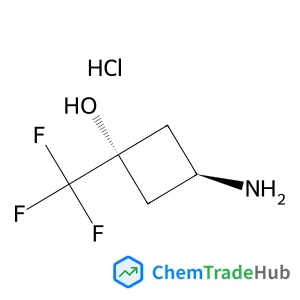
cis-3-Amino-1-(trifluoromethyl)cyclobutanol hydrochloride (1:1)
CAS Number:
1408075-16-0
Molecular Formula:
C5H9ClF3NO
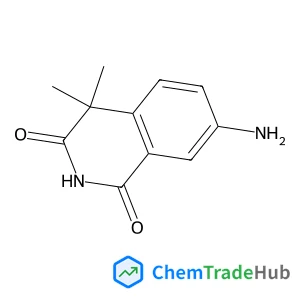
1,3(2H,4H)-Isoquinolinedione, 7-amino-4,4-dimethyl-
CAS Number:
14576-22-8
Molecular Formula:
C11H12N2O2
Recommended Suppliers




Disclaimer
This page provides academic journal information for reference and research purposes only. We are not affiliated with any journal publishers and do not handle publication submissions. For publication-related inquiries, please contact the respective journal publishers directly.
If you notice any inaccuracies in the information displayed, please contact us at support@chemtradehub.com. We will promptly review and address your concerns.