












Steered molecular dynamics and stability analysis on PAH dimerisation and condensation on fullerene and soot surfaces
Literature Information
Publication Date
2021-08-11
DOI
10.1039/D1CP01019K
Impact Factor
3.676
Authors
Wenjun Kong, Jun Xia
View Original
Abstract
The mechanism of how a soot nucleus is impacted by polycyclic aromatic hydrocarbons (PAHs) and then grows through PAH condensation remains unclear. Using steered molecular dynamics (SMD), the non-bonding interaction between PAHs and soot was quantitatively studied using the free energy distribution during the dimerisation and condensation. The results showed that only two dimers (A7–A10 and 2 A10) remained stable at 1000 K. The simulations showed that PAH condensation on a fullerene should not be ignored in soot mass growth. For fullerenes with a diameter not less than 1.8 nm (C540), even A4 condenses at temperatures of 1500 K, and A10 condenses stably on the surface of fullerenes even at 2000 K. The effects of multilayers and hydrogenated fullerenes on the free energy of PAH condensation are different. The stability of PAH dimers and PAH condensation pairs was discussed through free energy and chemical equilibrium. The results show that larger dimers are more stable than small ones at flame temperatures. Condensation is far more important than nucleation in mass growth at flame temperatures. Furthermore, the larger the PAH is, the higher the transformation ratio of the PAH in condensation on soot and thus the more stable the condensation product is. Finally, both the stability analysis of an upper temperature limit for condensation and simulation results of ReaxFF-MD cross-confirm that pyrene stably condensates on a simplified nascent soot (C540) and a simulated soot (C658H319O9), respectively, at 1500 K, but not at higher temperatures over 1800 K.
Related Literature
Spin-resolved NOCV analysis of the zeolite framework influence on the interaction of NO with Cu(i/ii) sites in zeolites
Paweł Kozyra, Witold Piskorz
2015-04-20
Paper
DOI: 10.1039/C4CP05932H
Study of chemical reactivity in relation to experimental parameters of efficiency in coumarin derivatives for dye sensitized solar cells using DFT
Jesús Baldenebro-López, Daniel Glossman-Mitnik
2015-04-27
Paper
DOI: 10.1039/C5CP01387A
Predicting accurate absolute binding energies in aqueous solution: thermodynamic considerations for electronic structure methods
2015-04-09
Perspective
DOI: 10.1039/C5CP00628G
Structural change of NaO1/2–WO3–NbO5/2–LaO3/2–PO5/2 glass induced by electrochemical substitution of sodium ions with protons
Tomohiro Ishiyama, Takuya Yamaguchi, Junji Nishii, Toshiharu Yamashita, Hiroshi Kawazoe, Naoaki Kuwata, Junichi Kawamura, Takahisa Omata
2015-04-27
Paper
DOI: 10.1039/C4CP05999A
Theoretical study of the oxidation mechanisms of naphthalene initiated by hydroxyl radicals: the O2 addition reaction pathways
A. Shiroudi, M. S. Deleuze, S. Canneaux
2015-04-27
Paper
DOI: 10.1039/C5CP01934F
Alcohol-soluble bis(tpy)thiophenes: new building units for constitutional dynamic conjugated polyelectrolytes
Pavla Štenclová-Bláhová, Jan Svoboda, Ivana Šloufová, Jiří Vohlídal
2015-04-20
Paper
DOI: 10.1039/C5CP01000D
Theoretical study of exciton dissociation through hot states at donor–acceptor interface in organic photocell
2015-04-16
Paper
DOI: 10.1039/C5CP00740B
The preferred upconversion pathway for the red emission of lanthanide-doped upconverting nanoparticles, NaYF4:Yb3+,Er3+
Taeyoung Jung, Hong Li Jo, Sang Hwan Nam, Youngho Cho, Jongwoo Kim, Hyung Min Kim, Hohjai Lee, Kang Taek Lee
2015-04-20
Communication
DOI: 10.1039/C5CP01634G
Strong field laser control of photochemistry
Ignacio R. Solá, Jesús González-Vázquez, Rebeca de Nalda, Luis Bañares
2015-03-16
Perspective
DOI: 10.1039/C5CP00627A
Synergy and pinning effects in a monatomic liquid film in confined conditions
Weikang Wu, Leining Zhang, Hongru Ren, Hui Li
2015-04-23
Paper
DOI: 10.1039/C5CP00354G
You might also like
Compound Q&A
What are the main uses of 4-Nitrophenyl phosphate disodium salt hexahydrate (CAS: 333338-18-4)?
4-Nitrophenyl phosphate disodium salt hexahydrate is primarily used as a substra...
333338-18-44-Nitrophenyl phosph...
Compound Q&A
What are the main uses of 2-(Trifluoromethyl)-1,3-oxazole-4-carboxylic Acid (CAS: 1060816-01-4)?
2-(Trifluoromethyl)-1,3-oxazole-4-carboxylic Acid (CAS: 1060816-01-4) is widely ...
1060816-01-42-(Trifluoromethyl)-...
Compound Q&A
How should 2-Fluoro-4-biphenylcarboxylic acid (CAS: 137045-30-8) be stored?
2-Fluoro-4-biphenylcarboxylic acid should be stored in a cool, dry place at room...
137045-30-82-Fluoro-4-biphenylc...
Compound Q&A
What industries use Prednisolone-21-Carboxylic Acid (CAS: 61549-70-0)?
Prednisolone-21-Carboxylic Acid is primarily used in the pharmaceutical industry...
61549-70-0Prednisolone-21-Carb...
Compound Q&A
How should 4-(Hydrazinomethyl)-1,2,3-benzenetriol (CAS: 3614-72-0) be stored?
4-(Hydrazinomethyl)-1,2,3-benzenetriol (CAS: 3614-72-0) should be stored in a co...
3614-72-04-(Hydrazinomethyl)-...
Compound Q&A
What industries use 4-Amino-1-methyl-1H-pyrazole-5-carboxylic acid hydrochloride (CAS: 92534-70-8)?
4-Amino-1-methyl-1H-pyrazole-5-carboxylic acid hydrochloride (CAS: 92534-70-8) i...
92534-70-84-Amino-1-methyl-1H-...
Compound Q&A
What regulatory guidelines apply to dehydropachymic acid (CAS: 77012-31-8)?
Dehydropachymic acid (CAS: 77012-31-8) is regulated by various agencies. It fall...
77012-31-8Dehydropachymic acid
Compound Q&A
What is the market or research trend for 6-[(2,2-Dimethylpropanoyl)amino]nicotinic acid (CAS: 898561-66-5)?
The market and research trends for 6-[(2,2-Dimethylpropanoyl)amino]nicotinic aci...
898561-66-56-[(2,2-Dimethylprop...
Compound Q&A
How should 1,10-Phenanthroline-2,9-dicarbaldehyde (CAS: 57709-62-3) be stored?
1,10-Phenanthroline-2,9-dicarbaldehyde should be stored in a cool, dry place awa...
57709-62-31,10-Phenanthroline-...
Compound Q&A
How is 5-Carbamoyl-11-oxo-10,11-dihydro-5H-dibenzo[b,f]azepin-10-yl acetate (CAS: 113952-21-9) typically synthesized?
5-Carbamoyl-11-oxo-10,11-dihydro-5H-dibenzo[b,f]azepin-10-yl acetate can be synt...
113952-21-95-Carbamoyl-11-oxo-1...
Source Journal
Physical Chemistry Chemical Physics

CiteScore:
5.5
Self-citation Rate:
10.3%
Articles per Year:
3036
Physical Chemistry Chemical Physics (PCCP) is an international journal co-owned by 19 physical chemistry and physics societies from around the world. This journal publishes original, cutting-edge research in physical chemistry, chemical physics and biophysical chemistry. To be suitable for publication in PCCP, articles must include significant innovation and/or insight into physical chemistry; this is the most important criterion that reviewers and Editors will judge against when evaluating submissions. The journal has a broad scope and welcomes contributions spanning experiment, theory, computation and data science. Topical coverage includes spectroscopy, dynamics, kinetics, statistical mechanics, thermodynamics, electrochemistry, catalysis, surface science, quantum mechanics, quantum computing and machine learning. Interdisciplinary research areas such as polymers and soft matter, materials, nanoscience, energy, surfaces/interfaces, and biophysical chemistry are welcomed if they demonstrate significant innovation and/or insight into physical chemistry. Joined experimental/theoretical studies are particularly appreciated when complementary and based on up-to-date approaches.
Recommended Compounds
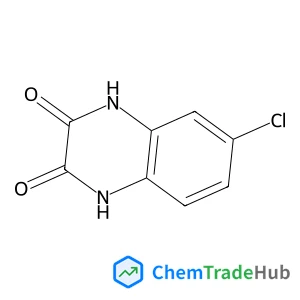
6-CHLORO-2,3-DIOXO-1,2,3,4-TETRAHYDROQUINOXALINE, 97
CAS Number:
169-14-2
Molecular Formula:
C8H5ClN2O2
Recommended Suppliers





Disclaimer
This page provides academic journal information for reference and research purposes only. We are not affiliated with any journal publishers and do not handle publication submissions. For publication-related inquiries, please contact the respective journal publishers directly.
If you notice any inaccuracies in the information displayed, please contact us at support@chemtradehub.com. We will promptly review and address your concerns.