












First-principles prediction of infrared phonon and dielectric function in biaxial hyperbolic van der Waals crystal α-MoO3
Literature Information
Publication Date
2021-08-11
DOI
10.1039/D1CP00682G
Impact Factor
3.676
Authors
Zhen Tong, Traian Dumitrică
View Original
Abstract
Layered biaxial hyperbolic molybdenum trioxide (α-MoO3) with weak van der Waals (vdW) interlayer bonding recently received extensive attention due to its anisotropic dielectric response to infrared (IR) radiation, which couples to the lattice vibrations and allows for manipulating the radiative energy transport. However, the understanding of IR-active phonon modes and dielectric function of it has not yet been fully achieved. Here, by utilizing mode-level first-principles analysis based on density functional theory (DFT), the phonon modes contributing to the IR dielectric response of α-MoO3 are fully determined. The anisotropic IR-active modes are identified from lattice vibration analysis, allowing for a clear evaluation of the IR absorption contribution from the weak or strong IR phonon modes. By further employing anharmonic-lattice dynamics calculations, the damping of the corresponding IR modes is directly obtained. This approach enables predictions of IR optical properties without any fitting or assumed parameters. Our predictions bridge the scientific gap of comprehensively understanding the unreported IR-active phonon modes of α-MoO3 and overall agree well with available experimental data, placing our DFT-based method at a privileged stage for accurately predicting the IR optical properties of α-MoO3. These comprehensive understandings of the IR phonons and dielectric properties of α-MoO3 pave the way for nanophotonic devices with tunable functionalities and enable design of α-MoO3 for advanced optical devices.
Related Literature
Factors controlling the molecular modification of one-dimensional zeolites
William A. Elliott, R. John Clark, James G. Sutjianto, Jeremy C. Palmer, Jeffrey D. Rimer
2021-08-06
Paper
DOI: 10.1039/D1CP02619D
Covalent photofunctionalization and electronic repair of 2H-MoS2via nitrogen incorporation
Helena Osthues, Christian Schwermann, Johann A. Preuß, Thorsten Deilmann, Rudolf Bratschitsch, Michael Rohlfing, Nikos L. Doltsinis
2021-08-13
Paper
DOI: 10.1039/D1CP02313F
DPD simulations on mixed polymeric DOX-loaded micelles assembled from PCL-SS-PPEGMA/PDEA–PPEGMA and their dual pH/reduction-responsive release
Zexiong Yang, Haiqian Zhao, Delin Wang, Li Yin, Kenxiang Cai, Zehua Lin, Tao Chen, Chufen Yang
2021-08-12
Paper
DOI: 10.1039/D1CP02750F
Subtle structure matters: boosting surface-directed photoelectron transfer via the introduction of specific monovalent oxygen vacancies in TiO2
Fei Li, Dong Wang, Xue-Qing Gong
2021-08-18
Paper
DOI: 10.1039/D1CP02787E
Mechanistic insight into the roles of anions and cations in the degradation of poly(ethylene terephthalate) catalyzed by ionic liquids
Lei Zhou, Xingmei Lu, Yao Li, Xiaoqian Yao, Shenyu Cheng, Gangwei Chen, Chengsheng Ge
2021-08-16
Paper
DOI: 10.1039/D1CP02038B
Kinetics of photon upconversion by triplet–triplet annihilation: a comprehensive tutorial
Yoichi Murakami, Kenji Kamada
2021-08-02
Perspective
DOI: 10.1039/D1CP02654B
Exploration on the drug solubility enhancement in aqueous medium with the help of endo-functionalized molecular tubes: a computational approach
Rabindranath Paul, Sandip Paul
2021-08-09
Paper
DOI: 10.1039/D1CP01187A
UVPD spectroscopy of differential mobility-selected prototropic isomers of protonated adenine
Mircea Guna, Bradley B. Schneider, J. C. Yves Le Blanc, Marcel Nooijen
2021-08-30
Paper
DOI: 10.1039/D1CP02688G
Ultrafast vibrational wave packet dynamics of the aqueous tyrosyl radical anion induced by photodetachment
Muhammad Shafiq Bin Mohd Yusof, Yong Liang Lim, Zhi-Heng Loh
2021-08-16
Paper
DOI: 10.1039/D1CP02975D
Ultrafast energy transfer between lipid-linked chromophores and plant light-harvesting complex II
Minjung Son, Muath Nairat, Tiejun Wei, Christopher D. P. Duffy, Gabriela S. Schlau-Cohen
2021-08-26
Paper
DOI: 10.1039/D1CP01628H
You might also like
Compound Q&A
What are the main uses of 4-Nitrophenyl phosphate disodium salt hexahydrate (CAS: 333338-18-4)?
4-Nitrophenyl phosphate disodium salt hexahydrate is primarily used as a substra...
333338-18-44-Nitrophenyl phosph...
Compound Q&A
What are the main uses of 2-(Trifluoromethyl)-1,3-oxazole-4-carboxylic Acid (CAS: 1060816-01-4)?
2-(Trifluoromethyl)-1,3-oxazole-4-carboxylic Acid (CAS: 1060816-01-4) is widely ...
1060816-01-42-(Trifluoromethyl)-...
Compound Q&A
How should 2-Fluoro-4-biphenylcarboxylic acid (CAS: 137045-30-8) be stored?
2-Fluoro-4-biphenylcarboxylic acid should be stored in a cool, dry place at room...
137045-30-82-Fluoro-4-biphenylc...
Compound Q&A
What industries use Prednisolone-21-Carboxylic Acid (CAS: 61549-70-0)?
Prednisolone-21-Carboxylic Acid is primarily used in the pharmaceutical industry...
61549-70-0Prednisolone-21-Carb...
Compound Q&A
How should 4-(Hydrazinomethyl)-1,2,3-benzenetriol (CAS: 3614-72-0) be stored?
4-(Hydrazinomethyl)-1,2,3-benzenetriol (CAS: 3614-72-0) should be stored in a co...
3614-72-04-(Hydrazinomethyl)-...
Compound Q&A
What industries use 4-Amino-1-methyl-1H-pyrazole-5-carboxylic acid hydrochloride (CAS: 92534-70-8)?
4-Amino-1-methyl-1H-pyrazole-5-carboxylic acid hydrochloride (CAS: 92534-70-8) i...
92534-70-84-Amino-1-methyl-1H-...
Compound Q&A
What regulatory guidelines apply to dehydropachymic acid (CAS: 77012-31-8)?
Dehydropachymic acid (CAS: 77012-31-8) is regulated by various agencies. It fall...
77012-31-8Dehydropachymic acid
Compound Q&A
What is the market or research trend for 6-[(2,2-Dimethylpropanoyl)amino]nicotinic acid (CAS: 898561-66-5)?
The market and research trends for 6-[(2,2-Dimethylpropanoyl)amino]nicotinic aci...
898561-66-56-[(2,2-Dimethylprop...
Compound Q&A
How should 1,10-Phenanthroline-2,9-dicarbaldehyde (CAS: 57709-62-3) be stored?
1,10-Phenanthroline-2,9-dicarbaldehyde should be stored in a cool, dry place awa...
57709-62-31,10-Phenanthroline-...
Compound Q&A
How is 5-Carbamoyl-11-oxo-10,11-dihydro-5H-dibenzo[b,f]azepin-10-yl acetate (CAS: 113952-21-9) typically synthesized?
5-Carbamoyl-11-oxo-10,11-dihydro-5H-dibenzo[b,f]azepin-10-yl acetate can be synt...
113952-21-95-Carbamoyl-11-oxo-1...
Source Journal
Physical Chemistry Chemical Physics

CiteScore:
5.5
Self-citation Rate:
10.3%
Articles per Year:
3036
Physical Chemistry Chemical Physics (PCCP) is an international journal co-owned by 19 physical chemistry and physics societies from around the world. This journal publishes original, cutting-edge research in physical chemistry, chemical physics and biophysical chemistry. To be suitable for publication in PCCP, articles must include significant innovation and/or insight into physical chemistry; this is the most important criterion that reviewers and Editors will judge against when evaluating submissions. The journal has a broad scope and welcomes contributions spanning experiment, theory, computation and data science. Topical coverage includes spectroscopy, dynamics, kinetics, statistical mechanics, thermodynamics, electrochemistry, catalysis, surface science, quantum mechanics, quantum computing and machine learning. Interdisciplinary research areas such as polymers and soft matter, materials, nanoscience, energy, surfaces/interfaces, and biophysical chemistry are welcomed if they demonstrate significant innovation and/or insight into physical chemistry. Joined experimental/theoretical studies are particularly appreciated when complementary and based on up-to-date approaches.
Recommended Compounds
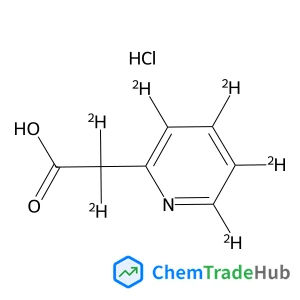
2,2-dideuterio-2-(3,4,5,6-tetradeuterio-2-pyridyl)acetic acid;hydrochloride
CAS Number:
1329799-67-8
Molecular Formula:
C7H2ClD6NO2

![(2E)-3-(3-Chlorophenyl)-N-{2-[4-(methylsulfonyl)-1-piperazinyl]-2-oxoethyl}acrylamide structure](https://static.chemtradehub.com/structs/250/2505001-54-5-c1e9.webp "(2E)-3-(3-Chlorophenyl)-N-{2-[4-(methylsulfonyl)-1-piperazinyl]-2-oxoethyl}acrylamide structure")
(2E)-3-(3-Chlorophenyl)-N-{2-[4-(methylsulfonyl)-1-piperazinyl]-2-oxoethyl}acrylamide
CAS Number:
2505001-54-5
Molecular Formula:
C16H20ClN3O4S
Recommended Suppliers







Disclaimer
This page provides academic journal information for reference and research purposes only. We are not affiliated with any journal publishers and do not handle publication submissions. For publication-related inquiries, please contact the respective journal publishers directly.
If you notice any inaccuracies in the information displayed, please contact us at support@chemtradehub.com. We will promptly review and address your concerns.