











How well do self-interaction corrections repair the overestimation of static polarizabilities in density functional calculations?
Literature Information
Publication Date
2021-08-10
DOI
10.1039/D0CP06512A
Impact Factor
3.676
Authors
Sharmin Akter, Jorge A. Vargas, Kamal Sharkas, Juan E. Peralta, Koblar A. Jackson
View Original
Abstract
We examine the effect of removing self-interaction error (SIE) on the calculation of molecular polarizabilities in the local spin density (LSDA) and generalized gradient approximations (GGA). To this end, we utilize a database of 132 molecules taken from a recent benchmark study [Hait and Head-Gordon, Phys. Chem. Chem. Phys., 2018, 20, 19800] to assess the influence of SIE on polarizabilities by comparing results with accurate reference data. Our results confirm that the general overestimation of molecular polarizabilities by these density functional approximations can be attributed to SIE. However, removing SIE using the Perdew–Zunger self-interaction-correction (PZ-SIC) method, implemented using the Fermi–Löwdin Orbital SIC approach, leads to an underestimation of molecular polarizabilities, showing that PZ-SIC overcorrects when combined with LSDA or GGA. Application of a recently proposed locally scaled SIC [Zope, et al., J. Chem. Phys., 2019, 151, 214108] is found to provide more accurate polarizabilities. We attribute this to the ability of the local scaling scheme to selectively correct for SIE in the regions of space where the correction is needed most.
Related Literature
Induced VCD and conformational chirality in host–guest complexes of a chiral ammonium salt with crown ethers
Luisa Weirich, Christian Merten
2021-06-01
Paper
DOI: 10.1039/D1CP01846A
Oxidation of HOSO˙ by Cl˙: a new source of SO2 in the atmosphere?
Amit Kumar, Subhasish Mallick, Pradeep Kumar
2021-08-05
Paper
DOI: 10.1039/D1CP01048D
One order of magnitude increase of triplet state lifetime observed in deprotonated form selenium substituted uracil
Peipei Jin, Xueli Wang, Haifeng Pan
2021-12-01
Paper
DOI: 10.1039/D1CP04811B
Mechanistic insight into the roles of anions and cations in the degradation of poly(ethylene terephthalate) catalyzed by ionic liquids
Lei Zhou, Xingmei Lu, Yao Li, Xiaoqian Yao, Shenyu Cheng, Gangwei Chen, Chengsheng Ge
2021-08-16
Paper
DOI: 10.1039/D1CP02038B
Isotopic separation of helium through graphyne membranes: a ring polymer molecular dynamics study
Marta I. Hernández, José Campos-Martínez, Yury V. Suleimanov
2021-08-11
Paper
DOI: 10.1039/D1CP02121D
Kinetics and energetic analysis of the slow dispersive electron transfer from nano-TiO2 to O2 by in situ diffusion reflectance and Laplace transform
Zhizhou Wu, Liuyang Li, Xuedong Zhou, Xiujian Zhao, Baoshun Liu
2021-09-01
Paper
DOI: 10.1039/D1CP03135J
Factors controlling the molecular modification of one-dimensional zeolites
William A. Elliott, R. John Clark, James G. Sutjianto, Jeremy C. Palmer, Jeffrey D. Rimer
2021-08-06
Paper
DOI: 10.1039/D1CP02619D
Electronic structures and properties of dianionic pentacarbonyls [TM(CO)5]2− (TM = Cr, Mo, W)
Gerui Pei, Cong-Cong Shu, Mengyang Li, Zhong-Ming Sun, Tao Yang
2021-08-03
Paper
DOI: 10.1039/D1CP01592C
The extrinsic nature of double broadband photoluminescence from the BaTiO3 perovskite: generation of white light emitters
J. L. Clabel H., G. Nicolodelli, G. Lozano C., V. A. G. Rivera, S. O. Ferreira, Alexandre H. Pinto, M. Siu Li, E. Marega, Jr.
2021-07-26
Paper
DOI: 10.1039/D1CP01765A
You might also like
Compound Q&A
What are the main uses of 4-Nitrophenyl phosphate disodium salt hexahydrate (CAS: 333338-18-4)?
4-Nitrophenyl phosphate disodium salt hexahydrate is primarily used as a substra...
333338-18-44-Nitrophenyl phosph...
Compound Q&A
What are the main uses of 2-(Trifluoromethyl)-1,3-oxazole-4-carboxylic Acid (CAS: 1060816-01-4)?
2-(Trifluoromethyl)-1,3-oxazole-4-carboxylic Acid (CAS: 1060816-01-4) is widely ...
1060816-01-42-(Trifluoromethyl)-...
Compound Q&A
How should 2-Fluoro-4-biphenylcarboxylic acid (CAS: 137045-30-8) be stored?
2-Fluoro-4-biphenylcarboxylic acid should be stored in a cool, dry place at room...
137045-30-82-Fluoro-4-biphenylc...
Compound Q&A
What industries use Prednisolone-21-Carboxylic Acid (CAS: 61549-70-0)?
Prednisolone-21-Carboxylic Acid is primarily used in the pharmaceutical industry...
61549-70-0Prednisolone-21-Carb...
Compound Q&A
How should 4-(Hydrazinomethyl)-1,2,3-benzenetriol (CAS: 3614-72-0) be stored?
4-(Hydrazinomethyl)-1,2,3-benzenetriol (CAS: 3614-72-0) should be stored in a co...
3614-72-04-(Hydrazinomethyl)-...
Compound Q&A
What industries use 4-Amino-1-methyl-1H-pyrazole-5-carboxylic acid hydrochloride (CAS: 92534-70-8)?
4-Amino-1-methyl-1H-pyrazole-5-carboxylic acid hydrochloride (CAS: 92534-70-8) i...
92534-70-84-Amino-1-methyl-1H-...
Compound Q&A
What regulatory guidelines apply to dehydropachymic acid (CAS: 77012-31-8)?
Dehydropachymic acid (CAS: 77012-31-8) is regulated by various agencies. It fall...
77012-31-8Dehydropachymic acid
Compound Q&A
What is the market or research trend for 6-[(2,2-Dimethylpropanoyl)amino]nicotinic acid (CAS: 898561-66-5)?
The market and research trends for 6-[(2,2-Dimethylpropanoyl)amino]nicotinic aci...
898561-66-56-[(2,2-Dimethylprop...
Compound Q&A
How should 1,10-Phenanthroline-2,9-dicarbaldehyde (CAS: 57709-62-3) be stored?
1,10-Phenanthroline-2,9-dicarbaldehyde should be stored in a cool, dry place awa...
57709-62-31,10-Phenanthroline-...
Compound Q&A
How is 5-Carbamoyl-11-oxo-10,11-dihydro-5H-dibenzo[b,f]azepin-10-yl acetate (CAS: 113952-21-9) typically synthesized?
5-Carbamoyl-11-oxo-10,11-dihydro-5H-dibenzo[b,f]azepin-10-yl acetate can be synt...
113952-21-95-Carbamoyl-11-oxo-1...
Source Journal
Physical Chemistry Chemical Physics

CiteScore:
5.5
Self-citation Rate:
10.3%
Articles per Year:
3036
Physical Chemistry Chemical Physics (PCCP) is an international journal co-owned by 19 physical chemistry and physics societies from around the world. This journal publishes original, cutting-edge research in physical chemistry, chemical physics and biophysical chemistry. To be suitable for publication in PCCP, articles must include significant innovation and/or insight into physical chemistry; this is the most important criterion that reviewers and Editors will judge against when evaluating submissions. The journal has a broad scope and welcomes contributions spanning experiment, theory, computation and data science. Topical coverage includes spectroscopy, dynamics, kinetics, statistical mechanics, thermodynamics, electrochemistry, catalysis, surface science, quantum mechanics, quantum computing and machine learning. Interdisciplinary research areas such as polymers and soft matter, materials, nanoscience, energy, surfaces/interfaces, and biophysical chemistry are welcomed if they demonstrate significant innovation and/or insight into physical chemistry. Joined experimental/theoretical studies are particularly appreciated when complementary and based on up-to-date approaches.
Recommended Compounds
![[(1S,2S,3R,4S,7R,9S,10S,12R,15S)-4,12-Diacetyloxy-15-[(2R,3S)-3-benzamido-3-phenyl-2-(2,2,2-trichloroethoxycarbonyloxy)propanoyl]oxy-1,9-dihydroxy-10,14,17,17-tetramethyl-11-oxo-6-oxatetracyclo[11.3.1.03,10.04,7]heptadec-13-en-2-yl] benzoate structure](https://static.chemtradehub.com/structs/100/100431-55-8-7104.webp "[(1S,2S,3R,4S,7R,9S,10S,12R,15S)-4,12-Diacetyloxy-15-[(2R,3S)-3-benzamido-3-phenyl-2-(2,2,2-trichloroethoxycarbonyloxy)propanoyl]oxy-1,9-dihydroxy-10,14,17,17-tetramethyl-11-oxo-6-oxatetracyclo[11.3.1.03,10.04,7]heptadec-13-en-2-yl] benzoate structure")
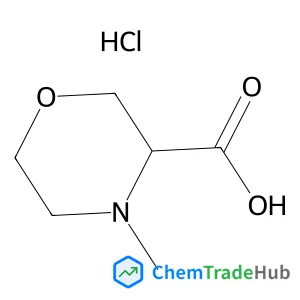
4-Methyl-3-morpholinecarboxylic acid hydrochloride (1:1)
CAS Number:
1240518-90-4
Molecular Formula:
C6H12ClNO3
Recommended Suppliers






Disclaimer
This page provides academic journal information for reference and research purposes only. We are not affiliated with any journal publishers and do not handle publication submissions. For publication-related inquiries, please contact the respective journal publishers directly.
If you notice any inaccuracies in the information displayed, please contact us at support@chemtradehub.com. We will promptly review and address your concerns.