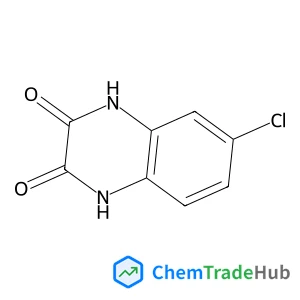
6-CHLORO-2,3-DIOXO-1,2,3,4-TETRAHYDROQUINOXALINE, 97
CAS Number:
169-14-2
Molecular Formula:
C8H5ClN2O2
Yanrong Jiang, Qinqin Yuan, Jonas Warneke, Zhubin Hu, Yan Yang, Xue-Bin Wang
We report a joint negative ion photoelectron spectroscopy (NIPES) and computational study on the electronic structures and noncovalent interactions of a series of cyclodextrin-closo-dodecaborate dianion complexes, χ-CD·B12X122− (χ = α, β, γ; X = H, F). The measured vertical/adiabatic detachment energies (VDEs/ADEs) are 1.15/0.93, 3.55/3.20, 3.90/3.60, and 3.85/3.60 eV for B12H122− and its α-, β-, γ-CD complexes, respectively; while the corresponding values are 1.90/1.70, 4.00/3.60, 4.33/3.95, and 4.30/3.85 eV for the X = F case. These results show that the inclusion of B12X122− into the CD cavities greatly increases the electronic stability of the dianions. The effect of electronic stabilization for β-CD is roughly the same as for γ-CD, both being considerably stronger than that for α-CD. Density functional theory (DFT) based geometry optimization reveals that B12X122− are inserted into CDs increasingly deeper from α-CD to γ-CD. The calculated VDEs and ADEs agree with the experiments well, particularly, reproducing the electron binding energy (EBE) trends. The molecular orbital analyses indicate that the most loosely bound photodetached electrons originate from the guest B12X122− moieties. In addition to a shift of all signals to a larger EBE, significant changes in the signal patterns are observed. At low EBE, this is due to the splitting of highly degenerate B12X122− orbitals, while at high EBE, photodetachment from CD oxygens contributes to the new bands. The guest B12X122− and host CD noncovalent, size-specific interaction based on the independent gradient model (IGM) and energy decomposition analysis (EDA) is dominated by electrostatic interactions. The analysis further unravels unambiguously the existence of dihydrogen bonding and how it affects the total energy that stabilizes the host–guest complexes of CDs·B12H122− compared to the general hydrogen bonding interaction in CDs·B12F122−. This work clearly exhibits strong influences on the electronic structures of dodecaborates upon clustering with CDs, with both size (α-, β-, and γ-) and molecular (X = H or F) specificities, thus providing critical molecular-level information on the cyclodextrin–closo-dodecaborate interactions of interest to medical applications, e.g., boron neutron capture therapy.
DOI: 10.1039/A606293H
Henan Chen, Baiyao Liang, Dingyi Zhang, Guanwu Lian, Chenxin Yang, Yun Zhang, Wei Zhao
DOI: 10.1039/D1GC04777A
Nohra Bassam, Candy Laure, Blanco Jean-François, Raoul Yann, Mouloungui Zephirin
DOI: 10.1039/C3GC37054B
Rolando Luna-García, Berenice M. Damián-Murillo, Victor Barba, Herbert Höpfl, Hiram I. Beltrán, Luis S. Zamudio-Rivera
DOI: 10.1039/B509787H
Heejeong Kim, Jingjing Han, Qichao Yao, Juyoung Yoon
DOI: 10.1039/D2CS90019J
Hirokazu Kobayashi, Atsushi Fukuoka
DOI: 10.1039/C3GC00060E
Jinliang Song, Honglei Fan, Jun Ma, Buxing Han
DOI: 10.1039/C3GC41141A
Masahiko Mori, Masanari Kimura, Yushi Takahashi, Yoshinao Tamaru
DOI: 10.1039/B610164J
Tianyi Zheng, Janna L. Berman, Forrest E. Michael
DOI: 10.1039/D2SC02648A
Md. Anwarul Karim, Yong-Rae Cho, Jin Su Park, Sung Chul Kim, Hee Joo Kim, Jae Wook Lee, Yeong-Soon Gal, Sung-Ho Jin
DOI: 10.1039/B800032H
4-Nitrophenyl phosphate disodium salt hexahydrate is primarily used as a substra...
2-(Trifluoromethyl)-1,3-oxazole-4-carboxylic Acid (CAS: 1060816-01-4) is widely ...
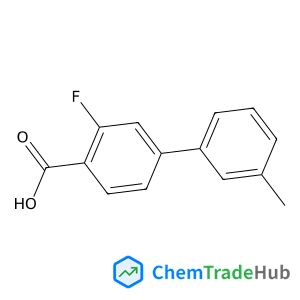
2-Fluoro-4-biphenylcarboxylic acid should be stored in a cool, dry place at room...
Prednisolone-21-Carboxylic Acid is primarily used in the pharmaceutical industry...
4-(Hydrazinomethyl)-1,2,3-benzenetriol (CAS: 3614-72-0) should be stored in a co...
4-Amino-1-methyl-1H-pyrazole-5-carboxylic acid hydrochloride (CAS: 92534-70-8) i...
Dehydropachymic acid (CAS: 77012-31-8) is regulated by various agencies. It fall...
The market and research trends for 6-[(2,2-Dimethylpropanoyl)amino]nicotinic aci...
1,10-Phenanthroline-2,9-dicarbaldehyde should be stored in a cool, dry place awa...
5-Carbamoyl-11-oxo-10,11-dihydro-5H-dibenzo[b,f]azepin-10-yl acetate can be synt...

Physical Chemistry Chemical Physics (PCCP) is an international journal co-owned by 19 physical chemistry and physics societies from around the world. This journal publishes original, cutting-edge research in physical chemistry, chemical physics and biophysical chemistry. To be suitable for publication in PCCP, articles must include significant innovation and/or insight into physical chemistry; this is the most important criterion that reviewers and Editors will judge against when evaluating submissions. The journal has a broad scope and welcomes contributions spanning experiment, theory, computation and data science. Topical coverage includes spectroscopy, dynamics, kinetics, statistical mechanics, thermodynamics, electrochemistry, catalysis, surface science, quantum mechanics, quantum computing and machine learning. Interdisciplinary research areas such as polymers and soft matter, materials, nanoscience, energy, surfaces/interfaces, and biophysical chemistry are welcomed if they demonstrate significant innovation and/or insight into physical chemistry. Joined experimental/theoretical studies are particularly appreciated when complementary and based on up-to-date approaches.