phosphoryl}methyl 4-methylbenzenesulfonate structure](https://static.chemtradehub.com/structs/864/864068-45-1-ba7c.webp "{[3-(Hexadecyloxy)propoxy](hydroxy)phosphoryl}methyl 4-methylbenzenesulfonate structure")
{[3-(Hexadecyloxy)propoxy](hydroxy)phosphoryl}methyl 4-methylbenzenesulfonate
CAS Number:
864068-45-1
Molecular Formula:
C27H49O7PS
Jinbin Wang, Xiangli Zhong, Xiaoping Ouyang
Two-dimensional ferroelectric materials can maintain stable polarization with atomic layer thickness, and they have a wide range of technological applications in transistors, resistive memories, energy collectors and other multi-functional sensors for highly integrated flexible electronics. Domain evolution should be considered when 2d ferroelectric material-based devices are applied in a radiation environment, which may induce radiation damage and performance degradation. In this work, we investigate the domain evolution and photodetection performance degradation of α-In2Se3 nanoflakes induced by the total dose effect of 60Co γ-rays. The phonon modes change with an increase in total dose, while the domain structure changes in α-In2Se3 based transistors. Domain evolution may be one of the main reasons for the photoresponsivity degradation of these transistors. This investigation can provide a solid base for future research, and immediate applications in 2d ferroelectric material-based devices can be contemplated.
Vipin K. Pandey, Sangita Sahoo, Arnab Rit
DOI: 10.1039/D2CC00491G
Urbi Pal, Bingyu Lu, Baharak Sayahpour, Binayak Roy
DOI: 10.1039/D1EE02929K
Qinglan Li, Li Ji, Beibei Jiang, Xiangguang Li, Zhaoji Lv, Jinpo Xie, Siping Chen, Kailin Xu, Yingwei Yang, Suqing Zhao
DOI: 10.1039/D2CC05642A
DOI: 10.1039/CS9871600045
Weiqiang Sun, Xueli Cui, Jing Qu, Xiaojia Cai, Jinhui Hu, Zhuang Xiong, Suqin Guo, Wen-Hua Chen, Jia-Qiang Wu
DOI: 10.1039/D3CC01390A
Mingshan Han, Qinqin Zhou, Meng Zhang, Jinshu Wang, Fangyan Cui, Yunfei Yang, Jingwen Su, Weiwei Huang, Yuxiang Hu
DOI: 10.1039/D3TA00343D
Woo-Jin Yoo, Shū Kobayashi
DOI: 10.1039/C3GC40482J
4-Nitrophenyl phosphate disodium salt hexahydrate is primarily used as a substra...
2-(Trifluoromethyl)-1,3-oxazole-4-carboxylic Acid (CAS: 1060816-01-4) is widely ...
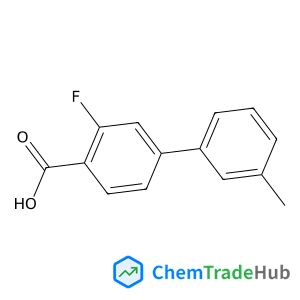
2-Fluoro-4-biphenylcarboxylic acid should be stored in a cool, dry place at room...
Prednisolone-21-Carboxylic Acid is primarily used in the pharmaceutical industry...
4-(Hydrazinomethyl)-1,2,3-benzenetriol (CAS: 3614-72-0) should be stored in a co...
4-Amino-1-methyl-1H-pyrazole-5-carboxylic acid hydrochloride (CAS: 92534-70-8) i...
Dehydropachymic acid (CAS: 77012-31-8) is regulated by various agencies. It fall...
The market and research trends for 6-[(2,2-Dimethylpropanoyl)amino]nicotinic aci...
1,10-Phenanthroline-2,9-dicarbaldehyde should be stored in a cool, dry place awa...
5-Carbamoyl-11-oxo-10,11-dihydro-5H-dibenzo[b,f]azepin-10-yl acetate can be synt...

Physical Chemistry Chemical Physics (PCCP) is an international journal co-owned by 19 physical chemistry and physics societies from around the world. This journal publishes original, cutting-edge research in physical chemistry, chemical physics and biophysical chemistry. To be suitable for publication in PCCP, articles must include significant innovation and/or insight into physical chemistry; this is the most important criterion that reviewers and Editors will judge against when evaluating submissions. The journal has a broad scope and welcomes contributions spanning experiment, theory, computation and data science. Topical coverage includes spectroscopy, dynamics, kinetics, statistical mechanics, thermodynamics, electrochemistry, catalysis, surface science, quantum mechanics, quantum computing and machine learning. Interdisciplinary research areas such as polymers and soft matter, materials, nanoscience, energy, surfaces/interfaces, and biophysical chemistry are welcomed if they demonstrate significant innovation and/or insight into physical chemistry. Joined experimental/theoretical studies are particularly appreciated when complementary and based on up-to-date approaches.