












A unique pentagonal network structure of the NiS2 monolayer with high stability and a tunable bandgap
Literature Information
Publication Date
2020-03-07
DOI
10.1039/D0CP00434K
Impact Factor
3.676
Authors
View Original
Abstract
Two dimensional atomic crystals with pentagonal building blocks have attracted extensive interest in recent years for their fundamental significance and potential applications in nanoscale devices. Here, with the help of ab initio calculations based on density functional theory, we report a unique pentagonal structured NiS2 monolayer in P21m symmetry, named P-NiS2. Its dynamic stability has been confirmed by phonon mode analysis. Molecular dynamics simulations and total-energy calculations show that this new P-NiS2 has robust thermal stability and energetically more stable than all other reported NiS2 monolayer structures. Electronic band structure calculations show that it is a semiconductor with an indirect band gap of 1.94 eV. Furthermore, we find that small strain triggers a transition from the indirect to direct band gap for this P-NiS2, suggesting its great potential for applications based on strain-engineering techniques.
Related Literature
Waterborne physically crosslinked antimicrobial nanogels
Subrata Chattopadhyay, Elisabeth Heine, Ahmed Mourran, Walter Richtering, Helmut Keul, Martin Möller
2015-11-04
Paper
DOI: 10.1039/C5PY01566A
pH-Responsive non-ionic diblock copolymers: protonation of a morpholine end-group induces an order–order transition
N. J. W. Penfold, J. R. Lovett, N. J. Warren, P. Verstraete, J. Smets, S. P. Armes
2015-10-13
Paper
DOI: 10.1039/C5PY01510C
Ionic hydrogen bond donor organocatalyst for fast living ring-opening polymerization
Xu Zhi, Jingjing Liu, Zhenjiang Li, Huiying Wang, Xin Wang, Saide Cui, Cheng Chen, Chengxu Zhao, Xiaopei Li, Kai Guo
2015-10-21
Paper
DOI: 10.1039/C5PY01315A
Sustainable, eco-friendly polyesters synthesized from renewable resources: preparation and thermal characteristics of poly(dimethyl-propylene furanoate)
Vasilios Tsanaktsis, Zoe Terzopoulou, Dimitrios N. Bikiaris, Dimitris S. Achilias, Dimitrios G. Papageorgiou, George Z. Papageorgiou
2015-10-05
Paper
DOI: 10.1039/C5PY01367D
Saturated and stabilized white electroluminescence with simultaneous three-color emission from a six-armed star-shaped single-polymer system
Yuan-Da Jiu, Cheng-Fang Liu, Jian-Yun Wang, Yi Jiang, Wei-Dong Xu, Xin-Wen Zhang
2015-09-28
Paper
DOI: 10.1039/C5PY01480H
Dibenzoyldiethylgermane as a visible light photo-reducing agent for CuAAC click reactions
Mustafa Arslan, Gorkem Yilmaz, Yusuf Yagci
2015-10-05
Paper
DOI: 10.1039/C5PY01465D
Regio- and stereoselective construction of stimuli-responsive macromolecules by a sequential coupling-hydroamination polymerization route
2015-10-06
Paper
DOI: 10.1039/C5PY01424G
Chalcogenodiazolo[3,4-c]pyridine based donor–acceptor–donor polymers for green and near-infrared electrochromics
Shouli Ming, Shijie Zhen, Ximei Liu, Kaiwen Lin, Hongtao Liu, Yao Zhao, Baoyang Lu, Jingkun Xu
2015-09-15
Paper
DOI: 10.1039/C5PY01321F
RAFT/MADIX polymerization of N-vinylcaprolactam in water–ethanol solvent mixtures
Ine Van Nieuwenhove, Samarendra Maji, Mamoni Dash, Sandra Van Vlierberghe, Richard Hoogenboom, Peter Dubruel
2017-03-28
Communication
DOI: 10.1039/C6PY02224C
You might also like
Compound Q&A
What are the main uses of 4-Nitrophenyl phosphate disodium salt hexahydrate (CAS: 333338-18-4)?
4-Nitrophenyl phosphate disodium salt hexahydrate is primarily used as a substra...
333338-18-44-Nitrophenyl phosph...
Compound Q&A
What are the main uses of 2-(Trifluoromethyl)-1,3-oxazole-4-carboxylic Acid (CAS: 1060816-01-4)?
2-(Trifluoromethyl)-1,3-oxazole-4-carboxylic Acid (CAS: 1060816-01-4) is widely ...
1060816-01-42-(Trifluoromethyl)-...
Compound Q&A
How should 2-Fluoro-4-biphenylcarboxylic acid (CAS: 137045-30-8) be stored?
2-Fluoro-4-biphenylcarboxylic acid should be stored in a cool, dry place at room...
137045-30-82-Fluoro-4-biphenylc...
Compound Q&A
What industries use Prednisolone-21-Carboxylic Acid (CAS: 61549-70-0)?
Prednisolone-21-Carboxylic Acid is primarily used in the pharmaceutical industry...
61549-70-0Prednisolone-21-Carb...
Compound Q&A
How should 4-(Hydrazinomethyl)-1,2,3-benzenetriol (CAS: 3614-72-0) be stored?
4-(Hydrazinomethyl)-1,2,3-benzenetriol (CAS: 3614-72-0) should be stored in a co...
3614-72-04-(Hydrazinomethyl)-...
Compound Q&A
What industries use 4-Amino-1-methyl-1H-pyrazole-5-carboxylic acid hydrochloride (CAS: 92534-70-8)?
4-Amino-1-methyl-1H-pyrazole-5-carboxylic acid hydrochloride (CAS: 92534-70-8) i...
92534-70-84-Amino-1-methyl-1H-...
Compound Q&A
What regulatory guidelines apply to dehydropachymic acid (CAS: 77012-31-8)?
Dehydropachymic acid (CAS: 77012-31-8) is regulated by various agencies. It fall...
77012-31-8Dehydropachymic acid
Compound Q&A
What is the market or research trend for 6-[(2,2-Dimethylpropanoyl)amino]nicotinic acid (CAS: 898561-66-5)?
The market and research trends for 6-[(2,2-Dimethylpropanoyl)amino]nicotinic aci...
898561-66-56-[(2,2-Dimethylprop...
Compound Q&A
How should 1,10-Phenanthroline-2,9-dicarbaldehyde (CAS: 57709-62-3) be stored?
1,10-Phenanthroline-2,9-dicarbaldehyde should be stored in a cool, dry place awa...
57709-62-31,10-Phenanthroline-...
Compound Q&A
How is 5-Carbamoyl-11-oxo-10,11-dihydro-5H-dibenzo[b,f]azepin-10-yl acetate (CAS: 113952-21-9) typically synthesized?
5-Carbamoyl-11-oxo-10,11-dihydro-5H-dibenzo[b,f]azepin-10-yl acetate can be synt...
113952-21-95-Carbamoyl-11-oxo-1...
Source Journal
Physical Chemistry Chemical Physics

CiteScore:
5.5
Self-citation Rate:
10.3%
Articles per Year:
3036
Physical Chemistry Chemical Physics (PCCP) is an international journal co-owned by 19 physical chemistry and physics societies from around the world. This journal publishes original, cutting-edge research in physical chemistry, chemical physics and biophysical chemistry. To be suitable for publication in PCCP, articles must include significant innovation and/or insight into physical chemistry; this is the most important criterion that reviewers and Editors will judge against when evaluating submissions. The journal has a broad scope and welcomes contributions spanning experiment, theory, computation and data science. Topical coverage includes spectroscopy, dynamics, kinetics, statistical mechanics, thermodynamics, electrochemistry, catalysis, surface science, quantum mechanics, quantum computing and machine learning. Interdisciplinary research areas such as polymers and soft matter, materials, nanoscience, energy, surfaces/interfaces, and biophysical chemistry are welcomed if they demonstrate significant innovation and/or insight into physical chemistry. Joined experimental/theoretical studies are particularly appreciated when complementary and based on up-to-date approaches.
Recommended Compounds
![(2E)-3-(3-Chlorophenyl)-N-{2-[4-(methylsulfonyl)-1-piperazinyl]-2-oxoethyl}acrylamide structure](https://static.chemtradehub.com/structs/250/2505001-54-5-c1e9.webp "(2E)-3-(3-Chlorophenyl)-N-{2-[4-(methylsulfonyl)-1-piperazinyl]-2-oxoethyl}acrylamide structure")
(2E)-3-(3-Chlorophenyl)-N-{2-[4-(methylsulfonyl)-1-piperazinyl]-2-oxoethyl}acrylamide
CAS Number:
2505001-54-5
Molecular Formula:
C16H20ClN3O4S
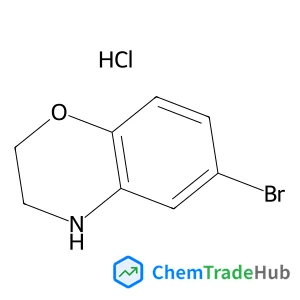
6-Bromo-3,4-dihydro-2H-1,4-benzoxazine hydrochloride (1:1)
CAS Number:
1260803-10-8
Molecular Formula:
C8H9BrClNO
Recommended Suppliers






Disclaimer
This page provides academic journal information for reference and research purposes only. We are not affiliated with any journal publishers and do not handle publication submissions. For publication-related inquiries, please contact the respective journal publishers directly.
If you notice any inaccuracies in the information displayed, please contact us at support@chemtradehub.com. We will promptly review and address your concerns.