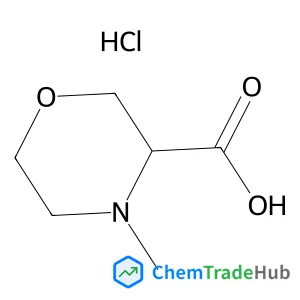
4-Methyl-3-morpholinecarboxylic acid hydrochloride (1:1)
CAS Number:
1240518-90-4
Molecular Formula:
C6H12ClNO3
N. Leifer, T. Penki, R. Nanda, J. Grinblat, S. Luski, D. Aurbach, G. Goobes
Li and Mn-rich Li1+xNiyCozMnwO2 (LMR-NMC, 0 < x < 0.2; w > 0.5) materials remain commercially relevant owing to their high specific capacity. Due to this stoichiometry, their synthesis forms always at least two phases: monoclinic Li2MnO3 and rhombohedral LiNiaCobMncO2 (a = b = c = 1) layered moieties. However, a complete understanding of their complex crystal structure has not yet been fully realized. The monoclinic phase may become electrochemically active only at high potentials (>4.6 V vs. Li). To complicate matters even more, it has been shown that the electrochemical performance of these materials, having formally the same stoichiometry, can vary with the chosen method of material synthesis. Identification of the chemical and/or structural reasons for these variations in performance is crucial to ensure the promotion of these important cathode materials towards a practical use. Yet most methods of analysis cannot distinguish the subtle, localized variations that account for such differences. Here, solid state 6,7Li NMR was found to be successful in identifying several distinctions between compounds with identical chemical formulae. Many distinctions can be made, and even suggested to account for some of the differences in the electrochemical behaviors noted for the differently prepared materials.
Amélie Augé, Daniel Fortin, Xia Tong, Yue Zhao
DOI: 10.1039/C8PY00960K
Prasanta Kumar Behera, Prantik Mondal, Nikhil K. Singha
DOI: 10.1039/C8PY00549D
Yuri Matsuo
DOI: 10.1039/C7PY01948C
Wen-Ming Zhang, Jian Zhang, Zhu Qiao, Huan-Ying Liu, Zong-Quan Wu, Jun Yin
DOI: 10.1039/C8PY00865E
Kyle J. Arrington, John B. Matson
DOI: 10.1039/C7PY01741C
Geta David, Lilia Clima, Manuela Calin, Cristina Ana Constantinescu, Mihaela Balan-Porcarasu
DOI: 10.1039/C7PY01720K
P. S. Eselem Bungu, H. Pasch
DOI: 10.1039/C7PY02076G
4-Nitrophenyl phosphate disodium salt hexahydrate is primarily used as a substra...
2-(Trifluoromethyl)-1,3-oxazole-4-carboxylic Acid (CAS: 1060816-01-4) is widely ...
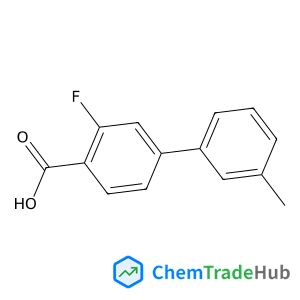
2-Fluoro-4-biphenylcarboxylic acid should be stored in a cool, dry place at room...
Prednisolone-21-Carboxylic Acid is primarily used in the pharmaceutical industry...
4-(Hydrazinomethyl)-1,2,3-benzenetriol (CAS: 3614-72-0) should be stored in a co...
4-Amino-1-methyl-1H-pyrazole-5-carboxylic acid hydrochloride (CAS: 92534-70-8) i...
Dehydropachymic acid (CAS: 77012-31-8) is regulated by various agencies. It fall...
The market and research trends for 6-[(2,2-Dimethylpropanoyl)amino]nicotinic aci...
1,10-Phenanthroline-2,9-dicarbaldehyde should be stored in a cool, dry place awa...
5-Carbamoyl-11-oxo-10,11-dihydro-5H-dibenzo[b,f]azepin-10-yl acetate can be synt...

Physical Chemistry Chemical Physics (PCCP) is an international journal co-owned by 19 physical chemistry and physics societies from around the world. This journal publishes original, cutting-edge research in physical chemistry, chemical physics and biophysical chemistry. To be suitable for publication in PCCP, articles must include significant innovation and/or insight into physical chemistry; this is the most important criterion that reviewers and Editors will judge against when evaluating submissions. The journal has a broad scope and welcomes contributions spanning experiment, theory, computation and data science. Topical coverage includes spectroscopy, dynamics, kinetics, statistical mechanics, thermodynamics, electrochemistry, catalysis, surface science, quantum mechanics, quantum computing and machine learning. Interdisciplinary research areas such as polymers and soft matter, materials, nanoscience, energy, surfaces/interfaces, and biophysical chemistry are welcomed if they demonstrate significant innovation and/or insight into physical chemistry. Joined experimental/theoretical studies are particularly appreciated when complementary and based on up-to-date approaches.

![(2E)-3-(3-Chlorophenyl)-N-{2-[4-(methylsulfonyl)-1-piperazinyl]-2-oxoethyl}acrylamide structure](https://static.chemtradehub.com/structs/250/2505001-54-5-c1e9.webp "(2E)-3-(3-Chlorophenyl)-N-{2-[4-(methylsulfonyl)-1-piperazinyl]-2-oxoethyl}acrylamide structure")