













Effects of temperature on the thermal conductivity of amorphous CaO–SiO2–Al2O3 slags: a computational insight
Literature Information
Publication Date
2020-03-26
DOI
10.1039/D0CP00382D
Impact Factor
3.676
Authors
Shuheng Huang
View Original
Abstract
Amorphous CaO–SiO2–Al2O3 (CSA) slags are widely used in the glass, ceramic, cement and metallurgy industries. Temperature, as an external condition, plays an important role in the thermal conductivity of silicates. Herein, the effects of temperature on the thermal conductivity of CSA slags were systematically investigated by using equilibrium molecular dynamics (EMD) simulations. Moreover, the effects of the composition and the structural unit on the thermal conductivity of CSA slags were examined. The results showed that the thermal conductivity of amorphous CSA slags significantly increases with an increase in temperature in the range of 1273 to 1973 K. Furthermore regression analysis based on a machine learning method showed that the temperature is the most crucial factor that affects the thermal conductivity of amorphous CSA slags, and high CaO/Al2O3 and CaO/SiO2 molar ratios can lead to high thermal conductivity.
Related Literature
A rotatable cathode with tunable steric hindrance for high-performance aluminum organic batteries
Mingshan Han, Qinqin Zhou, Meng Zhang, Jinshu Wang, Fangyan Cui, Yunfei Yang, Jingwen Su, Weiwei Huang, Yuxiang Hu
2023-05-16
Paper
DOI: 10.1039/D3TA00343D
Mechanistic study of the complex photooxidation of allyl methyl sulfide (AMS): reaction paths and products of addition under different atmospheric conditions
Alejandro L. Cardona, María B. Blanco, Mariano A. Teruel, Oscar N. Ventura
2023-05-05
Paper
DOI: 10.1039/D3EA00010A
Fluorescent probe: complexation of Fe3+with the myo-inositol 1,2,3-trisphosphate motif
David Mansell, Nicholas Rattray, Laura L. Etchells, Carl H. Schwalbe, Alexander J. Blake, Elena V. Bichenkova, Richard A. Bryce, Christopher J. Barker, Alvaro Díaz, Carlos Kremer, Sally Freeman
2008-09-29
Communication
DOI: 10.1039/B809238A
Synthesis of glycerol 1,2-carbonate by transesterification of glycerol with dimethyl carbonate using triethylamine as a facile separable homogeneous catalyst
Olga Gómez-Jiménez-Aberasturi, Camilo Ramírez-López, Belén Maestro-Madurga
2012-10-02
Paper
DOI: 10.1039/C2GC35992H
Highly efficient and durable solar thermal energy harvesting via scalable hierarchical coatings inspired by stony corals
Juan F. Torres, Kaoru Tsuda, Yasushi Murakami, Yifan Guo, Sahar Hosseini, Charles-Alexis Asselineau, Mahdiar Taheri, Kurt Drewes, Wojciech Lipiński, Joe Coventry
2022-03-28
Paper
DOI: 10.1039/D1EE03028K
C–H bond chlorination using nickel(ii) complexes of tetradentate amido-quinoline ligands
Sanjay Adhikari, Aniruddha Sarkar, Basab Bijayi Dhar
2022-02-28
Communication
DOI: 10.1039/D2CC00639A
High coke deposition resistance by Cr loading on zeolite defects: reduced regeneration in cracking reactions
Shinya Kokuryo, Kazuya Tamura, Koji Miyake, Yoshiaki Uchida, Manabu Miyamoto, Yasunori Oumi, Atsushi Mizusawa, Tadashi Kubo, Norikazu Nishiyama
2022-10-17
Communication
DOI: 10.1039/D2CY00506A
You might also like
Compound Q&A
What are the main uses of 4-Nitrophenyl phosphate disodium salt hexahydrate (CAS: 333338-18-4)?
4-Nitrophenyl phosphate disodium salt hexahydrate is primarily used as a substra...
333338-18-44-Nitrophenyl phosph...
Compound Q&A
What are the main uses of 2-(Trifluoromethyl)-1,3-oxazole-4-carboxylic Acid (CAS: 1060816-01-4)?
2-(Trifluoromethyl)-1,3-oxazole-4-carboxylic Acid (CAS: 1060816-01-4) is widely ...
1060816-01-42-(Trifluoromethyl)-...
Compound Q&A
How should 2-Fluoro-4-biphenylcarboxylic acid (CAS: 137045-30-8) be stored?
2-Fluoro-4-biphenylcarboxylic acid should be stored in a cool, dry place at room...
137045-30-82-Fluoro-4-biphenylc...
Compound Q&A
What industries use Prednisolone-21-Carboxylic Acid (CAS: 61549-70-0)?
Prednisolone-21-Carboxylic Acid is primarily used in the pharmaceutical industry...
61549-70-0Prednisolone-21-Carb...
Compound Q&A
How should 4-(Hydrazinomethyl)-1,2,3-benzenetriol (CAS: 3614-72-0) be stored?
4-(Hydrazinomethyl)-1,2,3-benzenetriol (CAS: 3614-72-0) should be stored in a co...
3614-72-04-(Hydrazinomethyl)-...
Compound Q&A
What industries use 4-Amino-1-methyl-1H-pyrazole-5-carboxylic acid hydrochloride (CAS: 92534-70-8)?
4-Amino-1-methyl-1H-pyrazole-5-carboxylic acid hydrochloride (CAS: 92534-70-8) i...
92534-70-84-Amino-1-methyl-1H-...
Compound Q&A
What regulatory guidelines apply to dehydropachymic acid (CAS: 77012-31-8)?
Dehydropachymic acid (CAS: 77012-31-8) is regulated by various agencies. It fall...
77012-31-8Dehydropachymic acid
Compound Q&A
What is the market or research trend for 6-[(2,2-Dimethylpropanoyl)amino]nicotinic acid (CAS: 898561-66-5)?
The market and research trends for 6-[(2,2-Dimethylpropanoyl)amino]nicotinic aci...
898561-66-56-[(2,2-Dimethylprop...
Compound Q&A
How should 1,10-Phenanthroline-2,9-dicarbaldehyde (CAS: 57709-62-3) be stored?
1,10-Phenanthroline-2,9-dicarbaldehyde should be stored in a cool, dry place awa...
57709-62-31,10-Phenanthroline-...
Compound Q&A
How is 5-Carbamoyl-11-oxo-10,11-dihydro-5H-dibenzo[b,f]azepin-10-yl acetate (CAS: 113952-21-9) typically synthesized?
5-Carbamoyl-11-oxo-10,11-dihydro-5H-dibenzo[b,f]azepin-10-yl acetate can be synt...
113952-21-95-Carbamoyl-11-oxo-1...
Source Journal
Physical Chemistry Chemical Physics

CiteScore:
5.5
Self-citation Rate:
10.3%
Articles per Year:
3036
Physical Chemistry Chemical Physics (PCCP) is an international journal co-owned by 19 physical chemistry and physics societies from around the world. This journal publishes original, cutting-edge research in physical chemistry, chemical physics and biophysical chemistry. To be suitable for publication in PCCP, articles must include significant innovation and/or insight into physical chemistry; this is the most important criterion that reviewers and Editors will judge against when evaluating submissions. The journal has a broad scope and welcomes contributions spanning experiment, theory, computation and data science. Topical coverage includes spectroscopy, dynamics, kinetics, statistical mechanics, thermodynamics, electrochemistry, catalysis, surface science, quantum mechanics, quantum computing and machine learning. Interdisciplinary research areas such as polymers and soft matter, materials, nanoscience, energy, surfaces/interfaces, and biophysical chemistry are welcomed if they demonstrate significant innovation and/or insight into physical chemistry. Joined experimental/theoretical studies are particularly appreciated when complementary and based on up-to-date approaches.
Recommended Compounds
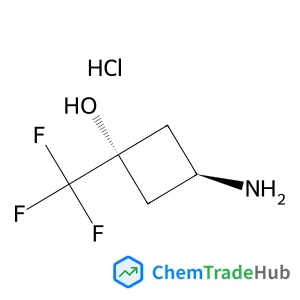
cis-3-Amino-1-(trifluoromethyl)cyclobutanol hydrochloride (1:1)
CAS Number:
1408075-16-0
Molecular Formula:
C5H9ClF3NO
Recommended Suppliers




Disclaimer
This page provides academic journal information for reference and research purposes only. We are not affiliated with any journal publishers and do not handle publication submissions. For publication-related inquiries, please contact the respective journal publishers directly.
If you notice any inaccuracies in the information displayed, please contact us at support@chemtradehub.com. We will promptly review and address your concerns.