












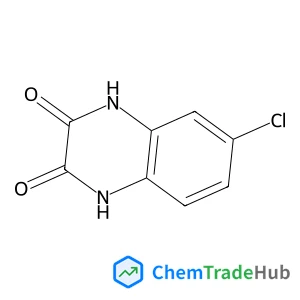
6-CHLORO-2,3-DIOXO-1,2,3,4-TETRAHYDROQUINOXALINE, 97
CAS Number:
169-14-2
Molecular Formula:
C8H5ClN2O2
Vitor H. Paschoal, Rafael S. Freitas, Luiz F. O. Faria, Mauro C. C. Ribeiro
The intermolecular dynamics in the THz frequency range of the ionic liquids n-butyl-trimethylammonium bis(trifluoromethanesulfonyl)imide, [N1114][NTf2], and methyl-tributylammonium bis(trifluoromethanesulfonyl)imide, [N1444][NTf2], were investigated by a combined usage of inelastic neutron scattering (INS), Raman, and far-infrared (FIR) spectroscopies and the power spectrum calculated by molecular dynamics (MD) simulations. The collective dynamics of the simulated systems is also discussed by the calculation of time correlation functions of charge and mass currents that are projected onto acoustic- and optic-like motions. The INS and Raman measurements have been performed as a function of temperature in the glassy, crystalline, and liquid phases. The excess in the vibrational density of states over the expectation of the Debye theory, the so-called boson peak, is found in the INS and Raman spectra as a peak at ∼2 meV (∼16 cm−1) and also in the direct measurement of heat capacity at very low temperatures (4–20 K). This low-frequency vibration is incorporated into the curve fits of Raman, FIR, and MD data at room temperature. Fits of spectra from these different sources in the range below 100 cm−1 are consistently achieved with three components at ca. 25, 50, and 80 cm−1, but with distinct relative intensities among the different techniques. It is proposed as the collective nature of the lowest-frequency component and the anion–cation intermolecular vibration nature of the highest-frequency component. The MD results indicate that there is no clear distinction between acoustic and optic vibrations in the spectral range investigated in this work for the ionic liquids [N1114][NTf2] and [N1444][NTf2]. The analysis carried out here agrees in part, but not entirely, with other propositions in the literature, mainly from optical Kerr effect (OKE) and FIR spectroscopies, concerning the intermolecular dynamics of ionic liquids.
Zhengxin Yu, Weijie Guo, Shrey Patel, Hong-Jun Cho, Liang Sun
DOI: 10.1039/D2SC02654F
Richard S. Graham, Richard J. Wheatley
DOI: 10.1039/D2CC01820A
Yang Liu, Yingqi Feng, Jinli Nie, Sijie Xie, Xin Pen, Huanliang Hong, Xiuwen Chen, Lu Chen, Yibiao Li
DOI: 10.1039/D3CC03279E
Dongmei Guo, Yiqun Liu, Xiubin Hou, Xubo Wang, Chenge Fan, Lixia Bao, Xinpeng He, Hongmei Zhang, Yurong Ma
DOI: 10.1039/D3CE00485F
Yingying Xue, Shengyang Duan, Zihao Liu, Miaomiao Cui, Zhanghui Xiong, Zengchen Liu, Jiangang Chen
DOI: 10.1039/D2CC03113B
Adewemimo Oluwakunmi Popoola, Lukuman Adekilekun Jimoda, Olusesan Abel Olu-Arotiowa, Oyetola Ogunkunle, Opeyeolu Timothy Laseinde, Sunday Adekunle Adebanjo, Wuraola Abake Raji
DOI: 10.1039/D3EA00041A
Stéphanie Pican, Annie-Claude Gaumont
DOI: 10.1039/B501078K
4-Nitrophenyl phosphate disodium salt hexahydrate is primarily used as a substra...
2-(Trifluoromethyl)-1,3-oxazole-4-carboxylic Acid (CAS: 1060816-01-4) is widely ...
2-Fluoro-4-biphenylcarboxylic acid should be stored in a cool, dry place at room...
Prednisolone-21-Carboxylic Acid is primarily used in the pharmaceutical industry...
4-(Hydrazinomethyl)-1,2,3-benzenetriol (CAS: 3614-72-0) should be stored in a co...
4-Amino-1-methyl-1H-pyrazole-5-carboxylic acid hydrochloride (CAS: 92534-70-8) i...
Dehydropachymic acid (CAS: 77012-31-8) is regulated by various agencies. It fall...
The market and research trends for 6-[(2,2-Dimethylpropanoyl)amino]nicotinic aci...
1,10-Phenanthroline-2,9-dicarbaldehyde should be stored in a cool, dry place awa...
5-Carbamoyl-11-oxo-10,11-dihydro-5H-dibenzo[b,f]azepin-10-yl acetate can be synt...

Physical Chemistry Chemical Physics (PCCP) is an international journal co-owned by 19 physical chemistry and physics societies from around the world. This journal publishes original, cutting-edge research in physical chemistry, chemical physics and biophysical chemistry. To be suitable for publication in PCCP, articles must include significant innovation and/or insight into physical chemistry; this is the most important criterion that reviewers and Editors will judge against when evaluating submissions. The journal has a broad scope and welcomes contributions spanning experiment, theory, computation and data science. Topical coverage includes spectroscopy, dynamics, kinetics, statistical mechanics, thermodynamics, electrochemistry, catalysis, surface science, quantum mechanics, quantum computing and machine learning. Interdisciplinary research areas such as polymers and soft matter, materials, nanoscience, energy, surfaces/interfaces, and biophysical chemistry are welcomed if they demonstrate significant innovation and/or insight into physical chemistry. Joined experimental/theoretical studies are particularly appreciated when complementary and based on up-to-date approaches.

![S-[2,3-Bis(palmitoyloxy)propyl]-N-[(9H-fluoren-9-ylmethoxy)(hydroxy)methylene]cysteine structure](https://static.chemtradehub.com/structs/210/210532-98-2-f6a7.webp "S-[2,3-Bis(palmitoyloxy)propyl]-N-[(9H-fluoren-9-ylmethoxy)(hydroxy)methylene]cysteine structure")






