












Embedding of atoms into the nanopore sites of the C6N6 and C6N8 porous carbon nitride monolayers with tunable electronic properties
Literature Information
Publication Date
2020-02-20
DOI
10.1039/D0CP00093K
Impact Factor
3.676
Authors
Catherine Stampfl, Berna Akgenc, Mitra Ghergherehchi, Ch. V. Nguyen
View Original
Abstract
Using first-principles calculations, we study the effect of embedding various atoms into the nanopore sites of both C6N6 and C6N8 monolayers. Our results indicate that the embedded atoms significantly affect the electronic and magnetic properties of C6N6 and C6N8 monolayers and lead to extraordinary and multifarious electronic properties, such as metallic, half-metallic, spin-glass semiconductor and dilute-magnetic semiconductor behaviour. Our results reveal that the H atom concentration dramatically affects the C6N6 monolayer. On increasing the H coverage, the impurity states also increase due to H atoms around the Fermi-level. C6N6 shows metallic character when the H atom concentration reaches 6.25%. Moreover, the effect of charge on the electronic properties of both Cr@C6N6 and C@C6N8 is also studied. Cr@C6N6 is a ferromagnetic metal with a magnetic moment of 2.40 μB, and when 0.2 electrons are added and removed, it remains a ferromagnetic metal with a magnetic moment of 2.57 and 2.77 μB, respectively. Interestingly, one can observe a semi-metal, in which the VBM and CBM in both spin channels touch each other near the Fermi-level. C@C6N8 is a semiconductor with a nontrivial band gap. When 0.2 electrons are removed, it remains metallic, and under excess electronic charge, it exhibits half-metallic behaviour.
Related Literature
Investigating the role of interstitial water molecules in copper hexacyanoferrate for sodium-ion battery cathodes
Donghyeon Kim, Ahreum Choi, Changhyun Park, Min-Ho Kim, Hyun-Wook Lee
2023-05-29
Paper
DOI: 10.1039/D3TA02417B
Coupling electrocatalytic cathodic nitrate reduction with anodic formaldehyde oxidation at ultra-low potential over Cu2O
Lei Xiao, Weidong Dai, Shiyong Mou, Xiaoyan Wang, Qin Cheng
2023-05-10
Paper
DOI: 10.1039/D3EE00635B
Co-doped MoS2 nanosheet: a stable and pH-universal electrocatalyst for an efficient hydrogen evolution reaction
Xiaojie Tan, Depeng Zhao, Yuchen Sun, Zhongxin Duan, Xiaowei Wang
2022-08-24
Paper
DOI: 10.1039/D2CE00951J
Electronic Ni–N interaction enhanced reductive amination on an N-doped porous carbon supported Ni catalyst
Wenjing Song, Yujie Wan, Yuefeng Li, Xin Luo, Weiping Fang, Quanxing Zheng, Pengfei Ma, Jianping Zhang, Weikun Lai
2022-10-18
Paper
DOI: 10.1039/D2CY01551J
Mechanistic study of the complex photooxidation of allyl methyl sulfide (AMS): reaction paths and products of addition under different atmospheric conditions
Alejandro L. Cardona, María B. Blanco, Mariano A. Teruel, Oscar N. Ventura
2023-05-05
Paper
DOI: 10.1039/D3EA00010A
Machine learning for non-additive intermolecular potentials: quantum chemistry to first-principles predictions
Richard S. Graham, Richard J. Wheatley
2022-05-24
Communication
DOI: 10.1039/D2CC01820A
Bifunctional thioacetamide-mediated synthesis of few-layered MoOSx nanosheet-modified CdS hollow spheres for efficient photocatalytic H2 production
Siqin Tao, Wei Zhong, Yuxiao Chen, Feng Chen, Ping Wang
2022-08-18
Paper
DOI: 10.1039/D2CY01315K
Dearomatization of benzopyrylium triflates with sulfoxonium ylides
Alexandria N. Leveille, Marissa M. Allegrezza, Kalen Laybourn, Anita E. Mattson
2022-09-27
Communication
DOI: 10.1039/D2CC02023H
Study on the luminescence properties of ionic [Cu(N^N)(P^P)]+ complexes: influence of ligands, counteranions and weak interactions
Zi-Xi Li, Zhen-Zhou Sun, Guo Wang, Wei Yang, Hong-Liang Han, Yu-Ping Yang, Zhong-Feng Li, Yi-Shan Yao
2022-09-27
Paper
DOI: 10.1039/D2CE01177H
Water-in-salt electrolytes – molecular insights to the high solubility of lithium-ion salts
Aleksandar Tot, Lars Kloo
2022-08-01
Communication
DOI: 10.1039/D2CC03062D
You might also like
Compound Q&A
What are the main uses of 4-Nitrophenyl phosphate disodium salt hexahydrate (CAS: 333338-18-4)?
4-Nitrophenyl phosphate disodium salt hexahydrate is primarily used as a substra...
333338-18-44-Nitrophenyl phosph...
Compound Q&A
What are the main uses of 2-(Trifluoromethyl)-1,3-oxazole-4-carboxylic Acid (CAS: 1060816-01-4)?
2-(Trifluoromethyl)-1,3-oxazole-4-carboxylic Acid (CAS: 1060816-01-4) is widely ...
1060816-01-42-(Trifluoromethyl)-...
Compound Q&A
How should 2-Fluoro-4-biphenylcarboxylic acid (CAS: 137045-30-8) be stored?
2-Fluoro-4-biphenylcarboxylic acid should be stored in a cool, dry place at room...
137045-30-82-Fluoro-4-biphenylc...
Compound Q&A
What industries use Prednisolone-21-Carboxylic Acid (CAS: 61549-70-0)?
Prednisolone-21-Carboxylic Acid is primarily used in the pharmaceutical industry...
61549-70-0Prednisolone-21-Carb...
Compound Q&A
How should 4-(Hydrazinomethyl)-1,2,3-benzenetriol (CAS: 3614-72-0) be stored?
4-(Hydrazinomethyl)-1,2,3-benzenetriol (CAS: 3614-72-0) should be stored in a co...
3614-72-04-(Hydrazinomethyl)-...
Compound Q&A
What industries use 4-Amino-1-methyl-1H-pyrazole-5-carboxylic acid hydrochloride (CAS: 92534-70-8)?
4-Amino-1-methyl-1H-pyrazole-5-carboxylic acid hydrochloride (CAS: 92534-70-8) i...
92534-70-84-Amino-1-methyl-1H-...
Compound Q&A
What regulatory guidelines apply to dehydropachymic acid (CAS: 77012-31-8)?
Dehydropachymic acid (CAS: 77012-31-8) is regulated by various agencies. It fall...
77012-31-8Dehydropachymic acid
Compound Q&A
What is the market or research trend for 6-[(2,2-Dimethylpropanoyl)amino]nicotinic acid (CAS: 898561-66-5)?
The market and research trends for 6-[(2,2-Dimethylpropanoyl)amino]nicotinic aci...
898561-66-56-[(2,2-Dimethylprop...
Compound Q&A
How should 1,10-Phenanthroline-2,9-dicarbaldehyde (CAS: 57709-62-3) be stored?
1,10-Phenanthroline-2,9-dicarbaldehyde should be stored in a cool, dry place awa...
57709-62-31,10-Phenanthroline-...
Compound Q&A
How is 5-Carbamoyl-11-oxo-10,11-dihydro-5H-dibenzo[b,f]azepin-10-yl acetate (CAS: 113952-21-9) typically synthesized?
5-Carbamoyl-11-oxo-10,11-dihydro-5H-dibenzo[b,f]azepin-10-yl acetate can be synt...
113952-21-95-Carbamoyl-11-oxo-1...
Source Journal
Physical Chemistry Chemical Physics

CiteScore:
5.5
Self-citation Rate:
10.3%
Articles per Year:
3036
Physical Chemistry Chemical Physics (PCCP) is an international journal co-owned by 19 physical chemistry and physics societies from around the world. This journal publishes original, cutting-edge research in physical chemistry, chemical physics and biophysical chemistry. To be suitable for publication in PCCP, articles must include significant innovation and/or insight into physical chemistry; this is the most important criterion that reviewers and Editors will judge against when evaluating submissions. The journal has a broad scope and welcomes contributions spanning experiment, theory, computation and data science. Topical coverage includes spectroscopy, dynamics, kinetics, statistical mechanics, thermodynamics, electrochemistry, catalysis, surface science, quantum mechanics, quantum computing and machine learning. Interdisciplinary research areas such as polymers and soft matter, materials, nanoscience, energy, surfaces/interfaces, and biophysical chemistry are welcomed if they demonstrate significant innovation and/or insight into physical chemistry. Joined experimental/theoretical studies are particularly appreciated when complementary and based on up-to-date approaches.
Recommended Compounds

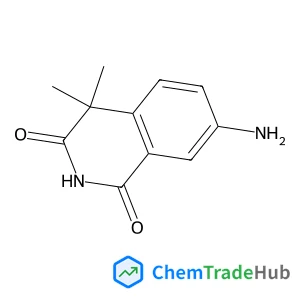
1,3(2H,4H)-Isoquinolinedione, 7-amino-4,4-dimethyl-
CAS Number:
14576-22-8
Molecular Formula:
C11H12N2O2
Recommended Suppliers







Disclaimer
This page provides academic journal information for reference and research purposes only. We are not affiliated with any journal publishers and do not handle publication submissions. For publication-related inquiries, please contact the respective journal publishers directly.
If you notice any inaccuracies in the information displayed, please contact us at support@chemtradehub.com. We will promptly review and address your concerns.