












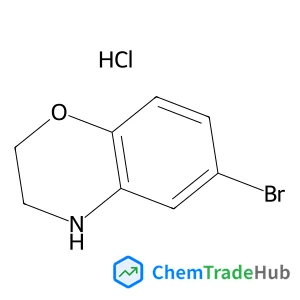
6-Bromo-3,4-dihydro-2H-1,4-benzoxazine hydrochloride (1:1)
CAS Number:
1260803-10-8
Molecular Formula:
C8H9BrClNO
Tan Phat Dao, M. Idrees, Huynh V. Phuc, Nguyen N. Hieu, Nguyen T. T. Binh, Hoi B. Dinh, B. Amin, Chuong V. Nguyen
Constructing vertical heterostructures by placing graphene (Gr) on two-dimensional materials has recently emerged as an effective way to enhance the performance of nanoelectronic and optoelectronic devices. In this work, first principles calculations are employed to explore the structural and electronic properties of Gr/GeC and Gr/functionalized-GeC by H/F/Cl surface functionalization. Our results imply that the electronic properties of the Gr, GeC and all functionalized-GeC monolayers are well preserved in Gr/GeC and Gr/functionalized-GeC heterostructures, and the Gr/GeC heterostructure forms a p-type Schottky contact. Interestingly, we find that the p-type Schottky contact in Gr/GeC can be converted into the n-type one and into an n-type ohmic contact by H/F/Cl surface functionalization to form Gr/functionalized-GeC heterostructures. Furthermore, we find that electric fields and strain engineering can change both the Schottky barrier heights and the contact types of the Gr/functionalized-GeC vdWHs. These findings suggest that Gr/functionalized-GeC heterostructures can be considered as a promising candidate for designing high-performance optoelectronic and nanoelectronic devices.
Jian-Bo Feng, Helfried Neumann, Anahit Pews-Davtyan, Matthias Beller
DOI: 10.1039/C3GC40668G
Jewel Ann Maria Xavier, Clara Viñas, Francesc Teixidor
DOI: 10.1039/D2CC00424K
Ji Wan, Yao Wu, Rui Sun, Jiawei Qiao, Xiaotao Hao, Jie Min
DOI: 10.1039/D2EE03134E
Mingshan Han, Qinqin Zhou, Meng Zhang, Jinshu Wang, Fangyan Cui, Yunfei Yang, Jingwen Su, Weiwei Huang, Yuxiang Hu
DOI: 10.1039/D3TA00343D
Wenjing Song, Yujie Wan, Yuefeng Li, Xin Luo, Weiping Fang, Quanxing Zheng, Pengfei Ma, Jianping Zhang, Weikun Lai
DOI: 10.1039/D2CY01551J
Yuling Zhang, Ruyue Wang, Zhan’ao Tan
DOI: 10.1039/D3TA90117C
Dongmei Guo, Yiqun Liu, Xiubin Hou, Xubo Wang, Chenge Fan, Lixia Bao, Xinpeng He, Hongmei Zhang, Yurong Ma
DOI: 10.1039/D3CE00485F
Xi-Meng Chen, Si-Han Jia, Jia-Xin Kang, Yichun Zhang, Yubin Ma, Yiming Ma, Xin Jiang, Xing-Chao Yu, Pengtao Qiu
DOI: 10.1039/D2CC00408A
4-Nitrophenyl phosphate disodium salt hexahydrate is primarily used as a substra...
2-(Trifluoromethyl)-1,3-oxazole-4-carboxylic Acid (CAS: 1060816-01-4) is widely ...
2-Fluoro-4-biphenylcarboxylic acid should be stored in a cool, dry place at room...
Prednisolone-21-Carboxylic Acid is primarily used in the pharmaceutical industry...
4-(Hydrazinomethyl)-1,2,3-benzenetriol (CAS: 3614-72-0) should be stored in a co...
4-Amino-1-methyl-1H-pyrazole-5-carboxylic acid hydrochloride (CAS: 92534-70-8) i...
Dehydropachymic acid (CAS: 77012-31-8) is regulated by various agencies. It fall...
The market and research trends for 6-[(2,2-Dimethylpropanoyl)amino]nicotinic aci...
1,10-Phenanthroline-2,9-dicarbaldehyde should be stored in a cool, dry place awa...
5-Carbamoyl-11-oxo-10,11-dihydro-5H-dibenzo[b,f]azepin-10-yl acetate can be synt...

Physical Chemistry Chemical Physics (PCCP) is an international journal co-owned by 19 physical chemistry and physics societies from around the world. This journal publishes original, cutting-edge research in physical chemistry, chemical physics and biophysical chemistry. To be suitable for publication in PCCP, articles must include significant innovation and/or insight into physical chemistry; this is the most important criterion that reviewers and Editors will judge against when evaluating submissions. The journal has a broad scope and welcomes contributions spanning experiment, theory, computation and data science. Topical coverage includes spectroscopy, dynamics, kinetics, statistical mechanics, thermodynamics, electrochemistry, catalysis, surface science, quantum mechanics, quantum computing and machine learning. Interdisciplinary research areas such as polymers and soft matter, materials, nanoscience, energy, surfaces/interfaces, and biophysical chemistry are welcomed if they demonstrate significant innovation and/or insight into physical chemistry. Joined experimental/theoretical studies are particularly appreciated when complementary and based on up-to-date approaches.
![1-[(4-Methylphenyl)sulfonyl]-3-(4,4,5,5-tetramethyl-1,3,2-dioxaborolan-2-yl)-1H-pyrrolo[2,3-b]pyridine-5-carbonitrile structure](https://static.chemtradehub.com/structs/143/1434747-57-5-fc0d.webp "1-[(4-Methylphenyl)sulfonyl]-3-(4,4,5,5-tetramethyl-1,3,2-dioxaborolan-2-yl)-1H-pyrrolo[2,3-b]pyridine-5-carbonitrile structure")





