












Effect of graphene between photoanode and sensitizer on the intramolecular and intermolecular electron transfer process
Literature Information
Publication Date
2020-02-28
DOI
10.1039/C9CP06543A
Impact Factor
3.676
Authors
Xiaofei Wang, Yuanzuo Li, Peng Song, Fengcai Ma, Yanhui Yang
View Original
Abstract
The main goal of this work is to investigate the effects of a graphene layer between the photosensitive layer and semiconductor substrates on the electron transport performance of dye-sensitized solar cells from the perspective of intramolecular arrangement and interfaces. The benzothiadiazole sensitizer YKP-88 is used as the photosensitive layer and the influence of the graphene layer on the short-circuit current density (Jsc) and open-circuit voltage (Voc) is also discussed by exploring the frontier molecular orbitals, intramolecular charge transfer, weak interaction, interfacial electron dynamic propagations and other microscopic parameters after the anchoring of the graphene layer. The results demonstrate that the graphene layer can accelerate the electron injection of dye molecules into the semiconductor substrate, which not only has a qualitative reduction in injection time, but also has a qualitative change in the increase of the injection amount. In addition, it is also found that the graphene layer increases the stereoscopic effect, the absorption of long wavelength (>700 nm) photon flu and the amount of electron injection into the photoanode, which benefits the intramolecular charge transfer and increases the Jsc and Voc of solar cells. The combination of intermolecular and interfacial perspectives indicates that the appropriate configuration of graphene layers can effectively improve the photoelectric conversion efficiency of dye-sensitized solar cells.
Related Literature
A one-pot strategy to improve end-capping efficacy in Stille poly-condensations
Jared D. Harris, Kenneth R. Carter
2018-01-19
Paper
DOI: 10.1039/C7PY01761H
Main-chain benzoxazine precursor block copolymers
Zeynep Deliballi, Baris Kiskan, Yusuf Yagci
2017-11-28
Paper
DOI: 10.1039/C7PY01873H
Correction: The effects of polymer topology and chain length on the antimicrobial activity and hemocompatibility of amphiphilic ternary copolymers
Rashin Namivandi-Zangeneh, Rebecca J. Kwan, Thuy-Khanh Nguyen, Jonathan Yeow, Frances L. Byrne, Edgar H. H. Wong, Cyrille Boyer
2017-09-11
Correction
DOI: 10.1039/C7PY90140B
Designing a main-chain visible-light-labile picolinium-caged polymer and its biological applications
Tongtong Zhou, Tao Liu, Yu Bao, Ping Zhang, Casey Yan, Fujun Yao, Shuxun Cui, Yongming Chen, Xin Chen, You Yu
2017-12-01
Paper
DOI: 10.1039/C7PY01844D
Strategies to combine ROP with ATRP or RAFT polymerization for the synthesis of biodegradable polymeric nanoparticles for biomedical applications
Mattia Sponchioni, Nicolò Manfredini, Matteo Maraldi, Davide Moscatelli
2018-07-09
Review Article
DOI: 10.1039/C8PY00649K
Open-cage silsesquioxane necklace polymers having closed-cage silsesquioxane pendants
Hiroaki Imoto, Ryoichi Katoh, Kensuke Naka
2018-06-26
Communication
DOI: 10.1039/C8PY00758F
Anti-fatigue adhesive and tough hydrogels regulated by adenine and uracil
Xin Liu, Qin Zhang, Yanchao Qiao, Lijie Duan, Guanghui Gao
2018-08-01
Paper
DOI: 10.1039/C8PY00868J
Significantly improved energy density of BaTiO3 nanocomposites by accurate interfacial tailoring using a novel rigid-fluoro-polymer
Sheng Chen, Xuguang Lv, Xianghui Han, Hang Luo, Chris R. Bowen, Dou Zhang
2017-12-08
Paper
DOI: 10.1039/C7PY01914A
Synthesis of enzyme-responsive phosphoramidate dendrimers for cancer drug delivery
Zhen Zhang, Yongcun Zhou, Zhuxian Zhou, Ying Piao, Nagendra Kalva, Xiangrui Liu, Jianbin Tang, Youqing Shen
2017-12-18
Paper
DOI: 10.1039/C7PY01492A
You might also like
Compound Q&A
What are the main uses of 4-Nitrophenyl phosphate disodium salt hexahydrate (CAS: 333338-18-4)?
4-Nitrophenyl phosphate disodium salt hexahydrate is primarily used as a substra...
333338-18-44-Nitrophenyl phosph...
Compound Q&A
What are the main uses of 2-(Trifluoromethyl)-1,3-oxazole-4-carboxylic Acid (CAS: 1060816-01-4)?
2-(Trifluoromethyl)-1,3-oxazole-4-carboxylic Acid (CAS: 1060816-01-4) is widely ...
1060816-01-42-(Trifluoromethyl)-...
Compound Q&A
How should 2-Fluoro-4-biphenylcarboxylic acid (CAS: 137045-30-8) be stored?
2-Fluoro-4-biphenylcarboxylic acid should be stored in a cool, dry place at room...
137045-30-82-Fluoro-4-biphenylc...
Compound Q&A
What industries use Prednisolone-21-Carboxylic Acid (CAS: 61549-70-0)?
Prednisolone-21-Carboxylic Acid is primarily used in the pharmaceutical industry...
61549-70-0Prednisolone-21-Carb...
Compound Q&A
How should 4-(Hydrazinomethyl)-1,2,3-benzenetriol (CAS: 3614-72-0) be stored?
4-(Hydrazinomethyl)-1,2,3-benzenetriol (CAS: 3614-72-0) should be stored in a co...
3614-72-04-(Hydrazinomethyl)-...
Compound Q&A
What industries use 4-Amino-1-methyl-1H-pyrazole-5-carboxylic acid hydrochloride (CAS: 92534-70-8)?
4-Amino-1-methyl-1H-pyrazole-5-carboxylic acid hydrochloride (CAS: 92534-70-8) i...
92534-70-84-Amino-1-methyl-1H-...
Compound Q&A
What regulatory guidelines apply to dehydropachymic acid (CAS: 77012-31-8)?
Dehydropachymic acid (CAS: 77012-31-8) is regulated by various agencies. It fall...
77012-31-8Dehydropachymic acid
Compound Q&A
What is the market or research trend for 6-[(2,2-Dimethylpropanoyl)amino]nicotinic acid (CAS: 898561-66-5)?
The market and research trends for 6-[(2,2-Dimethylpropanoyl)amino]nicotinic aci...
898561-66-56-[(2,2-Dimethylprop...
Compound Q&A
How should 1,10-Phenanthroline-2,9-dicarbaldehyde (CAS: 57709-62-3) be stored?
1,10-Phenanthroline-2,9-dicarbaldehyde should be stored in a cool, dry place awa...
57709-62-31,10-Phenanthroline-...
Compound Q&A
How is 5-Carbamoyl-11-oxo-10,11-dihydro-5H-dibenzo[b,f]azepin-10-yl acetate (CAS: 113952-21-9) typically synthesized?
5-Carbamoyl-11-oxo-10,11-dihydro-5H-dibenzo[b,f]azepin-10-yl acetate can be synt...
113952-21-95-Carbamoyl-11-oxo-1...
Source Journal
Physical Chemistry Chemical Physics

CiteScore:
5.5
Self-citation Rate:
10.3%
Articles per Year:
3036
Physical Chemistry Chemical Physics (PCCP) is an international journal co-owned by 19 physical chemistry and physics societies from around the world. This journal publishes original, cutting-edge research in physical chemistry, chemical physics and biophysical chemistry. To be suitable for publication in PCCP, articles must include significant innovation and/or insight into physical chemistry; this is the most important criterion that reviewers and Editors will judge against when evaluating submissions. The journal has a broad scope and welcomes contributions spanning experiment, theory, computation and data science. Topical coverage includes spectroscopy, dynamics, kinetics, statistical mechanics, thermodynamics, electrochemistry, catalysis, surface science, quantum mechanics, quantum computing and machine learning. Interdisciplinary research areas such as polymers and soft matter, materials, nanoscience, energy, surfaces/interfaces, and biophysical chemistry are welcomed if they demonstrate significant innovation and/or insight into physical chemistry. Joined experimental/theoretical studies are particularly appreciated when complementary and based on up-to-date approaches.
Recommended Compounds


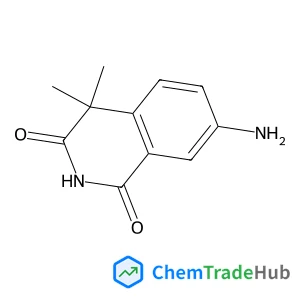
1,3(2H,4H)-Isoquinolinedione, 7-amino-4,4-dimethyl-
CAS Number:
14576-22-8
Molecular Formula:
C11H12N2O2

Recommended Suppliers





Disclaimer
This page provides academic journal information for reference and research purposes only. We are not affiliated with any journal publishers and do not handle publication submissions. For publication-related inquiries, please contact the respective journal publishers directly.
If you notice any inaccuracies in the information displayed, please contact us at support@chemtradehub.com. We will promptly review and address your concerns.