












Length-scale dependence of protein hydration-shell density
Literature Information
Publication Date
2020-03-23
DOI
10.1039/C9CP06214A
Impact Factor
3.676
Authors
Andrea Amadei, Isabella Daidone
View Original
Abstract
Here we present a computational approach based on molecular dynamics (MD) simulation to study the dependence of the protein hydration-shell density on the size of the protein molecule. The hydration-shell density of eighteen different proteins, differing in size, shape and function (eight of them are antifreeze proteins), is calculated. The results obtained show that an increase in the hydration-shell density, relative to that of the bulk, is observed (in the range of 4–14%) for all studied proteins and that this increment strongly correlates with the protein size. In particular, a decrease in the density increment is observed for decreasing protein size. A simple model is proposed in which the basic idea is to approximate the protein molecule as an effective ellipsoid and to partition the relevant parameters, i.e. the solvent-accessible volume and the corresponding solvent density, into two regions: inside and outside the effective protein ellipsoid. It is found that, within the model developed here, almost all of the hydration-density increase is located inside the protein ellipsoid, basically corresponding to pockets within, or at the surface of the protein molecule. The observed decrease in the density increment is caused by the protein size only and no difference is found between antifreeze and non-antifreeze proteins.
Related Literature
Investigating the role of interstitial water molecules in copper hexacyanoferrate for sodium-ion battery cathodes
Donghyeon Kim, Ahreum Choi, Changhyun Park, Min-Ho Kim, Hyun-Wook Lee
2023-05-29
Paper
DOI: 10.1039/D3TA02417B
Electronic Ni–N interaction enhanced reductive amination on an N-doped porous carbon supported Ni catalyst
Wenjing Song, Yujie Wan, Yuefeng Li, Xin Luo, Weiping Fang, Quanxing Zheng, Pengfei Ma, Jianping Zhang, Weikun Lai
2022-10-18
Paper
DOI: 10.1039/D2CY01551J
In situ modification of metal electrode by integrated microbial corrosion and microbial mineralization using Shewanella oneidensis for efficient oxygen evolution
Yang-Chun Yong, Jian-Li Mi
2023-03-06
Paper
DOI: 10.1039/D2CY01981G
Easy conjugations between molecules via copper-catalyzed reactions of ortho-aromatic diamines with ketones
Haijun Yang, Yunhe Jin, Yuyang Jiang
2013-09-10
Communication
DOI: 10.1039/C3GC41585F
Metal directed assembly of ditopic containers and their complexes with alkylammonium salts
Edoardo Menozzi, Julius Rebek Jr.
2005-10-11
Communication
DOI: 10.1039/B509189F
Arsonium ylides (with some mention also of arsinimines, stibonium and bismuthonium ylides)
Review Article
DOI: 10.1039/CS9871600045
Nanocomposites of bacterial cellulose nanofibers and chitin nanocrystals: fabrication, characterization and bactericidal activity
Núria Butchosa, Christian Brown, Lars A. Berglund, Vincent Bulone
2013-09-17
Paper
DOI: 10.1039/C3GC41700J
Polypropylene fiber supported ionic liquids for the conversion of fructose to 5-hydroxymethylfurfural under mild conditions
Xian-Lei Shi, Min Zhang, Yongdan Li, Wenqin Zhang
2013-09-25
Paper
DOI: 10.1039/C3GC41565A
You might also like
Compound Q&A
What are the main uses of 4-Nitrophenyl phosphate disodium salt hexahydrate (CAS: 333338-18-4)?
4-Nitrophenyl phosphate disodium salt hexahydrate is primarily used as a substra...
333338-18-44-Nitrophenyl phosph...
Compound Q&A
What are the main uses of 2-(Trifluoromethyl)-1,3-oxazole-4-carboxylic Acid (CAS: 1060816-01-4)?
2-(Trifluoromethyl)-1,3-oxazole-4-carboxylic Acid (CAS: 1060816-01-4) is widely ...
1060816-01-42-(Trifluoromethyl)-...
Compound Q&A
How should 2-Fluoro-4-biphenylcarboxylic acid (CAS: 137045-30-8) be stored?
2-Fluoro-4-biphenylcarboxylic acid should be stored in a cool, dry place at room...
137045-30-82-Fluoro-4-biphenylc...
Compound Q&A
What industries use Prednisolone-21-Carboxylic Acid (CAS: 61549-70-0)?
Prednisolone-21-Carboxylic Acid is primarily used in the pharmaceutical industry...
61549-70-0Prednisolone-21-Carb...
Compound Q&A
How should 4-(Hydrazinomethyl)-1,2,3-benzenetriol (CAS: 3614-72-0) be stored?
4-(Hydrazinomethyl)-1,2,3-benzenetriol (CAS: 3614-72-0) should be stored in a co...
3614-72-04-(Hydrazinomethyl)-...
Compound Q&A
What industries use 4-Amino-1-methyl-1H-pyrazole-5-carboxylic acid hydrochloride (CAS: 92534-70-8)?
4-Amino-1-methyl-1H-pyrazole-5-carboxylic acid hydrochloride (CAS: 92534-70-8) i...
92534-70-84-Amino-1-methyl-1H-...
Compound Q&A
What regulatory guidelines apply to dehydropachymic acid (CAS: 77012-31-8)?
Dehydropachymic acid (CAS: 77012-31-8) is regulated by various agencies. It fall...
77012-31-8Dehydropachymic acid
Compound Q&A
What is the market or research trend for 6-[(2,2-Dimethylpropanoyl)amino]nicotinic acid (CAS: 898561-66-5)?
The market and research trends for 6-[(2,2-Dimethylpropanoyl)amino]nicotinic aci...
898561-66-56-[(2,2-Dimethylprop...
Compound Q&A
How should 1,10-Phenanthroline-2,9-dicarbaldehyde (CAS: 57709-62-3) be stored?
1,10-Phenanthroline-2,9-dicarbaldehyde should be stored in a cool, dry place awa...
57709-62-31,10-Phenanthroline-...
Compound Q&A
How is 5-Carbamoyl-11-oxo-10,11-dihydro-5H-dibenzo[b,f]azepin-10-yl acetate (CAS: 113952-21-9) typically synthesized?
5-Carbamoyl-11-oxo-10,11-dihydro-5H-dibenzo[b,f]azepin-10-yl acetate can be synt...
113952-21-95-Carbamoyl-11-oxo-1...
Source Journal
Physical Chemistry Chemical Physics

CiteScore:
5.5
Self-citation Rate:
10.3%
Articles per Year:
3036
Physical Chemistry Chemical Physics (PCCP) is an international journal co-owned by 19 physical chemistry and physics societies from around the world. This journal publishes original, cutting-edge research in physical chemistry, chemical physics and biophysical chemistry. To be suitable for publication in PCCP, articles must include significant innovation and/or insight into physical chemistry; this is the most important criterion that reviewers and Editors will judge against when evaluating submissions. The journal has a broad scope and welcomes contributions spanning experiment, theory, computation and data science. Topical coverage includes spectroscopy, dynamics, kinetics, statistical mechanics, thermodynamics, electrochemistry, catalysis, surface science, quantum mechanics, quantum computing and machine learning. Interdisciplinary research areas such as polymers and soft matter, materials, nanoscience, energy, surfaces/interfaces, and biophysical chemistry are welcomed if they demonstrate significant innovation and/or insight into physical chemistry. Joined experimental/theoretical studies are particularly appreciated when complementary and based on up-to-date approaches.
Recommended Compounds

cis-3-Amino-1-(trifluoromethyl)cyclobutanol hydrochloride (1:1)
CAS Number:
1408075-16-0
Molecular Formula:
C5H9ClF3NO
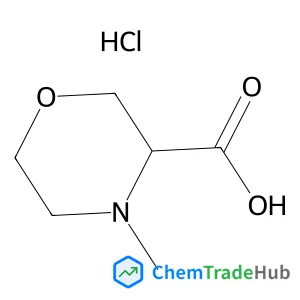
4-Methyl-3-morpholinecarboxylic acid hydrochloride (1:1)
CAS Number:
1240518-90-4
Molecular Formula:
C6H12ClNO3
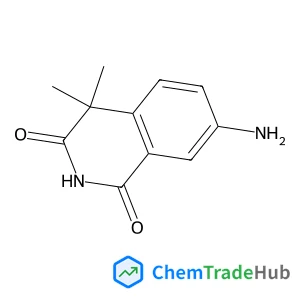
1,3(2H,4H)-Isoquinolinedione, 7-amino-4,4-dimethyl-
CAS Number:
14576-22-8
Molecular Formula:
C11H12N2O2
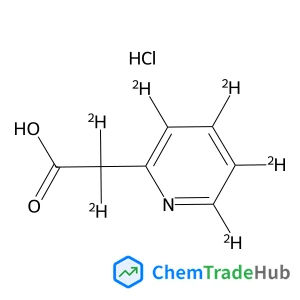
2,2-dideuterio-2-(3,4,5,6-tetradeuterio-2-pyridyl)acetic acid;hydrochloride
CAS Number:
1329799-67-8
Molecular Formula:
C7H2ClD6NO2
Recommended Suppliers





Disclaimer
This page provides academic journal information for reference and research purposes only. We are not affiliated with any journal publishers and do not handle publication submissions. For publication-related inquiries, please contact the respective journal publishers directly.
If you notice any inaccuracies in the information displayed, please contact us at support@chemtradehub.com. We will promptly review and address your concerns.