


Structure, electrical conductivity and oxygen transport properties of perovskite-type oxides CaMn1−x−yTixFeyO3−δ
Literature Information
Publication Date
2019-09-18
DOI
10.1039/C9CP04911H
Impact Factor
3.676
Authors
Rian Ruhl, Jia Song, Vincent Thoréton, Sathya Prakash Singh, Kjell Wiik, Yngve Larring, Henny J. M. Bouwmeester
View Original
Abstract
Calcium manganite-based perovskite-type oxides hold promise for application in chemical looping combustion processes and oxygen transport membranes. In this study, we have investigated the structure, electrical conductivity and oxygen transport properties of perovskite-type oxides CaMn1−x−yTixFeyO3−δ. Distinct from previous work, data of high-temperature X-ray diffraction (HT-XRD) in the temperature range 600–1000 °C (with intervals of 25 °C) demonstrates that CaMnO3−δ (CM) transforms from orthorhombic to a mixture of orthorhombic and tetragonal phases between 875 °C and 900 °C. Rietveld refinements show the formation of a pure tetragonal phase at 975 °C and of a pure cubic phase at 1000 °C. Partial substitution of manganese by iron and/or titanium to yield CaMn0.875Ti0.125O3−δ (CMT), CaMn0.85Fe0.15O3−δ (CMF) or CaMn0.725Ti0.125Fe0.15O3−δ (CMTF) leads to different phase behaviours. While CMT remains orthorhombic up to the highest temperature covered by the HT-XRD experiments, CMF and CMTF undergo an orthorhombic → tetragonal → cubic sequence of phase transitions. Electrical conductivity relaxation measurements are conducted to determine the chemical diffusion coefficient (Dchem) and the surface exchange coefficient (kchem) of the materials. The results demonstrate that oxygen transport is hindered in the tetragonal phase, when occurring, which is attributed to a possible ordering of oxygen vacancies. The small polaron electrical conductivity of CM in the cited temperature range is lowered upon partial manganese substitution, by about 10% for CMF and up to half an order of magnitude for CMT and CMTF.
Recommended Journals

Chemical & Pharmaceutical Bulletin

Corrosion Science

Journal of the American Chemical Society

Canadian Metallurgical Quarterly

Advances in Colloid and Interface Science

Cement and Concrete Research

Chemistry of Heterocyclic Compounds

Anti-Corrosion Methods and Materials

Analyst

Bulletin of the Chemical Society of Japan
Related Literature
Force-induced cleavage of a labile bond for enhanced mechanochemical crosslinking
Shu Wang, Grant A. Knappe, Norman J. Wagner
2017-10-03
Communication
DOI: 10.1039/C7PY01431G
Thermoresponsive hybrid double-crosslinked networks using magnetic iron oxide nanoparticles as crossing points
Thomas Blin, Antoine Niederberger, Lazhar Benyahia, Jérôme Fresnais, Véronique Montembault, Laurent Fontaine
2018-08-14
Paper
DOI: 10.1039/C8PY01006D
Elastomeric and pH-responsive hydrogels based on direct crosslinking of the poly(glycerol sebacate) pre-polymer and gelatin
Biqiong Chen
2018-05-15
Paper
DOI: 10.1039/C8PY00544C
Grafting-from lipase: utilization of a common amino acid residue as a new grafting site
Boyle Cheng
2018-08-17
Paper
DOI: 10.1039/C8PY01026A
Assembly of a visible light photoreactor: an inexpensive tool for bottlebrush polymer synthesis via photoiniferter polymerization
Kyle J. Arrington, John B. Matson
2017-11-30
Communication
DOI: 10.1039/C7PY01741C
Effective macrophage delivery using RAFT copolymer derived nanoparticles
R. W. M. Davidson, G. W. Simpson, J. Chiefari, M. J. Fuchter
2017-11-28
Paper
DOI: 10.1039/C7PY01363A
A user's guide to the thiol-thioester exchange in organic media: scope, limitations, and applications in material science
Brady T. Worrell, Sudheendran Mavila, Chen Wang, Taylor M. Kontour, Chern-Hooi Lim, Matthew K. McBride, Charles B. Musgrave, Richard Shoemaker
2018-08-14
Paper
DOI: 10.1039/C8PY01031E
Correction: The effects of polymer topology and chain length on the antimicrobial activity and hemocompatibility of amphiphilic ternary copolymers
Rashin Namivandi-Zangeneh, Rebecca J. Kwan, Thuy-Khanh Nguyen, Jonathan Yeow, Frances L. Byrne, Edgar H. H. Wong, Cyrille Boyer
2017-09-11
Correction
DOI: 10.1039/C7PY90140B
Anti-fatigue adhesive and tough hydrogels regulated by adenine and uracil
Xin Liu, Qin Zhang, Yanchao Qiao, Lijie Duan, Guanghui Gao
2018-08-01
Paper
DOI: 10.1039/C8PY00868J
You might also like
Compound Q&A
What are the main uses of 4-Nitrophenyl phosphate disodium salt hexahydrate (CAS: 333338-18-4)?
4-Nitrophenyl phosphate disodium salt hexahydrate is primarily used as a substra...
333338-18-44-Nitrophenyl phosph...
Compound Q&A
What are the main uses of 2-(Trifluoromethyl)-1,3-oxazole-4-carboxylic Acid (CAS: 1060816-01-4)?
2-(Trifluoromethyl)-1,3-oxazole-4-carboxylic Acid (CAS: 1060816-01-4) is widely ...
1060816-01-42-(Trifluoromethyl)-...
Compound Q&A
How should 2-Fluoro-4-biphenylcarboxylic acid (CAS: 137045-30-8) be stored?
2-Fluoro-4-biphenylcarboxylic acid should be stored in a cool, dry place at room...
137045-30-82-Fluoro-4-biphenylc...
Compound Q&A
What industries use Prednisolone-21-Carboxylic Acid (CAS: 61549-70-0)?
Prednisolone-21-Carboxylic Acid is primarily used in the pharmaceutical industry...
61549-70-0Prednisolone-21-Carb...
Compound Q&A
How should 4-(Hydrazinomethyl)-1,2,3-benzenetriol (CAS: 3614-72-0) be stored?
4-(Hydrazinomethyl)-1,2,3-benzenetriol (CAS: 3614-72-0) should be stored in a co...
3614-72-04-(Hydrazinomethyl)-...
Compound Q&A
What industries use 4-Amino-1-methyl-1H-pyrazole-5-carboxylic acid hydrochloride (CAS: 92534-70-8)?
4-Amino-1-methyl-1H-pyrazole-5-carboxylic acid hydrochloride (CAS: 92534-70-8) i...
92534-70-84-Amino-1-methyl-1H-...
Compound Q&A
What regulatory guidelines apply to dehydropachymic acid (CAS: 77012-31-8)?
Dehydropachymic acid (CAS: 77012-31-8) is regulated by various agencies. It fall...
77012-31-8Dehydropachymic acid
Compound Q&A
What is the market or research trend for 6-[(2,2-Dimethylpropanoyl)amino]nicotinic acid (CAS: 898561-66-5)?
The market and research trends for 6-[(2,2-Dimethylpropanoyl)amino]nicotinic aci...
898561-66-56-[(2,2-Dimethylprop...
Compound Q&A
How should 1,10-Phenanthroline-2,9-dicarbaldehyde (CAS: 57709-62-3) be stored?
1,10-Phenanthroline-2,9-dicarbaldehyde should be stored in a cool, dry place awa...
57709-62-31,10-Phenanthroline-...
Compound Q&A
How is 5-Carbamoyl-11-oxo-10,11-dihydro-5H-dibenzo[b,f]azepin-10-yl acetate (CAS: 113952-21-9) typically synthesized?
5-Carbamoyl-11-oxo-10,11-dihydro-5H-dibenzo[b,f]azepin-10-yl acetate can be synt...
113952-21-95-Carbamoyl-11-oxo-1...
Source Journal
Physical Chemistry Chemical Physics

CiteScore:
5.5
Self-citation Rate:
10.3%
Articles per Year:
3036
Physical Chemistry Chemical Physics (PCCP) is an international journal co-owned by 19 physical chemistry and physics societies from around the world. This journal publishes original, cutting-edge research in physical chemistry, chemical physics and biophysical chemistry. To be suitable for publication in PCCP, articles must include significant innovation and/or insight into physical chemistry; this is the most important criterion that reviewers and Editors will judge against when evaluating submissions. The journal has a broad scope and welcomes contributions spanning experiment, theory, computation and data science. Topical coverage includes spectroscopy, dynamics, kinetics, statistical mechanics, thermodynamics, electrochemistry, catalysis, surface science, quantum mechanics, quantum computing and machine learning. Interdisciplinary research areas such as polymers and soft matter, materials, nanoscience, energy, surfaces/interfaces, and biophysical chemistry are welcomed if they demonstrate significant innovation and/or insight into physical chemistry. Joined experimental/theoretical studies are particularly appreciated when complementary and based on up-to-date approaches.
Recommended Compounds
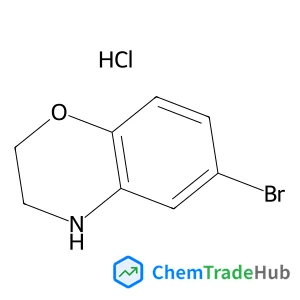
6-Bromo-3,4-dihydro-2H-1,4-benzoxazine hydrochloride (1:1)
CAS Number:
1260803-10-8
Molecular Formula:
C8H9BrClNO
![(2E)-3-(3-Chlorophenyl)-N-{2-[4-(methylsulfonyl)-1-piperazinyl]-2-oxoethyl}acrylamide structure](https://static.chemtradehub.com/structs/250/2505001-54-5-c1e9.webp "(2E)-3-(3-Chlorophenyl)-N-{2-[4-(methylsulfonyl)-1-piperazinyl]-2-oxoethyl}acrylamide structure")
(2E)-3-(3-Chlorophenyl)-N-{2-[4-(methylsulfonyl)-1-piperazinyl]-2-oxoethyl}acrylamide
CAS Number:
2505001-54-5
Molecular Formula:
C16H20ClN3O4S
Recommended Suppliers



Disclaimer
This page provides academic journal information for reference and research purposes only. We are not affiliated with any journal publishers and do not handle publication submissions. For publication-related inquiries, please contact the respective journal publishers directly.
If you notice any inaccuracies in the information displayed, please contact us at support@chemtradehub.com. We will promptly review and address your concerns.