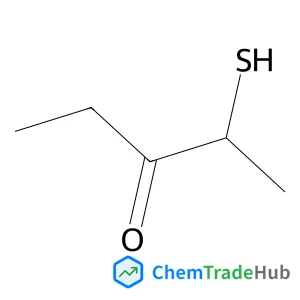
phosphoryl}methyl 4-methylbenzenesulfonate structure](https://static.chemtradehub.com/structs/864/864068-45-1-ba7c.webp "{[3-(Hexadecyloxy)propoxy](hydroxy)phosphoryl}methyl 4-methylbenzenesulfonate structure")
{[3-(Hexadecyloxy)propoxy](hydroxy)phosphoryl}methyl 4-methylbenzenesulfonate
CAS Number:
864068-45-1
Molecular Formula:
C27H49O7PS
Noureldin Saleh, Yong Wang, Poul Nissen, Kresten Lindorff-Larsen
The sarcoplasmic reticulum Ca2+-ATPase (SERCA) is a widely studied member of the large family of phosphorylation(P)-type ATPase membrane transporters. Ligands and nucleotide binding naturally modulate the conformational space of P-type ATPases through allosteric inter-domain communications. Whereas many inhibitory ATPase ligands act by directly blocking substrate uptake or release, SERCA is a target for thapsigargin (TG), a plant-derived natural product that allosterically inhibits the transport cycle. While thapsigargin's inhibitory effects on SERCA have been widely studied experimentally, the molecular mechanisms underlying these remain incompletely understood. Here, we apply modelling and molecular simulations to probe the effects of TG binding to the major functional states along SERCA's reaction cycle. Our results provide insight into the atomic-level details of the conformational changes induced by TG binding to SERCA, and suggest mechanisms for its effect. Since other P-type ATPases share closely related reaction cycles, our data suggests that similar modulators might exist for these.
Jewel Ann Maria Xavier, Clara Viñas, Francesc Teixidor
DOI: 10.1039/D2CC00424K
Edoardo Menozzi, Julius Rebek Jr.
DOI: 10.1039/B509189F
Kaliyamoorthy Justice Babu, Ayushi Shukla, Gurpreet Kaur, Arshdeep Kaur, Himanshu Bhatt
DOI: 10.1039/D2CC05142G
Christian Wolf, Shuanglong Liu, Brian C. Reinhardt
DOI: 10.1039/B609880K
Youcan Zhang
DOI: 10.1039/D2SC02665A
Marri Mahender Reddy, Macharla Arun Kumar, Peraka Swamy, Mameda Naresh, Kodumuri Srujana, Lanka Satyanarayana, Akula Venugopal, Nama Narender
DOI: 10.1039/C3GC41345D
Tianyi Zheng, Janna L. Berman, Forrest E. Michael
DOI: 10.1039/D2SC02648A
Michelle K. Taylor, David J. Evans, Charles G. Young
DOI: 10.1039/B610036H
4-Nitrophenyl phosphate disodium salt hexahydrate is primarily used as a substra...
2-(Trifluoromethyl)-1,3-oxazole-4-carboxylic Acid (CAS: 1060816-01-4) is widely ...
2-Fluoro-4-biphenylcarboxylic acid should be stored in a cool, dry place at room...
Prednisolone-21-Carboxylic Acid is primarily used in the pharmaceutical industry...
4-(Hydrazinomethyl)-1,2,3-benzenetriol (CAS: 3614-72-0) should be stored in a co...
4-Amino-1-methyl-1H-pyrazole-5-carboxylic acid hydrochloride (CAS: 92534-70-8) i...
Dehydropachymic acid (CAS: 77012-31-8) is regulated by various agencies. It fall...
The market and research trends for 6-[(2,2-Dimethylpropanoyl)amino]nicotinic aci...
1,10-Phenanthroline-2,9-dicarbaldehyde should be stored in a cool, dry place awa...
5-Carbamoyl-11-oxo-10,11-dihydro-5H-dibenzo[b,f]azepin-10-yl acetate can be synt...

Physical Chemistry Chemical Physics (PCCP) is an international journal co-owned by 19 physical chemistry and physics societies from around the world. This journal publishes original, cutting-edge research in physical chemistry, chemical physics and biophysical chemistry. To be suitable for publication in PCCP, articles must include significant innovation and/or insight into physical chemistry; this is the most important criterion that reviewers and Editors will judge against when evaluating submissions. The journal has a broad scope and welcomes contributions spanning experiment, theory, computation and data science. Topical coverage includes spectroscopy, dynamics, kinetics, statistical mechanics, thermodynamics, electrochemistry, catalysis, surface science, quantum mechanics, quantum computing and machine learning. Interdisciplinary research areas such as polymers and soft matter, materials, nanoscience, energy, surfaces/interfaces, and biophysical chemistry are welcomed if they demonstrate significant innovation and/or insight into physical chemistry. Joined experimental/theoretical studies are particularly appreciated when complementary and based on up-to-date approaches.

![N-[2-(4-Hydroxyphenoxy)-4-nitrophenyl]methanesulfonamide structure](https://static.chemtradehub.com/structs/109/109032-22-6-7c88.webp "N-[2-(4-Hydroxyphenoxy)-4-nitrophenyl]methanesulfonamide structure")
![(2E)-3-(3-Chlorophenyl)-N-{2-[4-(methylsulfonyl)-1-piperazinyl]-2-oxoethyl}acrylamide structure](https://static.chemtradehub.com/structs/250/2505001-54-5-c1e9.webp "(2E)-3-(3-Chlorophenyl)-N-{2-[4-(methylsulfonyl)-1-piperazinyl]-2-oxoethyl}acrylamide structure")