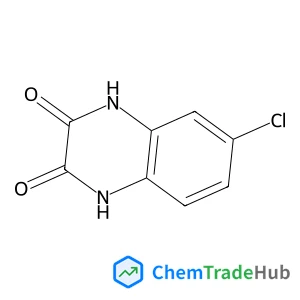
6-CHLORO-2,3-DIOXO-1,2,3,4-TETRAHYDROQUINOXALINE, 97
CAS Number:
169-14-2
Molecular Formula:
C8H5ClN2O2
Composites of the noble metal Au supported on MgAl-LDHs were prepared by a simple impregnation-reduction method to be used as thermal- and photocatalysts for the photocatalytic degradation of ciprofloxacin and thermocatalytic decomposition of formic acid to produce hydrogen. A collection of techniques, including X-ray diffraction (XRD), transmission electron microscopy (TEM) and X-ray photoelectron spectroscopy (XPS) were employed to determine the structure and morphology properties of the as-prepared Au/MgAl-LDHs. The presence of surface Au(0) in Au/MgAl-LDHs was confirmed by TEM and XPS analyses. For the first time, we compared the effect of the surfactant PVP on the catalyst and found that the Au/MgAl-LDH composite with Au particle size of 2–8 nm had better catalytic activity than the (PVP@Au)/MgAl-LDH composite with Au particle size in the range of 1–5 nm. The sizes of Au NPs in the two catalysts were similar but had different effects on the catalytic performance. This indicated that the addition of PVP had an inhibitory effect on the catalytic activity of the catalyst. To evaluate the photostability of Au/MgAl-LDHs, recycle experiments for the photocatalytic degradation of ciprofloxacin were performed, and it was found that Au/MgAl-LDHs had good stability. Finally, we also applied Au/MgAl-LDHs in environmental catalysis and energy catalysis; we hope that they will be useful in practical applications.
Mengting Tan, Yan Shi, Zhifeng Fu, Wantai Yang
DOI: 10.1039/C7PY01905J
R. W. M. Davidson, G. W. Simpson, J. Chiefari, M. J. Fuchter
DOI: 10.1039/C7PY01363A
Zhen Zhang, Yongcun Zhou, Zhuxian Zhou, Ying Piao, Nagendra Kalva, Xiangrui Liu, Jianbin Tang, Youqing Shen
DOI: 10.1039/C7PY01492A
Jie Gao, Zonghang Ying, Liu Zhong, Heng Liao, Haiyang Gao, Wu Qing
DOI: 10.1039/C8PY00047F
Chao Bian, Yin-Ning Zhou, Jun-Kang Guo, Zheng-Hong Luo
DOI: 10.1039/C7PY01762F
Chunyan Wu, Chunhua Hu, Yuzhou Liu
DOI: 10.1039/C7PY01177F
Kyle J. Arrington, John B. Matson
DOI: 10.1039/C7PY01741C
Gilles B. Desmet, Yoshi W. Marien, Paul H. M. Van Steenberge, Marie-Françoise Reyniers, Guy B. Marin
DOI: 10.1039/C7PY01008G
4-Nitrophenyl phosphate disodium salt hexahydrate is primarily used as a substra...
2-(Trifluoromethyl)-1,3-oxazole-4-carboxylic Acid (CAS: 1060816-01-4) is widely ...
2-Fluoro-4-biphenylcarboxylic acid should be stored in a cool, dry place at room...
Prednisolone-21-Carboxylic Acid is primarily used in the pharmaceutical industry...
4-(Hydrazinomethyl)-1,2,3-benzenetriol (CAS: 3614-72-0) should be stored in a co...
4-Amino-1-methyl-1H-pyrazole-5-carboxylic acid hydrochloride (CAS: 92534-70-8) i...
Dehydropachymic acid (CAS: 77012-31-8) is regulated by various agencies. It fall...
The market and research trends for 6-[(2,2-Dimethylpropanoyl)amino]nicotinic aci...
1,10-Phenanthroline-2,9-dicarbaldehyde should be stored in a cool, dry place awa...
5-Carbamoyl-11-oxo-10,11-dihydro-5H-dibenzo[b,f]azepin-10-yl acetate can be synt...

Physical Chemistry Chemical Physics (PCCP) is an international journal co-owned by 19 physical chemistry and physics societies from around the world. This journal publishes original, cutting-edge research in physical chemistry, chemical physics and biophysical chemistry. To be suitable for publication in PCCP, articles must include significant innovation and/or insight into physical chemistry; this is the most important criterion that reviewers and Editors will judge against when evaluating submissions. The journal has a broad scope and welcomes contributions spanning experiment, theory, computation and data science. Topical coverage includes spectroscopy, dynamics, kinetics, statistical mechanics, thermodynamics, electrochemistry, catalysis, surface science, quantum mechanics, quantum computing and machine learning. Interdisciplinary research areas such as polymers and soft matter, materials, nanoscience, energy, surfaces/interfaces, and biophysical chemistry are welcomed if they demonstrate significant innovation and/or insight into physical chemistry. Joined experimental/theoretical studies are particularly appreciated when complementary and based on up-to-date approaches.
![N-[2-(4-Hydroxyphenoxy)-4-nitrophenyl]methanesulfonamide structure](https://static.chemtradehub.com/structs/109/109032-22-6-7c88.webp "N-[2-(4-Hydroxyphenoxy)-4-nitrophenyl]methanesulfonamide structure")