












Comprehensive understanding of intrinsic mobility in the monolayers of III–VI group 2D materials
Literature Information
Publication Date
2019-09-09
DOI
10.1039/C9CP04407H
Impact Factor
3.676
Authors
Jianhui Chen, Xiaolin Tan, Peng Lin, Baisheng Sa, Jian Zhou, Yinggan Zhang, Cuilian Wen, Zhimei Sun
View Original
Abstract
Monolayers of III–VI group two-dimensional (2D) materials MX (M = Ga and In and X = S, Se, and Te) have attracted global interest for potential applications in electronic and photoelectric devices due to their attractive physical and chemical characteristics. However, a comprehensive understanding of the distinguished carrier mobility in MX monolayers is of great importance and not yet clear. Herein, using a Boltzmann transport equation (BTE) solver and first principles calculations, we have precisely revealed that the intrinsic mobility in MX monolayers is significantly limited by phonon scattering. Note that the longitudinal acoustic phonon mode and optic phonon modes and were found predominantly coupled with electrons, which strongly restrained the intrinsic mobility in the MX monolayers. Interestingly, apart from a moderate band gap, the GaSe and GaTe monolayers exhibit high electron mobility exceeding 103 cm2 V−1 s−1 and may serve as outstanding electron transport channels. We believe that our findings will shed light on the design and applications of MX monolayers and 2D materials in nanoscale electronic and photoelectric devices.
Related Literature
Cd2+ coordination: an efficient structuring switch for polypeptide polymers
2018-06-13
Communication
DOI: 10.1039/C8PY00810H
A one-pot strategy to improve end-capping efficacy in Stille poly-condensations
Jared D. Harris, Kenneth R. Carter
2018-01-19
Paper
DOI: 10.1039/C7PY01761H
A pH-responsive polymer based on dynamic imine bonds as a drug delivery material with pseudo target release behavior
Yangchun Tao, Siwei Liu, Yi Zhang, Zhenguo Chi, Jiarui Xu
2018-01-19
Paper
DOI: 10.1039/C7PY02108A
A new echelon of precision polypentenamers: highly isotactic branching on every five carbons
Stefan Brits, William J. Neary, Goutam Palui, Justin G. Kennemur
2018-01-02
Paper
DOI: 10.1039/C7PY01922J
Strategies to combine ROP with ATRP or RAFT polymerization for the synthesis of biodegradable polymeric nanoparticles for biomedical applications
Mattia Sponchioni, Nicolò Manfredini, Matteo Maraldi, Davide Moscatelli
2018-07-09
Review Article
DOI: 10.1039/C8PY00649K
Nanogel-like UCST triblock copolymer micelles showing large volume expansion before abrupt dissolution
Amélie Augé, Daniel Fortin, Xia Tong, Yue Zhao
2018-08-13
Paper
DOI: 10.1039/C8PY00960K
Temperature-responsive hydrogels via the electrostatic interaction of amphiphilic diblock copolymers with pendant-ion groups
Hye Yun Lee, Seung Hun Park, Jae Ho Kim, Moon Suk Kim
2017-10-17
Paper
DOI: 10.1039/C7PY01460K
Synthesis of PEVE-b-P(CTFE-alt-EVE) block copolymers by sequential cationic and radical RAFT polymerization
Marc Guerre, Mineto Uchiyama, Gérald Lopez, Bruno Améduri, Masami Kamigaito, Vincent Ladmiral
2017-12-08
Paper
DOI: 10.1039/C7PY01924F
You might also like
Compound Q&A
What are the main uses of 4-Nitrophenyl phosphate disodium salt hexahydrate (CAS: 333338-18-4)?
4-Nitrophenyl phosphate disodium salt hexahydrate is primarily used as a substra...
333338-18-44-Nitrophenyl phosph...
Compound Q&A
What are the main uses of 2-(Trifluoromethyl)-1,3-oxazole-4-carboxylic Acid (CAS: 1060816-01-4)?
2-(Trifluoromethyl)-1,3-oxazole-4-carboxylic Acid (CAS: 1060816-01-4) is widely ...
1060816-01-42-(Trifluoromethyl)-...
Compound Q&A
How should 2-Fluoro-4-biphenylcarboxylic acid (CAS: 137045-30-8) be stored?
2-Fluoro-4-biphenylcarboxylic acid should be stored in a cool, dry place at room...
137045-30-82-Fluoro-4-biphenylc...
Compound Q&A
What industries use Prednisolone-21-Carboxylic Acid (CAS: 61549-70-0)?
Prednisolone-21-Carboxylic Acid is primarily used in the pharmaceutical industry...
61549-70-0Prednisolone-21-Carb...
Compound Q&A
How should 4-(Hydrazinomethyl)-1,2,3-benzenetriol (CAS: 3614-72-0) be stored?
4-(Hydrazinomethyl)-1,2,3-benzenetriol (CAS: 3614-72-0) should be stored in a co...
3614-72-04-(Hydrazinomethyl)-...
Compound Q&A
What industries use 4-Amino-1-methyl-1H-pyrazole-5-carboxylic acid hydrochloride (CAS: 92534-70-8)?
4-Amino-1-methyl-1H-pyrazole-5-carboxylic acid hydrochloride (CAS: 92534-70-8) i...
92534-70-84-Amino-1-methyl-1H-...
Compound Q&A
What regulatory guidelines apply to dehydropachymic acid (CAS: 77012-31-8)?
Dehydropachymic acid (CAS: 77012-31-8) is regulated by various agencies. It fall...
77012-31-8Dehydropachymic acid
Compound Q&A
What is the market or research trend for 6-[(2,2-Dimethylpropanoyl)amino]nicotinic acid (CAS: 898561-66-5)?
The market and research trends for 6-[(2,2-Dimethylpropanoyl)amino]nicotinic aci...
898561-66-56-[(2,2-Dimethylprop...
Compound Q&A
How should 1,10-Phenanthroline-2,9-dicarbaldehyde (CAS: 57709-62-3) be stored?
1,10-Phenanthroline-2,9-dicarbaldehyde should be stored in a cool, dry place awa...
57709-62-31,10-Phenanthroline-...
Compound Q&A
How is 5-Carbamoyl-11-oxo-10,11-dihydro-5H-dibenzo[b,f]azepin-10-yl acetate (CAS: 113952-21-9) typically synthesized?
5-Carbamoyl-11-oxo-10,11-dihydro-5H-dibenzo[b,f]azepin-10-yl acetate can be synt...
113952-21-95-Carbamoyl-11-oxo-1...
Source Journal
Physical Chemistry Chemical Physics

CiteScore:
5.5
Self-citation Rate:
10.3%
Articles per Year:
3036
Physical Chemistry Chemical Physics (PCCP) is an international journal co-owned by 19 physical chemistry and physics societies from around the world. This journal publishes original, cutting-edge research in physical chemistry, chemical physics and biophysical chemistry. To be suitable for publication in PCCP, articles must include significant innovation and/or insight into physical chemistry; this is the most important criterion that reviewers and Editors will judge against when evaluating submissions. The journal has a broad scope and welcomes contributions spanning experiment, theory, computation and data science. Topical coverage includes spectroscopy, dynamics, kinetics, statistical mechanics, thermodynamics, electrochemistry, catalysis, surface science, quantum mechanics, quantum computing and machine learning. Interdisciplinary research areas such as polymers and soft matter, materials, nanoscience, energy, surfaces/interfaces, and biophysical chemistry are welcomed if they demonstrate significant innovation and/or insight into physical chemistry. Joined experimental/theoretical studies are particularly appreciated when complementary and based on up-to-date approaches.
Recommended Compounds
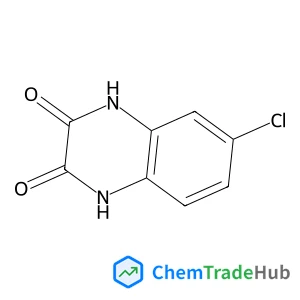
6-CHLORO-2,3-DIOXO-1,2,3,4-TETRAHYDROQUINOXALINE, 97
CAS Number:
169-14-2
Molecular Formula:
C8H5ClN2O2
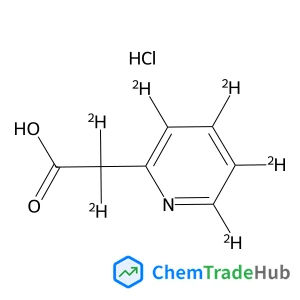
2,2-dideuterio-2-(3,4,5,6-tetradeuterio-2-pyridyl)acetic acid;hydrochloride
CAS Number:
1329799-67-8
Molecular Formula:
C7H2ClD6NO2
Recommended Suppliers






Disclaimer
This page provides academic journal information for reference and research purposes only. We are not affiliated with any journal publishers and do not handle publication submissions. For publication-related inquiries, please contact the respective journal publishers directly.
If you notice any inaccuracies in the information displayed, please contact us at support@chemtradehub.com. We will promptly review and address your concerns.