












Optimizing the orbital occupation in the multiple minima problem of magnetic materials from the metaheuristic firefly algorithm
Literature Information
Publication Date
2019-09-17
DOI
10.1039/C9CP03618K
Impact Factor
3.676
Authors
Adam Payne, Guillermo Avedaño-Franco, Xu He, Eric Bousquet, Aldo H. Romero
View Original
Abstract
We present the use and implementation of the firefly algorithm to help in scanning the multiple metastable minima of orbital occupations in density functional theory (DFT) plus Hubbard U correction and to identify the ground state occupations in strongly correlated materials. We show the application of this implementation with the Abinit code on KCoF3 and UO2 crystals, which are typical d and f electron systems with numerous occupation minima. We demonstrate the validity and performance of the method by comparing with previous methodologies. The method is general and can be applied to any code using constrained occupation matrices.
Related Literature
Classical photopolymerization kinetics, exceptional gelation, and improved diffraction efficiency and driving voltage in scaffolding morphological H-PDLCs afforded using a photoinitibitor
Guannan Chen, Mingli Ni, Yan Yan, Jiaqing Zhuang, V. A. L. Roy, Robert K. Y. Li
2015-10-26
Paper
DOI: 10.1039/C5PY01414J
Study of thiol–ene chemistry on polymer brushes and application to surface patterning and protein adsorption
Khooi Y. Tan, Madeleine Ramstedt, Wilhelm T. S. Huck
2015-12-16
Paper
DOI: 10.1039/C5PY01687H
Synthesis, properties and performance of organic polymers employed in flocculation applications
Vu H. Dao, Kei Saito
2015-11-03
Minireview
DOI: 10.1039/C5PY01572C
Redox-sensitive hyaluronic acid–paclitaxel conjugate micelles with high physical drug loading for efficient tumor therapy
Tingjie Yin, Jing Wang, Lifang Yin, Linjia Shen, Jianping Zhou, Meirong Huo
2015-09-24
Paper
DOI: 10.1039/C5PY01355K
A novel stimuli-responsive fluorescent elastomer based on an AIE mechanism
Dong Huang, Jun Wang, Wenjun Shen, Lizhuang Chen, Shengyuan Yang, Meifang Zhu, Guodong Liang, Zexiao Xu
2015-09-24
Paper
DOI: 10.1039/C5PY01273B
Robust carboxylated polymer pores from a cyclic peptide template
Mahesh Potnuru, Nandita Madhavan
2015-10-21
Communication
DOI: 10.1039/C5PY01313E
Entropically-driven ring-opening metathesis polymerization (ED-ROMP) of macrocyclic olefins prepared from deoxycholic acid to give functionalized polymers‡
Philip Hodge, Abdel Chakiri
2015-04-30
Paper
DOI: 10.1039/C5PY00272A
CO2-Stimulated morphology transition of ABC miktoarm star terpolymer assemblies
Haotian Du, Min Zeng, Long Pan, Tommy Fang, Xuming Xie, Yen Wei, Jinying Yuan
2017-04-04
Paper
DOI: 10.1039/C7PY00214A
You might also like
Compound Q&A
What are the main uses of 4-Nitrophenyl phosphate disodium salt hexahydrate (CAS: 333338-18-4)?
4-Nitrophenyl phosphate disodium salt hexahydrate is primarily used as a substra...
333338-18-44-Nitrophenyl phosph...
Compound Q&A
What are the main uses of 2-(Trifluoromethyl)-1,3-oxazole-4-carboxylic Acid (CAS: 1060816-01-4)?
2-(Trifluoromethyl)-1,3-oxazole-4-carboxylic Acid (CAS: 1060816-01-4) is widely ...
1060816-01-42-(Trifluoromethyl)-...
Compound Q&A
How should 2-Fluoro-4-biphenylcarboxylic acid (CAS: 137045-30-8) be stored?
2-Fluoro-4-biphenylcarboxylic acid should be stored in a cool, dry place at room...
137045-30-82-Fluoro-4-biphenylc...
Compound Q&A
What industries use Prednisolone-21-Carboxylic Acid (CAS: 61549-70-0)?
Prednisolone-21-Carboxylic Acid is primarily used in the pharmaceutical industry...
61549-70-0Prednisolone-21-Carb...
Compound Q&A
How should 4-(Hydrazinomethyl)-1,2,3-benzenetriol (CAS: 3614-72-0) be stored?
4-(Hydrazinomethyl)-1,2,3-benzenetriol (CAS: 3614-72-0) should be stored in a co...
3614-72-04-(Hydrazinomethyl)-...
Compound Q&A
What industries use 4-Amino-1-methyl-1H-pyrazole-5-carboxylic acid hydrochloride (CAS: 92534-70-8)?
4-Amino-1-methyl-1H-pyrazole-5-carboxylic acid hydrochloride (CAS: 92534-70-8) i...
92534-70-84-Amino-1-methyl-1H-...
Compound Q&A
What regulatory guidelines apply to dehydropachymic acid (CAS: 77012-31-8)?
Dehydropachymic acid (CAS: 77012-31-8) is regulated by various agencies. It fall...
77012-31-8Dehydropachymic acid
Compound Q&A
What is the market or research trend for 6-[(2,2-Dimethylpropanoyl)amino]nicotinic acid (CAS: 898561-66-5)?
The market and research trends for 6-[(2,2-Dimethylpropanoyl)amino]nicotinic aci...
898561-66-56-[(2,2-Dimethylprop...
Compound Q&A
How should 1,10-Phenanthroline-2,9-dicarbaldehyde (CAS: 57709-62-3) be stored?
1,10-Phenanthroline-2,9-dicarbaldehyde should be stored in a cool, dry place awa...
57709-62-31,10-Phenanthroline-...
Compound Q&A
How is 5-Carbamoyl-11-oxo-10,11-dihydro-5H-dibenzo[b,f]azepin-10-yl acetate (CAS: 113952-21-9) typically synthesized?
5-Carbamoyl-11-oxo-10,11-dihydro-5H-dibenzo[b,f]azepin-10-yl acetate can be synt...
113952-21-95-Carbamoyl-11-oxo-1...
Source Journal
Physical Chemistry Chemical Physics

CiteScore:
5.5
Self-citation Rate:
10.3%
Articles per Year:
3036
Physical Chemistry Chemical Physics (PCCP) is an international journal co-owned by 19 physical chemistry and physics societies from around the world. This journal publishes original, cutting-edge research in physical chemistry, chemical physics and biophysical chemistry. To be suitable for publication in PCCP, articles must include significant innovation and/or insight into physical chemistry; this is the most important criterion that reviewers and Editors will judge against when evaluating submissions. The journal has a broad scope and welcomes contributions spanning experiment, theory, computation and data science. Topical coverage includes spectroscopy, dynamics, kinetics, statistical mechanics, thermodynamics, electrochemistry, catalysis, surface science, quantum mechanics, quantum computing and machine learning. Interdisciplinary research areas such as polymers and soft matter, materials, nanoscience, energy, surfaces/interfaces, and biophysical chemistry are welcomed if they demonstrate significant innovation and/or insight into physical chemistry. Joined experimental/theoretical studies are particularly appreciated when complementary and based on up-to-date approaches.
Recommended Compounds

![(3R,5R)-1-[(Benzyloxy)carbonyl]-5-methyl-3-piperidinecarboxylic acid structure](https://static.chemtradehub.com/structs/126/1269757-29-0-c552.webp "(3R,5R)-1-[(Benzyloxy)carbonyl]-5-methyl-3-piperidinecarboxylic acid structure")
(3R,5R)-1-[(Benzyloxy)carbonyl]-5-methyl-3-piperidinecarboxylic acid
CAS Number:
1269757-29-0
Molecular Formula:
C15H19NO4
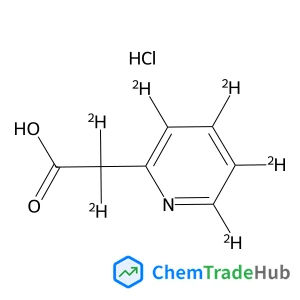
2,2-dideuterio-2-(3,4,5,6-tetradeuterio-2-pyridyl)acetic acid;hydrochloride
CAS Number:
1329799-67-8
Molecular Formula:
C7H2ClD6NO2

Recommended Suppliers








Disclaimer
This page provides academic journal information for reference and research purposes only. We are not affiliated with any journal publishers and do not handle publication submissions. For publication-related inquiries, please contact the respective journal publishers directly.
If you notice any inaccuracies in the information displayed, please contact us at support@chemtradehub.com. We will promptly review and address your concerns.