












Recent progress in Pt and Pd-based hybrid nanocatalysts for methanol electrooxidation
Literature Information
Publication Date
2019-09-02
DOI
10.1039/C9CP03600H
Impact Factor
3.676
Authors
View Original
Abstract
Although Pt and Pd nanocrystals are among the most popular candidates for anode catalysts in direct methanol fuel cells, their catalytic properties still need to be further improved in order to reduce the costs. In view of this, fabricating hybrid nanomaterials by integrating noble metal nanocrystals and other species turns out to be a powerful way to produce unprecedented catalysts which could combine the merits of different components and modulate the electronic states of Pt or Pd at the same time. In this review, we list recent studies in the construction of heterostructured hybrid nanocatalysts through introducing external components into the noble metal nanocrystals. The mentioned external components include heteroatom doped carbon nanomaterials, metal oxides and hydroxides, as well as transition metal carbides, nitrides, phosphides, and sulfides. The construction methodologies and functions that these introduced species played in the catalytic processes of methanol electrooxidation are discussed. The attempts to maximize the catalytically active interfaces and utilization efficiencies of noble metals are also presented. Finally, the conclusions and existing problems in relevant nanocatalysts are provided.
Related Literature
Arsonium ylides (with some mention also of arsinimines, stibonium and bismuthonium ylides)
Review Article
DOI: 10.1039/CS9871600045
Palladium-catalyzed difluoroalkylative carbonylation of styrenes toward difluoropentanedioates
Youcan Zhang
2022-08-03
Edge Article
DOI: 10.1039/D2SC02665A
Highly efficient and durable solar thermal energy harvesting via scalable hierarchical coatings inspired by stony corals
Juan F. Torres, Kaoru Tsuda, Yasushi Murakami, Yifan Guo, Sahar Hosseini, Charles-Alexis Asselineau, Mahdiar Taheri, Kurt Drewes, Wojciech Lipiński, Joe Coventry
2022-03-28
Paper
DOI: 10.1039/D1EE03028K
Study on the luminescence properties of ionic [Cu(N^N)(P^P)]+ complexes: influence of ligands, counteranions and weak interactions
Zi-Xi Li, Zhen-Zhou Sun, Guo Wang, Wei Yang, Hong-Liang Han, Yu-Ping Yang, Zhong-Feng Li, Yi-Shan Yao
2022-09-27
Paper
DOI: 10.1039/D2CE01177H
Synthesis of glycerol 1,2-carbonate by transesterification of glycerol with dimethyl carbonate using triethylamine as a facile separable homogeneous catalyst
Olga Gómez-Jiménez-Aberasturi, Camilo Ramírez-López, Belén Maestro-Madurga
2012-10-02
Paper
DOI: 10.1039/C2GC35992H
Metal directed assembly of ditopic containers and their complexes with alkylammonium salts
Edoardo Menozzi, Julius Rebek Jr.
2005-10-11
Communication
DOI: 10.1039/B509189F
Synthesis and utilisation of sugar compounds derived from lignocellulosic biomass
Hirokazu Kobayashi, Atsushi Fukuoka
2013-04-09
Critical Review
DOI: 10.1039/C3GC00060E
Correction: Activity-based NIR fluorescent probes based on the versatile hemicyanine scaffold: design strategy, biomedical applications, and outlook
Heejeong Kim, Jingjing Han, Qichao Yao, Juyoung Yoon
2022-02-21
Correction
DOI: 10.1039/D2CS90019J
Highly-oxidised, sulfur-rich, mixed-valence vanadium(iv/v) complexes
Michelle K. Taylor, David J. Evans, Charles G. Young
2006-09-05
Communication
DOI: 10.1039/B610036H
You might also like
Compound Q&A
What are the main uses of 4-Nitrophenyl phosphate disodium salt hexahydrate (CAS: 333338-18-4)?
4-Nitrophenyl phosphate disodium salt hexahydrate is primarily used as a substra...
333338-18-44-Nitrophenyl phosph...
Compound Q&A
What are the main uses of 2-(Trifluoromethyl)-1,3-oxazole-4-carboxylic Acid (CAS: 1060816-01-4)?
2-(Trifluoromethyl)-1,3-oxazole-4-carboxylic Acid (CAS: 1060816-01-4) is widely ...
1060816-01-42-(Trifluoromethyl)-...
Compound Q&A
How should 2-Fluoro-4-biphenylcarboxylic acid (CAS: 137045-30-8) be stored?
2-Fluoro-4-biphenylcarboxylic acid should be stored in a cool, dry place at room...
137045-30-82-Fluoro-4-biphenylc...
Compound Q&A
What industries use Prednisolone-21-Carboxylic Acid (CAS: 61549-70-0)?
Prednisolone-21-Carboxylic Acid is primarily used in the pharmaceutical industry...
61549-70-0Prednisolone-21-Carb...
Compound Q&A
How should 4-(Hydrazinomethyl)-1,2,3-benzenetriol (CAS: 3614-72-0) be stored?
4-(Hydrazinomethyl)-1,2,3-benzenetriol (CAS: 3614-72-0) should be stored in a co...
3614-72-04-(Hydrazinomethyl)-...
Compound Q&A
What industries use 4-Amino-1-methyl-1H-pyrazole-5-carboxylic acid hydrochloride (CAS: 92534-70-8)?
4-Amino-1-methyl-1H-pyrazole-5-carboxylic acid hydrochloride (CAS: 92534-70-8) i...
92534-70-84-Amino-1-methyl-1H-...
Compound Q&A
What regulatory guidelines apply to dehydropachymic acid (CAS: 77012-31-8)?
Dehydropachymic acid (CAS: 77012-31-8) is regulated by various agencies. It fall...
77012-31-8Dehydropachymic acid
Compound Q&A
What is the market or research trend for 6-[(2,2-Dimethylpropanoyl)amino]nicotinic acid (CAS: 898561-66-5)?
The market and research trends for 6-[(2,2-Dimethylpropanoyl)amino]nicotinic aci...
898561-66-56-[(2,2-Dimethylprop...
Compound Q&A
How should 1,10-Phenanthroline-2,9-dicarbaldehyde (CAS: 57709-62-3) be stored?
1,10-Phenanthroline-2,9-dicarbaldehyde should be stored in a cool, dry place awa...
57709-62-31,10-Phenanthroline-...
Compound Q&A
How is 5-Carbamoyl-11-oxo-10,11-dihydro-5H-dibenzo[b,f]azepin-10-yl acetate (CAS: 113952-21-9) typically synthesized?
5-Carbamoyl-11-oxo-10,11-dihydro-5H-dibenzo[b,f]azepin-10-yl acetate can be synt...
113952-21-95-Carbamoyl-11-oxo-1...
Source Journal
Physical Chemistry Chemical Physics

CiteScore:
5.5
Self-citation Rate:
10.3%
Articles per Year:
3036
Physical Chemistry Chemical Physics (PCCP) is an international journal co-owned by 19 physical chemistry and physics societies from around the world. This journal publishes original, cutting-edge research in physical chemistry, chemical physics and biophysical chemistry. To be suitable for publication in PCCP, articles must include significant innovation and/or insight into physical chemistry; this is the most important criterion that reviewers and Editors will judge against when evaluating submissions. The journal has a broad scope and welcomes contributions spanning experiment, theory, computation and data science. Topical coverage includes spectroscopy, dynamics, kinetics, statistical mechanics, thermodynamics, electrochemistry, catalysis, surface science, quantum mechanics, quantum computing and machine learning. Interdisciplinary research areas such as polymers and soft matter, materials, nanoscience, energy, surfaces/interfaces, and biophysical chemistry are welcomed if they demonstrate significant innovation and/or insight into physical chemistry. Joined experimental/theoretical studies are particularly appreciated when complementary and based on up-to-date approaches.
Recommended Compounds
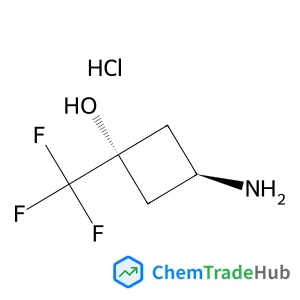
cis-3-Amino-1-(trifluoromethyl)cyclobutanol hydrochloride (1:1)
CAS Number:
1408075-16-0
Molecular Formula:
C5H9ClF3NO

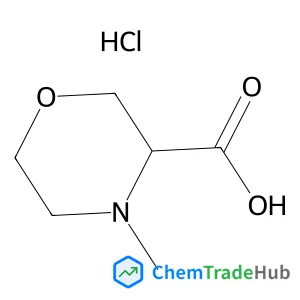
4-Methyl-3-morpholinecarboxylic acid hydrochloride (1:1)
CAS Number:
1240518-90-4
Molecular Formula:
C6H12ClNO3
Recommended Suppliers





Disclaimer
This page provides academic journal information for reference and research purposes only. We are not affiliated with any journal publishers and do not handle publication submissions. For publication-related inquiries, please contact the respective journal publishers directly.
If you notice any inaccuracies in the information displayed, please contact us at support@chemtradehub.com. We will promptly review and address your concerns.