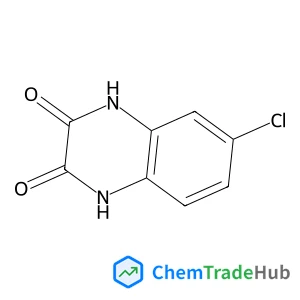
6-CHLORO-2,3-DIOXO-1,2,3,4-TETRAHYDROQUINOXALINE, 97
CAS Number:
169-14-2
Molecular Formula:
C8H5ClN2O2
Luís F. da Silva, Ariadne C. Catto, Waldir Avansi, Jr, Alexandre Mesquita, Lauro J. Q. Maia, Osmando F. Lopes, Máximo Siu Li, Mário L. Moreira, Elson Longo, Juan Andrés, Valmor R. Mastelaro
Material processing has become essential for the proper control, tuning and consequent application of the properties of micro/nanoparticles. In this case, we report herein the capability of the microwave-assisted hydrothermal (MAH) method to prepare the SrTiO3 compound, as a case study of inorganic compounds. Analyses conducted by X-ray diffraction, X-ray photoelectron and X-ray absorption spectroscopies confirmed that the MAH route enables the formation of pristine SrTiO3. The results indicated that the combination of thermal and non-thermal effects during the MAH treatment provides ideal conditions for an efficient and rapid synthesis of pristine SrTiO3 mesocrystals. Scanning electron microscopy images revealed a cube-like morphology (of ca. 1 μm) formed via a self-assembly process, influenced by the MAH time. Additionally, photoluminescence measurements revealed a broad blue emission related to intrinsic defects, which decreased with the MAH synthesis time.

Journal of the Chinese Chemical Society

Ferroelectrics

Anti-Corrosion Methods and Materials

Chemical & Pharmaceutical Bulletin

Bulletin of the Chemical Society of Japan

Cement and Concrete Research

Doklady Chemistry

Journal of the American Chemical Society

Chemistry of Natural Compounds

Advances in Colloid and Interface Science
Li Yu, Mei Zhang, Fu-Sheng Du, Zi-Chen Li
DOI: 10.1039/C8PY00620B
Jing Zhang, Qingzhong Zhang, Shuaifeng Zhou, Yuping Liu, Wei Huang
DOI: 10.1039/C7PY01476G
Taiki Yamate, Takayuki Fujiwara, Toru Yamaguchi, Hiroshi Suzuki, Motohiro Akazome
DOI: 10.1039/C8PY00592C
Mengting Tan, Yan Shi, Zhifeng Fu, Wantai Yang
DOI: 10.1039/C7PY01905J
Jared D. Harris, Kenneth R. Carter
DOI: 10.1039/C7PY01761H
P. S. Eselem Bungu, H. Pasch
DOI: 10.1039/C7PY02076G
I. Terzic, N. L. Meereboer, K. Loos
DOI: 10.1039/C8PY00742J
Sheng Chen, Xuguang Lv, Xianghui Han, Hang Luo, Chris R. Bowen, Dou Zhang
DOI: 10.1039/C7PY01914A
Zhen Zhang, Yongcun Zhou, Zhuxian Zhou, Ying Piao, Nagendra Kalva, Xiangrui Liu, Jianbin Tang, Youqing Shen
DOI: 10.1039/C7PY01492A
4-Nitrophenyl phosphate disodium salt hexahydrate is primarily used as a substra...
2-(Trifluoromethyl)-1,3-oxazole-4-carboxylic Acid (CAS: 1060816-01-4) is widely ...
2-Fluoro-4-biphenylcarboxylic acid should be stored in a cool, dry place at room...
Prednisolone-21-Carboxylic Acid is primarily used in the pharmaceutical industry...
4-(Hydrazinomethyl)-1,2,3-benzenetriol (CAS: 3614-72-0) should be stored in a co...
4-Amino-1-methyl-1H-pyrazole-5-carboxylic acid hydrochloride (CAS: 92534-70-8) i...
Dehydropachymic acid (CAS: 77012-31-8) is regulated by various agencies. It fall...
The market and research trends for 6-[(2,2-Dimethylpropanoyl)amino]nicotinic aci...
1,10-Phenanthroline-2,9-dicarbaldehyde should be stored in a cool, dry place awa...
5-Carbamoyl-11-oxo-10,11-dihydro-5H-dibenzo[b,f]azepin-10-yl acetate can be synt...

Physical Chemistry Chemical Physics (PCCP) is an international journal co-owned by 19 physical chemistry and physics societies from around the world. This journal publishes original, cutting-edge research in physical chemistry, chemical physics and biophysical chemistry. To be suitable for publication in PCCP, articles must include significant innovation and/or insight into physical chemistry; this is the most important criterion that reviewers and Editors will judge against when evaluating submissions. The journal has a broad scope and welcomes contributions spanning experiment, theory, computation and data science. Topical coverage includes spectroscopy, dynamics, kinetics, statistical mechanics, thermodynamics, electrochemistry, catalysis, surface science, quantum mechanics, quantum computing and machine learning. Interdisciplinary research areas such as polymers and soft matter, materials, nanoscience, energy, surfaces/interfaces, and biophysical chemistry are welcomed if they demonstrate significant innovation and/or insight into physical chemistry. Joined experimental/theoretical studies are particularly appreciated when complementary and based on up-to-date approaches.