


![[(1S,2S,3R,4S,7R,9S,10S,12R,15S)-4,12-Diacetyloxy-15-[(2R,3S)-3-benzamido-3-phenyl-2-(2,2,2-trichloroethoxycarbonyloxy)propanoyl]oxy-1,9-dihydroxy-10,14,17,17-tetramethyl-11-oxo-6-oxatetracyclo[11.3.1.03,10.04,7]heptadec-13-en-2-yl] benzoate structure](https://static.chemtradehub.com/structs/100/100431-55-8-7104.webp "[(1S,2S,3R,4S,7R,9S,10S,12R,15S)-4,12-Diacetyloxy-15-[(2R,3S)-3-benzamido-3-phenyl-2-(2,2,2-trichloroethoxycarbonyloxy)propanoyl]oxy-1,9-dihydroxy-10,14,17,17-tetramethyl-11-oxo-6-oxatetracyclo[11.3.1.03,10.04,7]heptadec-13-en-2-yl] benzoate structure")
Conformational preference and cationic structure of 2-methylpyrazine by VUV-MATI spectroscopy and natural bond orbital analysis
Literature Information
Publication Date
2019-04-16
DOI
10.1039/C9CP00766K
Impact Factor
3.676
Authors
Do Won Kang, Hong Lae Kim, Chan Ho Kwon
View Original
Abstract
Alkylpyrazines, which are well-known as aromatic substances and traditional medicines, are interesting molecular systems, and their methyl conformations result in unique structural and dynamical properties. We explored the conformational preference of the methyl group and the highest occupied molecular orbitals (HOMOs) of 2-methylpyrazine and its cation by utilizing high-resolution one-photon vacuum ultraviolet mass-analyzed threshold ionization (VUV-MATI) spectroscopy and natural bond orbital analysis to understand the relevant molecular activities. The measured VUV-MATI spectrum of 2-methylpyrazine revealed its adiabatic ionization energy and the vibrational frequencies of its cation. From the 0–0 band in the MATI spectrum under the zero-field limit, the accurate adiabatic ionization energy was determined as 9.0439 ± 0.0006 eV (72 944 ± 5 cm−1), which is lower than that of pyrazine. The peaks observed in the spectrum were unambiguously assigned based on vibrational frequencies and Franck–Condon factors from quantum chemical calculations for individual totally symmetric transitions between the S0 and D0 states using the simple one-photon dipole selection rules. The most convincing molecular structure of the 2-methylpyrazine cation was determined by Franck–Condon fit spectral simulations. Upon removal of an electron from the non-bonding orbital (HOMO) on the para nitrogen atoms, a significant structural change takes place along the vibrational motion associated with ring distortion by contraction of the N–N distance, resulting in prominent overtones and combination bands. In addition, the methyl substitution of pyrazine lowered the adiabatic ionization energy and the methyl group preferred the anti-configuration with respect to the pyrazine moiety in the D0 state, resulting in a frozen internal rotation regardless of ionization.
Recommended Journals

Chemical Communications

Chemistry Education Research and Practice

New Journal of Chemistry

Acta Materialia

Journal of Saudi Chemical Society

Journal of Peptide Science

Russian Journal of Organic Chemistry

Russian Chemical Bulletin

Russian Journal of Applied Chemistry

Russian Journal of Coordination Chemistry
Related Literature
Nonvolatile organic field-effect transistor memory devices using polymer electrets with different thiophene chain lengths
Ying-Hsuan Chou, Sanae Takasugi, Raita Goseki, Takashi Ishizone, Wen-Chang Chen
2013-10-14
Paper
DOI: 10.1039/C3PY01124K
Superheated high-temperature size-exclusion chromatography with chloroform as the mobile phase for π-conjugated polymers
Xianwen Lou, Joost L. J. van Dongen, Yasmine Braeken, Jeroen Brebels, Gijs W. P. van Pruissen, Weiwei Li, Martijn M. Wienk, René A. J. Janssen
2013-08-30
Paper
DOI: 10.1039/C3PY00933E
Manganese(iii) acetylacetonate initiated RAFT polymerizations: an alternative and versatile RAFT initiator
Zhigui Zheng, Yuan Zhou, Zhengbiao Zhang, Xiulin Zhu
2013-07-31
Communication
DOI: 10.1039/C3PY00879G
Supramolecular polymer fabricated by click polymerization from supramonomer
Liulin Yang, Xiaoguang Liu, Xinxin Tan, Hui Yang, Zhiqiang Wang, Xi Zhang
2013-09-10
Communication
DOI: 10.1039/C3PY01161E
Synthesis of well-defined amphiphilic branched polyethylene-graft-poly (N-isopropylacrylamide) copolymers by coordination copolymerization in tandem with RAFT polymerization and their self-assembled vesicles
Ye Zhao, Haiyang Gao, Guodong Liang, Fangming Zhu, Qing Wu
2013-09-27
Paper
DOI: 10.1039/C3PY01289A
Direct synthesis of poly(p-phenyleneethynylene)s from calcium carbide
Nopparat Thavornsin, Mongkol Sukwattanasinitt, Sumrit Wacharasindhu
2013-08-12
Communication
DOI: 10.1039/C3PY01068F
Precise evaluation of the block copolymer nanoparticle growth in polymerization-induced self-assembly under dispersion conditions
Yang Su, Xin Xiao, Shentong Li, Meihan Dan, Xiaohui Wang, Wangqing Zhang
2013-08-30
Paper
DOI: 10.1039/C3PY00995E
Preparation of a D–A polymer with disilanobithiophene as a new donor component and application to high-voltage bulk heterojunction polymer solar cells
Joji Ohshita, Makoto Nakashima, Daiki Tanaka, Yasushi Morihara, Hiroyuki Fueno, Kazuyoshi Tanaka
2013-10-17
Communication
DOI: 10.1039/C3PY01157G
Self-activation and activation of Cu(0) wire for SET-LRP mediated by fluorinated alcohols
Shampa R. Samanta, Hao-Jan Sun, David M. Haddleton, Virgil Percec
2013-08-01
Paper
DOI: 10.1039/C3PY01007D
Poly(methacrylic acid) complexation of amphotericin B to treat neglected diseases
Ji-won Choi, Denis Martin, Vanessa Yardley, Keith Powell, Antony Godwin
2013-10-08
Paper
DOI: 10.1039/C3PY01051A
You might also like
Compound Q&A
What are the main uses of 4-Nitrophenyl phosphate disodium salt hexahydrate (CAS: 333338-18-4)?
4-Nitrophenyl phosphate disodium salt hexahydrate is primarily used as a substra...
333338-18-44-Nitrophenyl phosph...
Compound Q&A
What are the main uses of 2-(Trifluoromethyl)-1,3-oxazole-4-carboxylic Acid (CAS: 1060816-01-4)?
2-(Trifluoromethyl)-1,3-oxazole-4-carboxylic Acid (CAS: 1060816-01-4) is widely ...
1060816-01-42-(Trifluoromethyl)-...
Compound Q&A
How should 2-Fluoro-4-biphenylcarboxylic acid (CAS: 137045-30-8) be stored?
2-Fluoro-4-biphenylcarboxylic acid should be stored in a cool, dry place at room...
137045-30-82-Fluoro-4-biphenylc...
Compound Q&A
What industries use Prednisolone-21-Carboxylic Acid (CAS: 61549-70-0)?
Prednisolone-21-Carboxylic Acid is primarily used in the pharmaceutical industry...
61549-70-0Prednisolone-21-Carb...
Compound Q&A
How should 4-(Hydrazinomethyl)-1,2,3-benzenetriol (CAS: 3614-72-0) be stored?
4-(Hydrazinomethyl)-1,2,3-benzenetriol (CAS: 3614-72-0) should be stored in a co...
3614-72-04-(Hydrazinomethyl)-...
Compound Q&A
What industries use 4-Amino-1-methyl-1H-pyrazole-5-carboxylic acid hydrochloride (CAS: 92534-70-8)?
4-Amino-1-methyl-1H-pyrazole-5-carboxylic acid hydrochloride (CAS: 92534-70-8) i...
92534-70-84-Amino-1-methyl-1H-...
Compound Q&A
What regulatory guidelines apply to dehydropachymic acid (CAS: 77012-31-8)?
Dehydropachymic acid (CAS: 77012-31-8) is regulated by various agencies. It fall...
77012-31-8Dehydropachymic acid
Compound Q&A
What is the market or research trend for 6-[(2,2-Dimethylpropanoyl)amino]nicotinic acid (CAS: 898561-66-5)?
The market and research trends for 6-[(2,2-Dimethylpropanoyl)amino]nicotinic aci...
898561-66-56-[(2,2-Dimethylprop...
Compound Q&A
How should 1,10-Phenanthroline-2,9-dicarbaldehyde (CAS: 57709-62-3) be stored?
1,10-Phenanthroline-2,9-dicarbaldehyde should be stored in a cool, dry place awa...
57709-62-31,10-Phenanthroline-...
Compound Q&A
How is 5-Carbamoyl-11-oxo-10,11-dihydro-5H-dibenzo[b,f]azepin-10-yl acetate (CAS: 113952-21-9) typically synthesized?
5-Carbamoyl-11-oxo-10,11-dihydro-5H-dibenzo[b,f]azepin-10-yl acetate can be synt...
113952-21-95-Carbamoyl-11-oxo-1...
Source Journal
Physical Chemistry Chemical Physics

CiteScore:
5.5
Self-citation Rate:
10.3%
Articles per Year:
3036
Physical Chemistry Chemical Physics (PCCP) is an international journal co-owned by 19 physical chemistry and physics societies from around the world. This journal publishes original, cutting-edge research in physical chemistry, chemical physics and biophysical chemistry. To be suitable for publication in PCCP, articles must include significant innovation and/or insight into physical chemistry; this is the most important criterion that reviewers and Editors will judge against when evaluating submissions. The journal has a broad scope and welcomes contributions spanning experiment, theory, computation and data science. Topical coverage includes spectroscopy, dynamics, kinetics, statistical mechanics, thermodynamics, electrochemistry, catalysis, surface science, quantum mechanics, quantum computing and machine learning. Interdisciplinary research areas such as polymers and soft matter, materials, nanoscience, energy, surfaces/interfaces, and biophysical chemistry are welcomed if they demonstrate significant innovation and/or insight into physical chemistry. Joined experimental/theoretical studies are particularly appreciated when complementary and based on up-to-date approaches.
Recommended Compounds
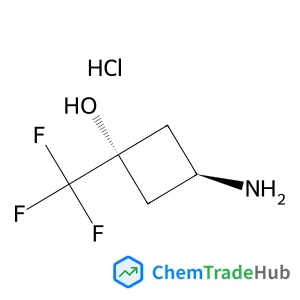
cis-3-Amino-1-(trifluoromethyl)cyclobutanol hydrochloride (1:1)
CAS Number:
1408075-16-0
Molecular Formula:
C5H9ClF3NO
![(3R,5R)-1-[(Benzyloxy)carbonyl]-5-methyl-3-piperidinecarboxylic acid structure](https://static.chemtradehub.com/structs/126/1269757-29-0-c552.webp "(3R,5R)-1-[(Benzyloxy)carbonyl]-5-methyl-3-piperidinecarboxylic acid structure")
(3R,5R)-1-[(Benzyloxy)carbonyl]-5-methyl-3-piperidinecarboxylic acid
CAS Number:
1269757-29-0
Molecular Formula:
C15H19NO4

Recommended Suppliers






Disclaimer
This page provides academic journal information for reference and research purposes only. We are not affiliated with any journal publishers and do not handle publication submissions. For publication-related inquiries, please contact the respective journal publishers directly.
If you notice any inaccuracies in the information displayed, please contact us at support@chemtradehub.com. We will promptly review and address your concerns.