


The effect of co-adsorbed solvent molecules on H2 binding to metal alkoxides
Literature Information
Publication Date
2019-04-08
DOI
10.1039/C9CP00754G
Impact Factor
3.676
Authors
Yamil J. Colón, Randall Q. Snurr
View Original
Abstract
The introduction of metal alkoxides has been proposed as an attractive option to enhance hydrogen binding energies in porous materials such as metal–organic frameworks (MOFs) for room-temperature hydrogen storage applications. The presence of residual solvent molecules from MOF synthesis can, however, affect the performance of these functional groups. We perform quantum chemical calculations to predict solvent binding energies onto the metal-alkoxides and the temperatures required to drive off the solvent molecules and successfully activate porous materials with these moieties. Calculations are performed for Li, Mg, Zn, Cu, and Ni alkoxides and chloroform (CHCl3), dimethylformamide (DMF), ethanol, methanol, and water solvent molecules. We identify CHCl3 as a promising solvent that can be removed from these alkoxides at mild temperatures, whereas DMF binds strongly to the metal alkoxides and removal would require temperatures above the present upper bound of thermal stability in MOFs. As a second objective, we calculated the binding energies of hydrogen to metal alkoxide–solvent complexes to explore the effect of any solvent molecules that cannot be removed.
Recommended Journals

Current Opinion in Solid State & Materials Science

New Journal of Chemistry

Russian Chemical Bulletin

Current Opinion in Colloid & Interface Science

Journal of Peptide Science

Russian Journal of General Chemistry

Chemical Communications

Journal of Saudi Chemical Society

Russian Journal of Organic Chemistry

Saudi Pharmaceutical Journal
Related Literature
Polytriphenylamine derivatives as materials for hole transporting layers in electroluminescent devices
Paper
DOI: 10.1039/A808613C
The role of onium salts in the oxidation of hydrocarbons by O2 catalysed by cationic phase-transfer reagents
László J. Csányi, Károly Jáky, István Pálinkó, Antal Rockenbauer, László Korecz
2000-08-04
Paper
DOI: 10.1039/B002558P
Use of a surface acoustic wave device for investigation of water adsorption on NaCl
Mattias Hallquist, Noemi B. Petrucci, Christopher Kreuzer, Victor P. Ostanin, R. Anthony Cox
2000-09-13
Paper
DOI: 10.1039/B003028G
Influence of the boundaries in the impedance of porous film electrodes
2000-08-31
Paper
DOI: 10.1039/B001708F
Bi adsorption on Pt(111) in perchloric acid solution: A rotating ring–disk electrode and XPS study
T. J. Schmidt, B. N. Grgur, R. J. Behm, N. M. Markovic, P. N. Ross, Jr.
2000-09-13
Paper
DOI: 10.1039/B003767M
A light-emitting device based on a CdTe nanocrystal/polyaniline composite
Paper
DOI: 10.1039/A808619B
Experimental characterization of aircraft combustor soot: Microstructure, surface area, porosity and water adsorption
O. B. Popovitcheva, N. M. Persiantseva, M. E. Trukhin, G. B. Rulev, N. K. Shonija, Yu. Ya. Buriko, A. M. Starik, B. Demirdjian, D. Ferry, J. Suzanne
2000-09-15
Paper
DOI: 10.1039/B004345L
The weakly bound g round state of the LiHe2 triatomic system
I. Baccarelli, G. Delgado-Barrio, F. A. Gianturco, T. González-Lezana, S. Miret-Artes, P. Villarreal
2000-06-29
Paper
DOI: 10.1039/B002415P
You might also like
Compound Q&A
What are the main uses of 4-Nitrophenyl phosphate disodium salt hexahydrate (CAS: 333338-18-4)?
4-Nitrophenyl phosphate disodium salt hexahydrate is primarily used as a substra...
333338-18-44-Nitrophenyl phosph...
Compound Q&A
What are the main uses of 2-(Trifluoromethyl)-1,3-oxazole-4-carboxylic Acid (CAS: 1060816-01-4)?
2-(Trifluoromethyl)-1,3-oxazole-4-carboxylic Acid (CAS: 1060816-01-4) is widely ...
1060816-01-42-(Trifluoromethyl)-...
Compound Q&A
How should 2-Fluoro-4-biphenylcarboxylic acid (CAS: 137045-30-8) be stored?
2-Fluoro-4-biphenylcarboxylic acid should be stored in a cool, dry place at room...
137045-30-82-Fluoro-4-biphenylc...
Compound Q&A
What industries use Prednisolone-21-Carboxylic Acid (CAS: 61549-70-0)?
Prednisolone-21-Carboxylic Acid is primarily used in the pharmaceutical industry...
61549-70-0Prednisolone-21-Carb...
Compound Q&A
How should 4-(Hydrazinomethyl)-1,2,3-benzenetriol (CAS: 3614-72-0) be stored?
4-(Hydrazinomethyl)-1,2,3-benzenetriol (CAS: 3614-72-0) should be stored in a co...
3614-72-04-(Hydrazinomethyl)-...
Compound Q&A
What industries use 4-Amino-1-methyl-1H-pyrazole-5-carboxylic acid hydrochloride (CAS: 92534-70-8)?
4-Amino-1-methyl-1H-pyrazole-5-carboxylic acid hydrochloride (CAS: 92534-70-8) i...
92534-70-84-Amino-1-methyl-1H-...
Compound Q&A
What regulatory guidelines apply to dehydropachymic acid (CAS: 77012-31-8)?
Dehydropachymic acid (CAS: 77012-31-8) is regulated by various agencies. It fall...
77012-31-8Dehydropachymic acid
Compound Q&A
What is the market or research trend for 6-[(2,2-Dimethylpropanoyl)amino]nicotinic acid (CAS: 898561-66-5)?
The market and research trends for 6-[(2,2-Dimethylpropanoyl)amino]nicotinic aci...
898561-66-56-[(2,2-Dimethylprop...
Compound Q&A
How should 1,10-Phenanthroline-2,9-dicarbaldehyde (CAS: 57709-62-3) be stored?
1,10-Phenanthroline-2,9-dicarbaldehyde should be stored in a cool, dry place awa...
57709-62-31,10-Phenanthroline-...
Compound Q&A
How is 5-Carbamoyl-11-oxo-10,11-dihydro-5H-dibenzo[b,f]azepin-10-yl acetate (CAS: 113952-21-9) typically synthesized?
5-Carbamoyl-11-oxo-10,11-dihydro-5H-dibenzo[b,f]azepin-10-yl acetate can be synt...
113952-21-95-Carbamoyl-11-oxo-1...
Source Journal
Physical Chemistry Chemical Physics

CiteScore:
5.5
Self-citation Rate:
10.3%
Articles per Year:
3036
Physical Chemistry Chemical Physics (PCCP) is an international journal co-owned by 19 physical chemistry and physics societies from around the world. This journal publishes original, cutting-edge research in physical chemistry, chemical physics and biophysical chemistry. To be suitable for publication in PCCP, articles must include significant innovation and/or insight into physical chemistry; this is the most important criterion that reviewers and Editors will judge against when evaluating submissions. The journal has a broad scope and welcomes contributions spanning experiment, theory, computation and data science. Topical coverage includes spectroscopy, dynamics, kinetics, statistical mechanics, thermodynamics, electrochemistry, catalysis, surface science, quantum mechanics, quantum computing and machine learning. Interdisciplinary research areas such as polymers and soft matter, materials, nanoscience, energy, surfaces/interfaces, and biophysical chemistry are welcomed if they demonstrate significant innovation and/or insight into physical chemistry. Joined experimental/theoretical studies are particularly appreciated when complementary and based on up-to-date approaches.
Recommended Compounds
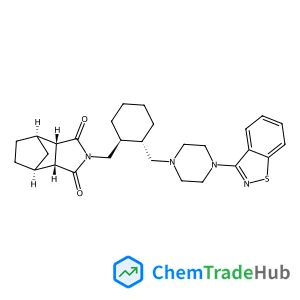

4-Methyl-3-morpholinecarboxylic acid hydrochloride (1:1)
CAS Number:
1240518-90-4
Molecular Formula:
C6H12ClNO3

2,2-dideuterio-2-(3,4,5,6-tetradeuterio-2-pyridyl)acetic acid;hydrochloride
CAS Number:
1329799-67-8
Molecular Formula:
C7H2ClD6NO2
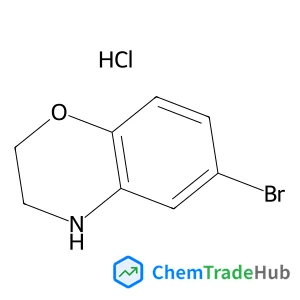
6-Bromo-3,4-dihydro-2H-1,4-benzoxazine hydrochloride (1:1)
CAS Number:
1260803-10-8
Molecular Formula:
C8H9BrClNO
Recommended Suppliers





Disclaimer
This page provides academic journal information for reference and research purposes only. We are not affiliated with any journal publishers and do not handle publication submissions. For publication-related inquiries, please contact the respective journal publishers directly.
If you notice any inaccuracies in the information displayed, please contact us at support@chemtradehub.com. We will promptly review and address your concerns.