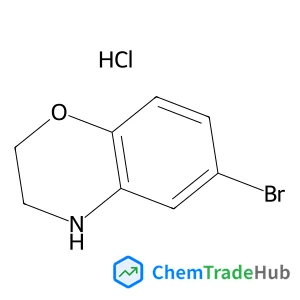
6-Bromo-3,4-dihydro-2H-1,4-benzoxazine hydrochloride (1:1)
CAS Number:
1260803-10-8
Molecular Formula:
C8H9BrClNO
Bo-Sun Yun, Jin-Hyoung Kim, So-Yoen Kim, Ho-Jin Son, Sang Ook Kang
The phosphorescence properties of fac-Ir(pmp)3, mer-Ir(pmp)3, fac-Ir(dmpmp)3 and mer-Ir(dmpmp)3 (where pmp = 3-methyl-1-phenyl-2,3-dihydro-1H-imidazo[4,5-b]pyridine and dmpmp = 1-(2′,6′-dimethylbiphenyl-2-yl)-3-methyl-2,3-dihydro-1H-imidazo[4,5-b]pyridine) in CH2Cl2 were investigated. At 77 K, the fac-isomers showed blue emission with a vibronic structure, while the mer-isomers showed less structured emissions. At 300 K, all complexes showed broad and markedly red-shifted emission spectra compared to those at 77 K. The quantum yields of the Ir(dmpmp)3 isomers were very low, and their emission lifetimes were very short compared to those of Ir(pmp)3. In order to understand the large differences between the photodynamic properties of Ir(pmp)3 and Ir(dmpmp)3, we performed femtosecond time-resolved transient absorption (TA) spectroscopic measurements. The TA spectra of Ir(dmpmp)3 were almost the same as those of Ir(pmp)3 at a short delay time. However, Ir(dmpmp)3 showed a new broad TA band at around 720 nm with increasing delay time. The rise time of this band was ca. 10 ps for both isomers, and this may be attributed to the geometrical change in the excited state, which is associated with the steric hindrance of the bulky dimethylphenyl substituent. Actually, Ir(dmpmp)3 showed a strong rigidochromic shift in the emission spectra with varying temperature. To understand the molecular orbitals and the energy levels, theoretical calculations were performed using density functional theory. As a result, structural displacement takes place accompanied by the fast migration of localization of excited states via intraligand charge transfer.

Current Opinion in Solid State & Materials Science

Chemistry Education Research and Practice

Drug Discovery Today

Journal of Natural Medicines

Acta Materialia

Crystallography Reports

Russian Journal of Coordination Chemistry

Russian Journal of Bioorganic Chemistry

Journal of Saudi Chemical Society

Russian Chemical Bulletin
Antonio Riganelli, Frederico V. Prudente, António J. C. Varandas
DOI: 10.1039/B001746I
Thomas Ruchti, Berton E. Callicoatt, Kenneth C. Janda
DOI: 10.1039/B002051F
DOI: 10.1039/B004924G
I. Baccarelli, G. Delgado-Barrio, F. A. Gianturco, T. González-Lezana, S. Miret-Artes, P. Villarreal
DOI: 10.1039/B002415P
Corey J. Evans, Daryl S. Rubinoff, Michael C. L. Gerry
DOI: 10.1039/B004352O
DOI: 10.1039/A808610I
4-Nitrophenyl phosphate disodium salt hexahydrate is primarily used as a substra...
2-(Trifluoromethyl)-1,3-oxazole-4-carboxylic Acid (CAS: 1060816-01-4) is widely ...
2-Fluoro-4-biphenylcarboxylic acid should be stored in a cool, dry place at room...
Prednisolone-21-Carboxylic Acid is primarily used in the pharmaceutical industry...
4-(Hydrazinomethyl)-1,2,3-benzenetriol (CAS: 3614-72-0) should be stored in a co...
4-Amino-1-methyl-1H-pyrazole-5-carboxylic acid hydrochloride (CAS: 92534-70-8) i...
Dehydropachymic acid (CAS: 77012-31-8) is regulated by various agencies. It fall...
The market and research trends for 6-[(2,2-Dimethylpropanoyl)amino]nicotinic aci...
1,10-Phenanthroline-2,9-dicarbaldehyde should be stored in a cool, dry place awa...
5-Carbamoyl-11-oxo-10,11-dihydro-5H-dibenzo[b,f]azepin-10-yl acetate can be synt...

Physical Chemistry Chemical Physics (PCCP) is an international journal co-owned by 19 physical chemistry and physics societies from around the world. This journal publishes original, cutting-edge research in physical chemistry, chemical physics and biophysical chemistry. To be suitable for publication in PCCP, articles must include significant innovation and/or insight into physical chemistry; this is the most important criterion that reviewers and Editors will judge against when evaluating submissions. The journal has a broad scope and welcomes contributions spanning experiment, theory, computation and data science. Topical coverage includes spectroscopy, dynamics, kinetics, statistical mechanics, thermodynamics, electrochemistry, catalysis, surface science, quantum mechanics, quantum computing and machine learning. Interdisciplinary research areas such as polymers and soft matter, materials, nanoscience, energy, surfaces/interfaces, and biophysical chemistry are welcomed if they demonstrate significant innovation and/or insight into physical chemistry. Joined experimental/theoretical studies are particularly appreciated when complementary and based on up-to-date approaches.