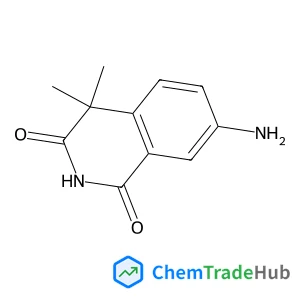
1,3(2H,4H)-Isoquinolinedione, 7-amino-4,4-dimethyl-
CAS Number:
14576-22-8
Molecular Formula:
C11H12N2O2
Martin Hladík, Aliaksei Vetushka, Antonín Fejfar, Héctor Vázquez
Using density functional theory including van der Waals interactions, we calculate the adsorption and electronic properties of dithiol-dicarba-closo-dodecaboranes chemisorbed on Au(111) surfaces. Carborane molecules consist of a cage-like structure made of boron and carbon atoms and possess a large intrinsic dipole. We consider two functionalized carborane positional isomers, with thiol linker groups attached to either carbon or boron backbone atoms, such that when adsorbed on the Au substrate, the molecular dipole points towards the metal surface or away from it. We investigate a large number of junction geometries and find that carborane adsorption can induce significant changes in the work function of the Au substrate, in the range of 1 eV. These changes depend strongly on the interface geometry at the atomistic level. From the analysis of these junction structures, we provide a picture of the driving mechanisms that determine adsorption geometries, and relate them to interface electronic structure and resulting work function modification. In particular, our results highlight the important role played in these interface quantities by distortions in the Au surface layer induced by carborane adsorption.

Russian Journal of Coordination Chemistry

Chemical Communications

Organic Process Research & Development

Russian Journal of General Chemistry

Acta Materialia

Russian Chemical Bulletin

Current Opinion in Solid State & Materials Science

Journal of Natural Medicines

Drug Discovery Today

Journal of Peptide Science
DOI: 10.1039/A809431D
K. Hildenbrand, S. Naumov
DOI: 10.1039/B004617P
Antonio Riganelli, Frederico V. Prudente, António J. C. Varandas
DOI: 10.1039/B001746I
Thomas Ruchti, Berton E. Callicoatt, Kenneth C. Janda
DOI: 10.1039/B002051F
DOI: 10.1039/A901016E
DOI: 10.1039/B002675L
DOI: 10.1039/A808619B
When handling 4-Methyl-6-(trifluoromethyl)quinoline (CAS: 40716-16-3), safety go...
4-(3,5-Difluorophenyl)aniline is an aromatic organic compound with the CAS numbe...
5-{[4-(Trifluoromethyl)phenyl]sulfanyl}-1,2,3-thiadiazole-4-carboxylic acid can ...
The market for 4-Benzylaniline hydrochloride (CAS: 6317-57-3) is steadily growin...
[3-(Diethylsulfamoyl)phenyl]boronic acid is generally considered safe when handl...
3-Bromo-2,5-dimethoxyaniline is mainly used in the pharmaceutical and chemical i...
N-Methyl-1-(5-methyl-1H-indol-3-yl)methanamine (CAS: 915922-67-7) is subject to ...
This compound is primarily used in the pharmaceutical industry for the synthesis...
2-Methyl-2-propanyl [(1S,3R)-3-aminocyclohexyl]carbamate (CAS: 1298101-47-9) sho...
Ethyl 2-bromo-4,4,4-trifluorobutanoate (CAS: 367-33-9) is utilized in the pharma...

Physical Chemistry Chemical Physics (PCCP) is an international journal co-owned by 19 physical chemistry and physics societies from around the world. This journal publishes original, cutting-edge research in physical chemistry, chemical physics and biophysical chemistry. To be suitable for publication in PCCP, articles must include significant innovation and/or insight into physical chemistry; this is the most important criterion that reviewers and Editors will judge against when evaluating submissions. The journal has a broad scope and welcomes contributions spanning experiment, theory, computation and data science. Topical coverage includes spectroscopy, dynamics, kinetics, statistical mechanics, thermodynamics, electrochemistry, catalysis, surface science, quantum mechanics, quantum computing and machine learning. Interdisciplinary research areas such as polymers and soft matter, materials, nanoscience, energy, surfaces/interfaces, and biophysical chemistry are welcomed if they demonstrate significant innovation and/or insight into physical chemistry. Joined experimental/theoretical studies are particularly appreciated when complementary and based on up-to-date approaches.