


Manipulation of dipolar magnetism in low-dimensional iron oxide nanoparticle assemblies
Literature Information
Publication Date
2019-02-25
DOI
10.1039/C9CP00302A
Impact Factor
3.676
Authors
Asma Qdemat, Oleg Petracic, Emmanuel Kentzinger, Ulrich Rücker, Fengshan Zheng, Peng-Han Lu, Xian-Kui Wei, Rafal E. Dunin-Borkowski, Thomas Brückel
View Original
Abstract
The manipulation of magnetic states in nanoparticle supercrystals promises new pathways to design nanocrystalline magnetic materials and devices. Trench-patterned silicon substrates were used as templates to guide the self-assembly of iron oxide nanoparticles. Grazing incidence small angle X-ray scattering shows that the nanoparticles form a long-range ordered structure along the trench direction while in the direction perpendicular to the trenches, no coherent structure is observable. Electron holography provides evidence of an ordered magnetic state of nanoparticle moments in the remanent state after the application of a saturation magnetic field parallel to the trenches. However, a disordered magnetic state was observed in a perpendicular geometry. Hysteresis loops indicate that the nanoparticle moments form a superferromagnetic state for the geometry parallel to the trenches. Memory effect investigations reveal that the disordered magnetic state corresponds to a collective superspin glass state in the perpendicular geometry, while the superferromagnetic state in the parallel geometry suppresses the superspin glass state.
Recommended Journals

Russian Chemical Bulletin

Russian Journal of General Chemistry

Organic Process Research & Development

Saudi Pharmaceutical Journal

New Journal of Chemistry

Russian Journal of Organic Chemistry

Russian Journal of Bioorganic Chemistry

Drug Discovery Today

Journal of Saudi Chemical Society

Journal of Natural Medicines
Related Literature
Sedimentation of colloidal particles near a wall: Stokesian dynamics simulations
Paper
DOI: 10.1039/A809571J
Photodissociation of p-ethyl- and p-(α-hydroxyethyl)toluene in solution
M. Fujiwara, K. Mishima
2000-08-09
Paper
DOI: 10.1039/B004079G
Molecular dynamics simulations of the lithium coordination environment in phosphate glasses
Todd M. Alam, Jian-Jie Liang, Randall T. Cygan
2000-09-15
Paper
DOI: 10.1039/B004627M
Electron transfer at a distance induced by site-selective photoionization of 2-aminopurine in oligonucleotides and investigated by transient absorption techniques
Vladimir Shafirovich, Alexander Dourandin, Weidong Huang, Natalia P. Luneva, Nicholas E. Geacintov
2000-09-15
Paper
DOI: 10.1039/B004896H
Experimental and theoretical study of the F, Cl and Br reactions with formaldehyde and acetaldehyde
J. A. Beukes, B. D'Anna, V. Bakken, C. J. Nielsen
2000-08-10
Paper
DOI: 10.1039/B004546M
Excited state proton and electron transfer reactions of acridinedione dyes with amines
Paper
DOI: 10.1039/A809070J
Benzene cation radical in mesoporous silicate: EPR detection of unusually stabilized Jahn–Teller distortion
Paper
DOI: 10.1039/A901061K
Characterization of a TiCl4-modified silica surface by means of quantitative surface analysis
Paper
DOI: 10.1039/A901016E
You might also like
Compound Q&A
What are the main uses of 4-Nitrophenyl phosphate disodium salt hexahydrate (CAS: 333338-18-4)?
4-Nitrophenyl phosphate disodium salt hexahydrate is primarily used as a substra...
333338-18-44-Nitrophenyl phosph...
Compound Q&A
What are the main uses of 2-(Trifluoromethyl)-1,3-oxazole-4-carboxylic Acid (CAS: 1060816-01-4)?
2-(Trifluoromethyl)-1,3-oxazole-4-carboxylic Acid (CAS: 1060816-01-4) is widely ...
1060816-01-42-(Trifluoromethyl)-...
Compound Q&A
How should 2-Fluoro-4-biphenylcarboxylic acid (CAS: 137045-30-8) be stored?
2-Fluoro-4-biphenylcarboxylic acid should be stored in a cool, dry place at room...
137045-30-82-Fluoro-4-biphenylc...
Compound Q&A
What industries use Prednisolone-21-Carboxylic Acid (CAS: 61549-70-0)?
Prednisolone-21-Carboxylic Acid is primarily used in the pharmaceutical industry...
61549-70-0Prednisolone-21-Carb...
Compound Q&A
How should 4-(Hydrazinomethyl)-1,2,3-benzenetriol (CAS: 3614-72-0) be stored?
4-(Hydrazinomethyl)-1,2,3-benzenetriol (CAS: 3614-72-0) should be stored in a co...
3614-72-04-(Hydrazinomethyl)-...
Compound Q&A
What industries use 4-Amino-1-methyl-1H-pyrazole-5-carboxylic acid hydrochloride (CAS: 92534-70-8)?
4-Amino-1-methyl-1H-pyrazole-5-carboxylic acid hydrochloride (CAS: 92534-70-8) i...
92534-70-84-Amino-1-methyl-1H-...
Compound Q&A
What regulatory guidelines apply to dehydropachymic acid (CAS: 77012-31-8)?
Dehydropachymic acid (CAS: 77012-31-8) is regulated by various agencies. It fall...
77012-31-8Dehydropachymic acid
Compound Q&A
What is the market or research trend for 6-[(2,2-Dimethylpropanoyl)amino]nicotinic acid (CAS: 898561-66-5)?
The market and research trends for 6-[(2,2-Dimethylpropanoyl)amino]nicotinic aci...
898561-66-56-[(2,2-Dimethylprop...
Compound Q&A
How should 1,10-Phenanthroline-2,9-dicarbaldehyde (CAS: 57709-62-3) be stored?
1,10-Phenanthroline-2,9-dicarbaldehyde should be stored in a cool, dry place awa...
57709-62-31,10-Phenanthroline-...
Compound Q&A
How is 5-Carbamoyl-11-oxo-10,11-dihydro-5H-dibenzo[b,f]azepin-10-yl acetate (CAS: 113952-21-9) typically synthesized?
5-Carbamoyl-11-oxo-10,11-dihydro-5H-dibenzo[b,f]azepin-10-yl acetate can be synt...
113952-21-95-Carbamoyl-11-oxo-1...
Source Journal
Physical Chemistry Chemical Physics

CiteScore:
5.5
Self-citation Rate:
10.3%
Articles per Year:
3036
Physical Chemistry Chemical Physics (PCCP) is an international journal co-owned by 19 physical chemistry and physics societies from around the world. This journal publishes original, cutting-edge research in physical chemistry, chemical physics and biophysical chemistry. To be suitable for publication in PCCP, articles must include significant innovation and/or insight into physical chemistry; this is the most important criterion that reviewers and Editors will judge against when evaluating submissions. The journal has a broad scope and welcomes contributions spanning experiment, theory, computation and data science. Topical coverage includes spectroscopy, dynamics, kinetics, statistical mechanics, thermodynamics, electrochemistry, catalysis, surface science, quantum mechanics, quantum computing and machine learning. Interdisciplinary research areas such as polymers and soft matter, materials, nanoscience, energy, surfaces/interfaces, and biophysical chemistry are welcomed if they demonstrate significant innovation and/or insight into physical chemistry. Joined experimental/theoretical studies are particularly appreciated when complementary and based on up-to-date approaches.
Recommended Compounds
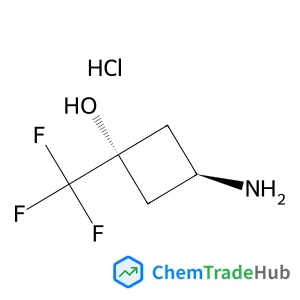
cis-3-Amino-1-(trifluoromethyl)cyclobutanol hydrochloride (1:1)
CAS Number:
1408075-16-0
Molecular Formula:
C5H9ClF3NO
Recommended Suppliers





Disclaimer
This page provides academic journal information for reference and research purposes only. We are not affiliated with any journal publishers and do not handle publication submissions. For publication-related inquiries, please contact the respective journal publishers directly.
If you notice any inaccuracies in the information displayed, please contact us at support@chemtradehub.com. We will promptly review and address your concerns.