












![[(1S,2S,3R,4S,7R,9S,10S,12R,15S)-4,12-Diacetyloxy-15-[(2R,3S)-3-benzamido-3-phenyl-2-(2,2,2-trichloroethoxycarbonyloxy)propanoyl]oxy-1,9-dihydroxy-10,14,17,17-tetramethyl-11-oxo-6-oxatetracyclo[11.3.1.03,10.04,7]heptadec-13-en-2-yl] benzoate structure](https://static.chemtradehub.com/structs/100/100431-55-8-7104.webp "[(1S,2S,3R,4S,7R,9S,10S,12R,15S)-4,12-Diacetyloxy-15-[(2R,3S)-3-benzamido-3-phenyl-2-(2,2,2-trichloroethoxycarbonyloxy)propanoyl]oxy-1,9-dihydroxy-10,14,17,17-tetramethyl-11-oxo-6-oxatetracyclo[11.3.1.03,10.04,7]heptadec-13-en-2-yl] benzoate structure")
Anti-fatigue adhesive and tough hydrogels regulated by adenine and uracil
Literature Information
Publication Date
2018-08-01
DOI
10.1039/C8PY00868J
Impact Factor
5.582
Authors
Xin Liu, Qin Zhang, Yanchao Qiao, Lijie Duan, Guanghui Gao
View Original
Abstract
Hydrogels generally possess either high strength or excellent adhesive behavior but not both, which limits their applications. Here, we present anti-fatigue, adhesive and tough hydrogels through introducing nucleobase pairs of adenine–uracil (A–U) and chemical crosslinkers of N,N′-methylene bis-acrylamide (MBA) into polyacrylamide hydrogels. The synergetic interaction of A–U and MBA endowed hydrogels with high mechanical performance and excellent adhesive behavior via the tunable balance of cohesion and adhesion. The hydrogels exhibited a tensile strength of 120 kPa, a superior stretchability of 2700%, and remarkable adhesive behavior for various materials and biological tissues, including wood, steel, copper, polytetrafluoroethylene, plastics, glass, rubber, silica rubber, spleen, liver and fat. For example, the adhesion strength of hydrogels at the surface of polytetrafluoroethylene was 190 N m−1. More importantly, the hydrogels exhibited excellent anti-fatigue compressive toughness and adhesiveness. It was envisioned that the nucleobase-tackified chemical crosslinking hydrogels with excellent anti-fatigue, tough and adhesive behavior would be widely applied in wound dressings, human wearable devices and biomedical sensors and electrodes.
Related Literature
An active transport dual adaptive nanocarrier designed to overcome the corneal microenvironment for neovascularization therapy
Yingying Li, Shan Gao, Yu Zhang, Zhijing He, Jianbo Ji, Xiaoye Yang, Lei Ye, Lixia Zhao
2023-11-10
Paper
DOI: 10.1039/D3BM01349A
Covalent drugs based on small molecules and peptides for disease theranostics
Yin-Sheng Xu, Yingying Cui, Zeng-Ying Qiao
2023-11-08
Review Article
DOI: 10.1039/D3BM01138K
Platelet membrane-based biochemotactic-targeting nanoplatform combining PDT with EGFR inhibition therapy for the treatment of breast cancer
Guoyun Wan, Xuheng Chen, Ruiling Gou, Chenguang Guan, Jiayu Chen, Qian Wang, Qiqing Zhang, Haijiao Wang
2023-12-05
Paper
DOI: 10.1039/D3BM01627G
A stable ratiometric fluorescent probe for hypochlorous acid detection and rheumatoid arthritis evaluation
Liuwei Gu, Yinghao Li, Xiaojie Kong, Ke Zhang, Yuling Qin, Xiaobo Zhou, Haiwei Ji, Guo Li, Li Wu
2023-12-21
Communication
DOI: 10.1039/D3BM01576A
Precise temperature control and rapid heating/cooling of infrared spectroscopy samples with a two-stage thermoelectric device
2023-12-04
Paper
DOI: 10.1039/D3AY01627G
Determination of total phenol and six polyphenolic components in the polyphenol extract of Cinnamomi cortex by quantitative nuclear magnetic resonance spectroscopy
Dan-Yang Shi, Yu Zheng, Qiang-Sheng Guo, Can Gong, Xu Xu, Jian-Ping Gao
2023-11-13
Paper
DOI: 10.1039/D3AY01501G
You might also like
Compound Q&A
What are the main uses of 4-Nitrophenyl phosphate disodium salt hexahydrate (CAS: 333338-18-4)?
4-Nitrophenyl phosphate disodium salt hexahydrate is primarily used as a substra...
333338-18-44-Nitrophenyl phosph...
Compound Q&A
What are the main uses of 2-(Trifluoromethyl)-1,3-oxazole-4-carboxylic Acid (CAS: 1060816-01-4)?
2-(Trifluoromethyl)-1,3-oxazole-4-carboxylic Acid (CAS: 1060816-01-4) is widely ...
1060816-01-42-(Trifluoromethyl)-...
Compound Q&A
How should 2-Fluoro-4-biphenylcarboxylic acid (CAS: 137045-30-8) be stored?
2-Fluoro-4-biphenylcarboxylic acid should be stored in a cool, dry place at room...
137045-30-82-Fluoro-4-biphenylc...
Compound Q&A
What industries use Prednisolone-21-Carboxylic Acid (CAS: 61549-70-0)?
Prednisolone-21-Carboxylic Acid is primarily used in the pharmaceutical industry...
61549-70-0Prednisolone-21-Carb...
Compound Q&A
How should 4-(Hydrazinomethyl)-1,2,3-benzenetriol (CAS: 3614-72-0) be stored?
4-(Hydrazinomethyl)-1,2,3-benzenetriol (CAS: 3614-72-0) should be stored in a co...
3614-72-04-(Hydrazinomethyl)-...
Compound Q&A
What industries use 4-Amino-1-methyl-1H-pyrazole-5-carboxylic acid hydrochloride (CAS: 92534-70-8)?
4-Amino-1-methyl-1H-pyrazole-5-carboxylic acid hydrochloride (CAS: 92534-70-8) i...
92534-70-84-Amino-1-methyl-1H-...
Compound Q&A
What regulatory guidelines apply to dehydropachymic acid (CAS: 77012-31-8)?
Dehydropachymic acid (CAS: 77012-31-8) is regulated by various agencies. It fall...
77012-31-8Dehydropachymic acid
Compound Q&A
What is the market or research trend for 6-[(2,2-Dimethylpropanoyl)amino]nicotinic acid (CAS: 898561-66-5)?
The market and research trends for 6-[(2,2-Dimethylpropanoyl)amino]nicotinic aci...
898561-66-56-[(2,2-Dimethylprop...
Compound Q&A
How should 1,10-Phenanthroline-2,9-dicarbaldehyde (CAS: 57709-62-3) be stored?
1,10-Phenanthroline-2,9-dicarbaldehyde should be stored in a cool, dry place awa...
57709-62-31,10-Phenanthroline-...
Compound Q&A
How is 5-Carbamoyl-11-oxo-10,11-dihydro-5H-dibenzo[b,f]azepin-10-yl acetate (CAS: 113952-21-9) typically synthesized?
5-Carbamoyl-11-oxo-10,11-dihydro-5H-dibenzo[b,f]azepin-10-yl acetate can be synt...
113952-21-95-Carbamoyl-11-oxo-1...
Source Journal
Polymer Chemistry

CiteScore:
8.6
Self-citation Rate:
7.3%
Articles per Year:
457
Polymer Chemistry welcomes submissions in all areas of polymer science that have a strong focus on macromolecular chemistry. Manuscripts may cover a broad range of fields, yet no direct application focus is required.
Recommended Compounds
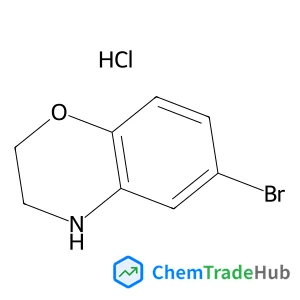
6-Bromo-3,4-dihydro-2H-1,4-benzoxazine hydrochloride (1:1)
CAS Number:
1260803-10-8
Molecular Formula:
C8H9BrClNO
Recommended Suppliers





Disclaimer
This page provides academic journal information for reference and research purposes only. We are not affiliated with any journal publishers and do not handle publication submissions. For publication-related inquiries, please contact the respective journal publishers directly.
If you notice any inaccuracies in the information displayed, please contact us at support@chemtradehub.com. We will promptly review and address your concerns.