












Renewable polyols for advanced polyurethane foams from diverse biomass resources
Literature Information
Publication Date
2018-07-24
DOI
10.1039/C8PY00827B
Impact Factor
5.582
Authors
Pierre Furtwengler, Luc Avérous
View Original
Abstract
Polyols, used for making polyurethane (PU) and polyisocyanurate (PIR) foams, are a topic of interest due to the strong growth of the foam market during the last few decades. Polyols used for their elaboration constitute the majority of polyol consumption worldwide. The large availability of chemicals and compounds from biomass has opened up a vast range of opportunities to develop partially or fully biobased polyols, to be added to foam formulations. This review is focused on recent advances in the synthesis of renewable polyols, used for PU and PIR foams. Polyols have been classified by their chemical structures. The corresponding chemical pathways have been connected with the properties of the final PU-based foams. Correlations were made between the origin of the polyol, the chemical modifications, and the properties and morphologies of the corresponding foams. Recent advances in non-isocyanate polyurethane foams have been also taken into consideration.
Related Literature
Cartilage regeneration using transforming growth factor-beta 3-loaded injectable crosslinked hyaluronic acid hydrogel
Ju Hwa Lee, Yun Chang Pyun, Jonggyu Park, Tae Woong Kang, Jin Sol Seo, Dae Hoon Lee
2023-12-13
Paper
DOI: 10.1039/D3BM01008B
A novel copper-based nanozyme: fabrication and application for colorimetric detection of resveratrol
Wanxin Li, Jiaxin Sun, Yao Xin, Yu Han, Yanyang Sun, Aijun Li, Zhi Wang
2023-11-13
Paper
DOI: 10.1039/D3AY01666H
Precise temperature control and rapid heating/cooling of infrared spectroscopy samples with a two-stage thermoelectric device
2023-12-04
Paper
DOI: 10.1039/D3AY01627G
Rapamycin-based inhaled therapy for potential treatment of COPD-related inflammation: production and characterization of aerosolizable nano into micro (NiM) particles
Emanuela Fabiola Craparo, Marta Cabibbo, Cinzia Scialabba, Luca Casula, Francesco Lai
2023-11-24
Paper
DOI: 10.1039/D3BM01210G
Construction of Mn–N–C nanoparticles with multienzyme-like properties and photothermal performance for the effective treatment of bacterial infections
Yong Ding, Xiao-Chan Yang, Ya-Ya Yu, Sheng-Nan Song, Bo Li, Xue-Yao Pang, Jian-Jian Cai, Chun-Huan Zhang, Ya-Mu Xia, Wei-Wei Gao
2023-11-22
Paper
DOI: 10.1039/D3BM01228J
Enhancing drug delivery with supramolecular amphiphilic macrocycle nanoparticles: selective targeting of CDK4/6 inhibitor palbociclib to melanoma
Mohamed F. Attia, Edikan A. Ogunnaike, Megan Pitz, Nancy M. Elbaz, Dillip K. Panda, Angela Alexander-Bryant, Sourav Saha, Daniel C. Whitehead
2023-12-11
Paper
DOI: 10.1039/D3BM01888A
Platelet membrane-based biochemotactic-targeting nanoplatform combining PDT with EGFR inhibition therapy for the treatment of breast cancer
Guoyun Wan, Xuheng Chen, Ruiling Gou, Chenguang Guan, Jiayu Chen, Qian Wang, Qiqing Zhang, Haijiao Wang
2023-12-05
Paper
DOI: 10.1039/D3BM01627G
Determination of polyfluoroalkyl substances in cosmetic products using dispersed liquid–liquid extraction coupled with UHPLC-MS/MS
Wenyao Liang, Zemin Xia, Jianhua Tan
2023-11-20
Paper
DOI: 10.1039/D3AY01553J
You might also like
Compound Q&A
What are the main uses of 4-Nitrophenyl phosphate disodium salt hexahydrate (CAS: 333338-18-4)?
4-Nitrophenyl phosphate disodium salt hexahydrate is primarily used as a substra...
333338-18-44-Nitrophenyl phosph...
Compound Q&A
What are the main uses of 2-(Trifluoromethyl)-1,3-oxazole-4-carboxylic Acid (CAS: 1060816-01-4)?
2-(Trifluoromethyl)-1,3-oxazole-4-carboxylic Acid (CAS: 1060816-01-4) is widely ...
1060816-01-42-(Trifluoromethyl)-...
Compound Q&A
How should 2-Fluoro-4-biphenylcarboxylic acid (CAS: 137045-30-8) be stored?
2-Fluoro-4-biphenylcarboxylic acid should be stored in a cool, dry place at room...
137045-30-82-Fluoro-4-biphenylc...
Compound Q&A
What industries use Prednisolone-21-Carboxylic Acid (CAS: 61549-70-0)?
Prednisolone-21-Carboxylic Acid is primarily used in the pharmaceutical industry...
61549-70-0Prednisolone-21-Carb...
Compound Q&A
How should 4-(Hydrazinomethyl)-1,2,3-benzenetriol (CAS: 3614-72-0) be stored?
4-(Hydrazinomethyl)-1,2,3-benzenetriol (CAS: 3614-72-0) should be stored in a co...
3614-72-04-(Hydrazinomethyl)-...
Compound Q&A
What industries use 4-Amino-1-methyl-1H-pyrazole-5-carboxylic acid hydrochloride (CAS: 92534-70-8)?
4-Amino-1-methyl-1H-pyrazole-5-carboxylic acid hydrochloride (CAS: 92534-70-8) i...
92534-70-84-Amino-1-methyl-1H-...
Compound Q&A
What regulatory guidelines apply to dehydropachymic acid (CAS: 77012-31-8)?
Dehydropachymic acid (CAS: 77012-31-8) is regulated by various agencies. It fall...
77012-31-8Dehydropachymic acid
Compound Q&A
What is the market or research trend for 6-[(2,2-Dimethylpropanoyl)amino]nicotinic acid (CAS: 898561-66-5)?
The market and research trends for 6-[(2,2-Dimethylpropanoyl)amino]nicotinic aci...
898561-66-56-[(2,2-Dimethylprop...
Compound Q&A
How should 1,10-Phenanthroline-2,9-dicarbaldehyde (CAS: 57709-62-3) be stored?
1,10-Phenanthroline-2,9-dicarbaldehyde should be stored in a cool, dry place awa...
57709-62-31,10-Phenanthroline-...
Compound Q&A
How is 5-Carbamoyl-11-oxo-10,11-dihydro-5H-dibenzo[b,f]azepin-10-yl acetate (CAS: 113952-21-9) typically synthesized?
5-Carbamoyl-11-oxo-10,11-dihydro-5H-dibenzo[b,f]azepin-10-yl acetate can be synt...
113952-21-95-Carbamoyl-11-oxo-1...
Source Journal
Polymer Chemistry

CiteScore:
8.6
Self-citation Rate:
7.3%
Articles per Year:
457
Polymer Chemistry welcomes submissions in all areas of polymer science that have a strong focus on macromolecular chemistry. Manuscripts may cover a broad range of fields, yet no direct application focus is required.
Recommended Compounds
![[(1S,2S,3R,4S,7R,9S,10S,12R,15S)-4,12-Diacetyloxy-15-[(2R,3S)-3-benzamido-3-phenyl-2-(2,2,2-trichloroethoxycarbonyloxy)propanoyl]oxy-1,9-dihydroxy-10,14,17,17-tetramethyl-11-oxo-6-oxatetracyclo[11.3.1.03,10.04,7]heptadec-13-en-2-yl] benzoate structure](https://static.chemtradehub.com/structs/100/100431-55-8-7104.webp "[(1S,2S,3R,4S,7R,9S,10S,12R,15S)-4,12-Diacetyloxy-15-[(2R,3S)-3-benzamido-3-phenyl-2-(2,2,2-trichloroethoxycarbonyloxy)propanoyl]oxy-1,9-dihydroxy-10,14,17,17-tetramethyl-11-oxo-6-oxatetracyclo[11.3.1.03,10.04,7]heptadec-13-en-2-yl] benzoate structure")
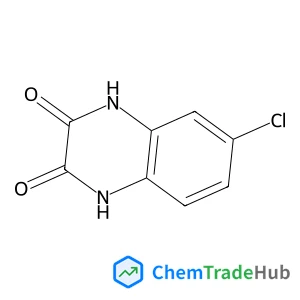
6-CHLORO-2,3-DIOXO-1,2,3,4-TETRAHYDROQUINOXALINE, 97
CAS Number:
169-14-2
Molecular Formula:
C8H5ClN2O2
Recommended Suppliers





Disclaimer
This page provides academic journal information for reference and research purposes only. We are not affiliated with any journal publishers and do not handle publication submissions. For publication-related inquiries, please contact the respective journal publishers directly.
If you notice any inaccuracies in the information displayed, please contact us at support@chemtradehub.com. We will promptly review and address your concerns.