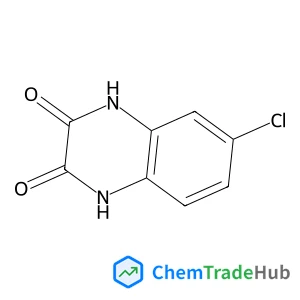
6-CHLORO-2,3-DIOXO-1,2,3,4-TETRAHYDROQUINOXALINE, 97
CAS Number:
169-14-2
Molecular Formula:
C8H5ClN2O2
Qian Li, Xiao Li, Zhongying Wu, Yuhao Sun, Jianglin Fang, Dongzhong Chen
Tetraphenylethylene (TPE) is one of the well-known typical aggregation-induced emission (AIE) luminogens (AIEgens) and TPE-containing polymers possess excellent processing properties which facilitates the fabrication of various AIE systems and devices. For AIE active side-chain polymers, increasing the fluorescence quantum yield through suitable molecular design is very appealing. In this work, we present the well-controlled synthesis of a series of TPE polyacrylate side-chain polymers of Pm with short spacers with methylene number m = 0–5 via RAFT polymerization. All the obtained polymers exhibit typical and strong AIE characteristics in THF/H2O solution mixtures and in solid state films. In particular, greatly enhanced fluorescence emission is achieved with reduced spacer lengths, and further significant improvement achieved through annealing, which is ascribed to the restriction of intramolecular motions (RIM) and the blocking of the non-radiative channels due to overcrowding and confinement thanks to the strong positive coupling effect and the jacketing effect of side-chain polymers with very short spacers. The quantum yields of 34.4%, 32.0% and 31.4%, respectively, for the polymer films P0, P1 and P2 are several times higher than those of homologous polymers with longer spacers reported in the literature. Based on these TPE side-chain polymers of very short spacers, a simple, economic and visual method for detection of the explosive 2,4,6-trinitrotoluene (TNT) is demonstrated. Therefore, a facile approach and feasible strategy of simply adopting very short spacers for side-chain AIE active polymer preparation to significantly enhance the luminescence efficiency has been properly established and proposed, which may provide guidance and have a wealth of implications for the rational design and preparation of highly efficient luminescent AIE polymer materials.
David Mansell, Nicholas Rattray, Laura L. Etchells, Carl H. Schwalbe, Alexander J. Blake, Elena V. Bichenkova, Richard A. Bryce, Christopher J. Barker, Alvaro Díaz, Carlos Kremer, Sally Freeman
DOI: 10.1039/B809238A
Stéphanie Pican, Annie-Claude Gaumont
DOI: 10.1039/B501078K
Rolando Luna-García, Berenice M. Damián-Murillo, Victor Barba, Herbert Höpfl, Hiram I. Beltrán, Luis S. Zamudio-Rivera
DOI: 10.1039/B509787H
Aleksandar Tot, Lars Kloo
DOI: 10.1039/D2CC03062D
Mingzi Sun
DOI: 10.1039/D2EE02647C
Núria Butchosa, Christian Brown, Lars A. Berglund, Vincent Bulone
DOI: 10.1039/C3GC41700J
Kaliyamoorthy Justice Babu, Ayushi Shukla, Gurpreet Kaur, Arshdeep Kaur, Himanshu Bhatt
DOI: 10.1039/D2CC05142G
Mingshan Han, Qinqin Zhou, Meng Zhang, Jinshu Wang, Fangyan Cui, Yunfei Yang, Jingwen Su, Weiwei Huang, Yuxiang Hu
DOI: 10.1039/D3TA00343D
Weiqiang Sun, Xueli Cui, Jing Qu, Xiaojia Cai, Jinhui Hu, Zhuang Xiong, Suqin Guo, Wen-Hua Chen, Jia-Qiang Wu
DOI: 10.1039/D3CC01390A
Yingying Xue, Shengyang Duan, Zihao Liu, Miaomiao Cui, Zhanghui Xiong, Zengchen Liu, Jiangang Chen
DOI: 10.1039/D2CC03113B
4-Nitrophenyl phosphate disodium salt hexahydrate is primarily used as a substra...
2-(Trifluoromethyl)-1,3-oxazole-4-carboxylic Acid (CAS: 1060816-01-4) is widely ...
2-Fluoro-4-biphenylcarboxylic acid should be stored in a cool, dry place at room...
Prednisolone-21-Carboxylic Acid is primarily used in the pharmaceutical industry...
4-(Hydrazinomethyl)-1,2,3-benzenetriol (CAS: 3614-72-0) should be stored in a co...
4-Amino-1-methyl-1H-pyrazole-5-carboxylic acid hydrochloride (CAS: 92534-70-8) i...
Dehydropachymic acid (CAS: 77012-31-8) is regulated by various agencies. It fall...
The market and research trends for 6-[(2,2-Dimethylpropanoyl)amino]nicotinic aci...
1,10-Phenanthroline-2,9-dicarbaldehyde should be stored in a cool, dry place awa...
5-Carbamoyl-11-oxo-10,11-dihydro-5H-dibenzo[b,f]azepin-10-yl acetate can be synt...

Polymer Chemistry welcomes submissions in all areas of polymer science that have a strong focus on macromolecular chemistry. Manuscripts may cover a broad range of fields, yet no direct application focus is required.
![S-[2,3-Bis(palmitoyloxy)propyl]-N-[(9H-fluoren-9-ylmethoxy)(hydroxy)methylene]cysteine structure](https://static.chemtradehub.com/structs/210/210532-98-2-f6a7.webp "S-[2,3-Bis(palmitoyloxy)propyl]-N-[(9H-fluoren-9-ylmethoxy)(hydroxy)methylene]cysteine structure")