













Strategies to combine ROP with ATRP or RAFT polymerization for the synthesis of biodegradable polymeric nanoparticles for biomedical applications
Literature Information
Publication Date
2018-07-09
DOI
10.1039/C8PY00649K
Impact Factor
5.582
Authors
Mattia Sponchioni, Nicolò Manfredini, Matteo Maraldi, Davide Moscatelli
View Original
Abstract
The architecture, composition and molecular weight (MW) of polymers and copolymers made via free radical polymerization are important parameters that affect the end-use of both these polymeric materials and the nanoparticles that they compose. In order to gain control over these parameters, several controlled radical polymerizations (CRPs)—such as atom transfer radical polymerization (ATRP) and reversible addition fragmentation chain transfer (RAFT) polymerization—have been developed over the past few decades. However, the toxicity, biocompatibility and degradation profile of these materials are emerging as key features for their final disposal and for certain applications, such as the synthesis of biomaterials. In this case, polyesters made via ring opening polymerization (ROP) are preferred due to the control over the synthesis that this technique allows as well as the biodegradability of the final material. The combination of ROP with CRP techniques has allowed for the synthesis of polymeric surfactants capable of self-assembling into biodegradable nanoparticles (NPs) for biomedical applications. This review presents and critically discusses the primary strategies for the synthesis of highly engineered colloids via the combination of ROP with two CRP techniques: ATRP and RAFT polymerization.
Recommended Journals
Related Literature
Fibrous capsule-resistant, controllably degradable and functionalizable zwitterion-albumin hybrid hydrogels
Zuolong Liu, Xianchi Zhou, Yongcheng Chen, Yanwen Ni, Zihao Zhu, Wenzhong Cao, Kexin Chen, Yu Yan
2023-11-29
Paper
DOI: 10.1039/D3BM01783D
Spectroscopic/colorimetric dual-mode rapid and ultrasensitive detection of reactive oxygen species based on shape-dependent silver nanostructures
Varsha UshaVipinachandran, Susanta Kumar Bhunia
2023-11-14
Paper
DOI: 10.1039/D3AY01749D
Underwater determination of calcium and strontium ions in oilfield produced water by laser-induced breakdown spectroscopy (LIBS)
Nilvan A. Silva, Ivo M. Raimundo, Jr
2023-10-06
Paper
DOI: 10.1039/D3AY01457F
Fluorescent covalent organic frameworks for environmental pollutant detection sensors and enrichment sorbents: a mini-review
Qiuyi Liu, Yulian Yang, Yuemeng Zou, Luchun Wang, Zhu Li, Mingyue Wang, Lingling Li, Meng Tian, Dandan Wang, Die Gao
2023-10-18
Minireview
DOI: 10.1039/D3AY01166F
SERS combined with QuEChERS using NBC and Fe3O4 MNPs as cleanup agents to rapidly and reliably detect chlorpyrifos pesticide in citrus
Xu Wang, Shirong Ai, Aihua Xiong, Weiqi Zhou, Liang He, Jie Teng, Xiang Geng, Ruimei Wu
2023-11-13
Paper
DOI: 10.1039/D3AY01604H
Oxygen and pH responsive theragnostic liposomes for early-stage diagnosis and photothermal therapy of solid tumours
Siyi Li, Qinglin Wang, Yingying Ren, Pengtao Bao, Shanyue Guan, Xiaochen Qiu
2023-12-12
Paper
DOI: 10.1039/D3BM01514A
A robust method to improve the regression accuracy of LIBS data: determination of heavy metal Cu in Tegillarca granosa
Jie Huang, Xiaojing Chen, Zhonghao Xie, Shujat Ali, Xi Chen, Leiming Yuan, Chengxi Jiang, Guangzao Huang, Wen Shi
2023-11-14
Paper
DOI: 10.1039/D3AY01411H
Antiepileptic drug concentration detection based on Raman spectroscopy and an improved snake optimization-convolutional neural network algorithm
Xinghu Fu, Xiqing Cao, Zizhen Fu, Zhexu Huang, Wa Jin, Guangwei Fu, Weihong Bi
2023-11-07
Paper
DOI: 10.1039/D3AY01631E
Gastric cancer specific drug delivery with hydrophilic peptide probe conjugation
Moon Hwa Kwak, Seul Ki Yun, Seung Mok Yang, Seokho Myeong
2023-11-21
Paper
DOI: 10.1039/D3BM01590D
You might also like
Compound Q&A
What are the main uses of 4-Nitrophenyl phosphate disodium salt hexahydrate (CAS: 333338-18-4)?
4-Nitrophenyl phosphate disodium salt hexahydrate is primarily used as a substra...
333338-18-44-Nitrophenyl phosph...
Compound Q&A
What are the main uses of 2-(Trifluoromethyl)-1,3-oxazole-4-carboxylic Acid (CAS: 1060816-01-4)?
2-(Trifluoromethyl)-1,3-oxazole-4-carboxylic Acid (CAS: 1060816-01-4) is widely ...
1060816-01-42-(Trifluoromethyl)-...
Compound Q&A
How should 2-Fluoro-4-biphenylcarboxylic acid (CAS: 137045-30-8) be stored?
2-Fluoro-4-biphenylcarboxylic acid should be stored in a cool, dry place at room...
137045-30-82-Fluoro-4-biphenylc...
Compound Q&A
What industries use Prednisolone-21-Carboxylic Acid (CAS: 61549-70-0)?
Prednisolone-21-Carboxylic Acid is primarily used in the pharmaceutical industry...
61549-70-0Prednisolone-21-Carb...
Compound Q&A
How should 4-(Hydrazinomethyl)-1,2,3-benzenetriol (CAS: 3614-72-0) be stored?
4-(Hydrazinomethyl)-1,2,3-benzenetriol (CAS: 3614-72-0) should be stored in a co...
3614-72-04-(Hydrazinomethyl)-...
Compound Q&A
What industries use 4-Amino-1-methyl-1H-pyrazole-5-carboxylic acid hydrochloride (CAS: 92534-70-8)?
4-Amino-1-methyl-1H-pyrazole-5-carboxylic acid hydrochloride (CAS: 92534-70-8) i...
92534-70-84-Amino-1-methyl-1H-...
Compound Q&A
What regulatory guidelines apply to dehydropachymic acid (CAS: 77012-31-8)?
Dehydropachymic acid (CAS: 77012-31-8) is regulated by various agencies. It fall...
77012-31-8Dehydropachymic acid
Compound Q&A
What is the market or research trend for 6-[(2,2-Dimethylpropanoyl)amino]nicotinic acid (CAS: 898561-66-5)?
The market and research trends for 6-[(2,2-Dimethylpropanoyl)amino]nicotinic aci...
898561-66-56-[(2,2-Dimethylprop...
Compound Q&A
How should 1,10-Phenanthroline-2,9-dicarbaldehyde (CAS: 57709-62-3) be stored?
1,10-Phenanthroline-2,9-dicarbaldehyde should be stored in a cool, dry place awa...
57709-62-31,10-Phenanthroline-...
Compound Q&A
How is 5-Carbamoyl-11-oxo-10,11-dihydro-5H-dibenzo[b,f]azepin-10-yl acetate (CAS: 113952-21-9) typically synthesized?
5-Carbamoyl-11-oxo-10,11-dihydro-5H-dibenzo[b,f]azepin-10-yl acetate can be synt...
113952-21-95-Carbamoyl-11-oxo-1...
Source Journal
Polymer Chemistry

CiteScore:
8.6
Self-citation Rate:
7.3%
Articles per Year:
457
Polymer Chemistry welcomes submissions in all areas of polymer science that have a strong focus on macromolecular chemistry. Manuscripts may cover a broad range of fields, yet no direct application focus is required.
Recommended Compounds
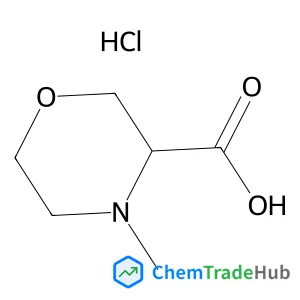
4-Methyl-3-morpholinecarboxylic acid hydrochloride (1:1)
CAS Number:
1240518-90-4
Molecular Formula:
C6H12ClNO3

Recommended Suppliers





Disclaimer
This page provides academic journal information for reference and research purposes only. We are not affiliated with any journal publishers and do not handle publication submissions. For publication-related inquiries, please contact the respective journal publishers directly.
If you notice any inaccuracies in the information displayed, please contact us at support@chemtradehub.com. We will promptly review and address your concerns.