












Elastomeric and pH-responsive hydrogels based on direct crosslinking of the poly(glycerol sebacate) pre-polymer and gelatin
Literature Information
Publication Date
2018-05-15
DOI
10.1039/C8PY00544C
Impact Factor
5.582
Authors
Biqiong Chen
View Original
Abstract
Hydrogels capable of responding to physicochemical dynamics in vivo are of significant interest in a variety of advanced biomedical applications. Herein, we develop novel fully biodegradable, biocompatible, highly elastomeric and pH-responsive copolymer hydrogels by direct crosslinking of the poly(glycerol sebacate) (PGS) pre-polymer and gelatin via their inherent functional groups without the use of any crosslinking agents. The addition of hydrophilic gelatin to the hydrophobic PGS enables the design of hydrogels with both elastomeric properties and water swelling capability as well as pH-responsive behaviours. The copolymer hydrogels were highly flexible and stretchable, enduring complex deformations such as stretching and knotting. Their Young's moduli were in the range of 0.16–0.62 MPa, mimicking the values of some soft tissues. A three-dimensional tissue scaffold with interconnected pore structures was also fabricated which shows full shape recovery after compression, further demonstrating a high potential of these copolymers to be used in soft tissue engineering applications. The pH-responsive swelling ratios of the copolymer hydrogels were found to be up to 11-fold different in acidic and basic environments, which resulted in pH-dependent release profiles of a model drug. Moreover, a tunable biodegradation kinetics with an ultimate full degradation in 11 weeks in vitro and good cytocompatibility in the cell metabolic assay with mouse fibroblasts were also achieved with these copolymer hydrogels. The versatile multifunctionalities in these new copolymer hydrogels illustrate their great potential in soft tissue engineering and controlled drug delivery.
Related Literature
Bifunctional thioacetamide-mediated synthesis of few-layered MoOSx nanosheet-modified CdS hollow spheres for efficient photocatalytic H2 production
Siqin Tao, Wei Zhong, Yuxiao Chen, Feng Chen, Ping Wang
2022-08-18
Paper
DOI: 10.1039/D2CY01315K
Construction of and electrophoretic fluorescence imaging with a nano-porous polyaniline–fluorescein conducting particle system
Ki-Whan Chi, Ho Yun Hwang, Sung Ho Jin, Han Mo Jeong, Koo Sik Yoon, Jong-Man Kim, Chan Woo Lee
2009-02-09
Communication
DOI: 10.1039/B818773H
Structural relationship between a host included chain of spirocyclic water hexamers and bulk water – the role of water clusters in self assembly and crystallization processes
Rolando Luna-García, Berenice M. Damián-Murillo, Victor Barba, Herbert Höpfl, Hiram I. Beltrán, Luis S. Zamudio-Rivera
2005-10-11
Communication
DOI: 10.1039/B509787H
Water-in-salt electrolytes – molecular insights to the high solubility of lithium-ion salts
Aleksandar Tot, Lars Kloo
2022-08-01
Communication
DOI: 10.1039/D2CC03062D
Composition space of PtIrPdRhRu high entropy alloy nanoparticles synthesized by solvothermal reactions
Andreas Dueholm Bertelsen, Alexander Reinhardt Hansen, Nils Lau Nyborg Broge, Aref Mamakhel, Martin Bondesgaard, Bo Brummerstedt Iversen
2022-10-14
Communication
DOI: 10.1039/D2CC04827B
A possible means of realizing a sacrifice-free three component separation of lignocellulose from wood biomass using an amino acid ionic liquid
Yukoh Hamada, Kohei Yoshida, Ryo-ichi Asai, Shuichi Hayase, Toshiki Nokami, Shunsuke Izumi, Toshiyuki Itoh
2013-06-06
Communication
DOI: 10.1039/C3GC40445E
Engineering the outcome of cofermentation processes by altering the feedstock sugar-to-protein ratio
R. Bevilacqua, M. Mauricio-Iglesias, S. Balboa, J. M. Lema, M. Carballa
2022-05-26
Paper
DOI: 10.1039/D2EW00144F
You might also like
Compound Q&A
What are the main uses of 4-Nitrophenyl phosphate disodium salt hexahydrate (CAS: 333338-18-4)?
4-Nitrophenyl phosphate disodium salt hexahydrate is primarily used as a substra...
333338-18-44-Nitrophenyl phosph...
Compound Q&A
What are the main uses of 2-(Trifluoromethyl)-1,3-oxazole-4-carboxylic Acid (CAS: 1060816-01-4)?
2-(Trifluoromethyl)-1,3-oxazole-4-carboxylic Acid (CAS: 1060816-01-4) is widely ...
1060816-01-42-(Trifluoromethyl)-...
Compound Q&A
How should 2-Fluoro-4-biphenylcarboxylic acid (CAS: 137045-30-8) be stored?
2-Fluoro-4-biphenylcarboxylic acid should be stored in a cool, dry place at room...
137045-30-82-Fluoro-4-biphenylc...
Compound Q&A
What industries use Prednisolone-21-Carboxylic Acid (CAS: 61549-70-0)?
Prednisolone-21-Carboxylic Acid is primarily used in the pharmaceutical industry...
61549-70-0Prednisolone-21-Carb...
Compound Q&A
How should 4-(Hydrazinomethyl)-1,2,3-benzenetriol (CAS: 3614-72-0) be stored?
4-(Hydrazinomethyl)-1,2,3-benzenetriol (CAS: 3614-72-0) should be stored in a co...
3614-72-04-(Hydrazinomethyl)-...
Compound Q&A
What industries use 4-Amino-1-methyl-1H-pyrazole-5-carboxylic acid hydrochloride (CAS: 92534-70-8)?
4-Amino-1-methyl-1H-pyrazole-5-carboxylic acid hydrochloride (CAS: 92534-70-8) i...
92534-70-84-Amino-1-methyl-1H-...
Compound Q&A
What regulatory guidelines apply to dehydropachymic acid (CAS: 77012-31-8)?
Dehydropachymic acid (CAS: 77012-31-8) is regulated by various agencies. It fall...
77012-31-8Dehydropachymic acid
Compound Q&A
What is the market or research trend for 6-[(2,2-Dimethylpropanoyl)amino]nicotinic acid (CAS: 898561-66-5)?
The market and research trends for 6-[(2,2-Dimethylpropanoyl)amino]nicotinic aci...
898561-66-56-[(2,2-Dimethylprop...
Compound Q&A
How should 1,10-Phenanthroline-2,9-dicarbaldehyde (CAS: 57709-62-3) be stored?
1,10-Phenanthroline-2,9-dicarbaldehyde should be stored in a cool, dry place awa...
57709-62-31,10-Phenanthroline-...
Compound Q&A
How is 5-Carbamoyl-11-oxo-10,11-dihydro-5H-dibenzo[b,f]azepin-10-yl acetate (CAS: 113952-21-9) typically synthesized?
5-Carbamoyl-11-oxo-10,11-dihydro-5H-dibenzo[b,f]azepin-10-yl acetate can be synt...
113952-21-95-Carbamoyl-11-oxo-1...
Source Journal
Polymer Chemistry

CiteScore:
8.6
Self-citation Rate:
7.3%
Articles per Year:
457
Polymer Chemistry welcomes submissions in all areas of polymer science that have a strong focus on macromolecular chemistry. Manuscripts may cover a broad range of fields, yet no direct application focus is required.
Recommended Compounds

![[(1S,2S,3R,4S,7R,9S,10S,12R,15S)-4,12-Diacetyloxy-15-[(2R,3S)-3-benzamido-3-phenyl-2-(2,2,2-trichloroethoxycarbonyloxy)propanoyl]oxy-1,9-dihydroxy-10,14,17,17-tetramethyl-11-oxo-6-oxatetracyclo[11.3.1.03,10.04,7]heptadec-13-en-2-yl] benzoate structure](https://static.chemtradehub.com/structs/100/100431-55-8-7104.webp "[(1S,2S,3R,4S,7R,9S,10S,12R,15S)-4,12-Diacetyloxy-15-[(2R,3S)-3-benzamido-3-phenyl-2-(2,2,2-trichloroethoxycarbonyloxy)propanoyl]oxy-1,9-dihydroxy-10,14,17,17-tetramethyl-11-oxo-6-oxatetracyclo[11.3.1.03,10.04,7]heptadec-13-en-2-yl] benzoate structure")
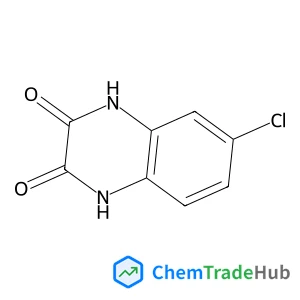
6-CHLORO-2,3-DIOXO-1,2,3,4-TETRAHYDROQUINOXALINE, 97
CAS Number:
169-14-2
Molecular Formula:
C8H5ClN2O2
Recommended Suppliers







Disclaimer
This page provides academic journal information for reference and research purposes only. We are not affiliated with any journal publishers and do not handle publication submissions. For publication-related inquiries, please contact the respective journal publishers directly.
If you notice any inaccuracies in the information displayed, please contact us at support@chemtradehub.com. We will promptly review and address your concerns.