












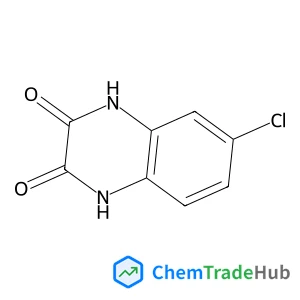
6-CHLORO-2,3-DIOXO-1,2,3,4-TETRAHYDROQUINOXALINE, 97
CAS Number:
169-14-2
Molecular Formula:
C8H5ClN2O2
Jie Gao, Zonghang Ying, Liu Zhong, Heng Liao, Haiyang Gao, Wu Qing
Precise control over macromolecular structures is a central goal and remains a great challenge in synthetic polymer chemistry. We report herein the living isomerization polymerization of allycyclohexane (ACH) using α-diimine nickel catalysts with high regioselectivity. The influences of catalyst structure, cocatalyst, and temperature on ACH polymerization were studied in detail. The macromolecular structure of polyallycyclohexanes (PACHs) was precisely controlled by living polymerization in combination with high regioselectivity under optimized conditions. A mechanistic model involving the 2,1-insertion selectivity of ACH and chain walking was proposed. Well-defined polyallycyclohexane-b-poly(1-hexene) copolymers (PACH-b-PH) with cyclic units were synthesized by sequential monomer addition.
Chih-Chia Cheng, Jyun-Jie Huang, Adem Ali Muhable, Zhi-Sheng Liao, Shan-You Huang, Shun-Chieh Lee, Chih-Wei Chiu
DOI: 10.1039/C7PY00276A
Paul H. M. Van Steenberge, Pieter Derboven, Marie-Françoise Reyniers, Guy B. Marin
DOI: 10.1039/C5PY01069A
DOI: 10.1039/C5PY01466B
Telma Costa, Diego de Azevedo, Beverly Stewart, Matti Knaapila, Artur J. M. Valente, Mario Kraft, Ullrich Scherf, Hugh D. Burrows
DOI: 10.1039/C5PY01210D
Nghia P. Truong, Michael R. Whittaker, John F. Quinn
DOI: 10.1039/C5PY01467K
Ankit Vora, Rudy J. Wojtecki, Kristin Schmidt, Anindarupa Chunder, Joy Y. Cheng, Alshakim Nelson, Daniel P. Sanders
DOI: 10.1039/C5PY01846C
Subrata Chattopadhyay, Elisabeth Heine, Ahmed Mourran, Walter Richtering, Helmut Keul, Martin Möller
DOI: 10.1039/C5PY01566A
Philippe Guégan, Christine Jérôme, Jutta Rieger, Antoine Debuigne
DOI: 10.1039/C5PY01325A
4-Nitrophenyl phosphate disodium salt hexahydrate is primarily used as a substra...
2-(Trifluoromethyl)-1,3-oxazole-4-carboxylic Acid (CAS: 1060816-01-4) is widely ...
2-Fluoro-4-biphenylcarboxylic acid should be stored in a cool, dry place at room...
Prednisolone-21-Carboxylic Acid is primarily used in the pharmaceutical industry...
4-(Hydrazinomethyl)-1,2,3-benzenetriol (CAS: 3614-72-0) should be stored in a co...
4-Amino-1-methyl-1H-pyrazole-5-carboxylic acid hydrochloride (CAS: 92534-70-8) i...
Dehydropachymic acid (CAS: 77012-31-8) is regulated by various agencies. It fall...
The market and research trends for 6-[(2,2-Dimethylpropanoyl)amino]nicotinic aci...
1,10-Phenanthroline-2,9-dicarbaldehyde should be stored in a cool, dry place awa...
5-Carbamoyl-11-oxo-10,11-dihydro-5H-dibenzo[b,f]azepin-10-yl acetate can be synt...

Polymer Chemistry welcomes submissions in all areas of polymer science that have a strong focus on macromolecular chemistry. Manuscripts may cover a broad range of fields, yet no direct application focus is required.
![(3R,5R)-1-[(Benzyloxy)carbonyl]-5-methyl-3-piperidinecarboxylic acid structure](https://static.chemtradehub.com/structs/126/1269757-29-0-c552.webp "(3R,5R)-1-[(Benzyloxy)carbonyl]-5-methyl-3-piperidinecarboxylic acid structure")
![N-[2-(4-Hydroxyphenoxy)-4-nitrophenyl]methanesulfonamide structure](https://static.chemtradehub.com/structs/109/109032-22-6-7c88.webp "N-[2-(4-Hydroxyphenoxy)-4-nitrophenyl]methanesulfonamide structure")




