


Equilibrium structures of the tetramezine diastereomers and their ratio: joint analysis of gas phase electron diffraction, quantum chemistry, and spectroscopic data
Literature Information
Publication Date
2019-02-08
DOI
10.1039/C8CP07607C
Impact Factor
3.676
Authors
Leonid S. Khaikin, Igor V. Kochikov, Anatoliy N. Rykov, Olga E. Grikina, Georgiy G. Ageev, Igor F. Shishkov, Vladimir V. Kuznetsov, Nina N. Makhova
View Original
Abstract
For the first time, we applied a gas-phase electron diffraction (GED) method together with vibrational spectroscopy and quantum chemical calculations to investigate the equilibrium geometries of achiral meso and enantiomeric diastereomers of tetramezine [1,2-bis-(3,3-dimethyldiaziridin-1-yl)ethane] and their ratio in the mixture. In the joint structural analysis of these data, a new approach based on PES parameters is used in the framework of a static molecular model (small amplitude motion approximation). The agreement between the theoretical and experimental molecular intensities is characterized by a divergence factor Rf of 5.9%. The experimental re-parameters of tetramezine diastereomers agreed with our B3LYP/cc-pVTZ and MP2/cc-pVTZ calculations, which predicted the total energy of the meso form (Ci point group symmetry) to be lower than that of the enantiomeric form (C2 point group symmetry), by 6.4 and 4.7 kJ mol−1, respectively. The experimentally measured percentages of the meso and both enantiomeric diastereoisomers at 360 K were 70% and 30%, respectively. We characterized the meso form using 2D NMR spectra. Our GED data are in good agreement with the X-ray diffraction analysis of the meso form. This result reflects the weak effect of intermolecular interactions in the crystal. We assigned the IR spectrum bands of the crystalline meso form using the Pulay technique of scaling quantum chemical force fields. In the case of the enantiomeric form calculated at the same level, transferability of the refined scale factors was used for more reliable prediction of the mutual location and interpretation of its fundamental frequencies.
Recommended Journals

Journal of Natural Medicines

Current Opinion in Solid State & Materials Science

Crystallography Reports

Russian Journal of Applied Chemistry

Russian Chemical Bulletin

Russian Journal of Bioorganic Chemistry

Journal of Peptide Science

Current Opinion in Colloid & Interface Science

Organic Process Research & Development

Russian Journal of General Chemistry
Related Literature
Lamellar-to-gyroid transition in a poly(oxyethylene)–poly(oxybutylene) diblock copolymer melt
Paper
DOI: 10.1039/A807847E
Upper limit for the rate coefficient for the reaction of OH with N2O5
2000-08-21
Paper
DOI: 10.1039/B004184J
The weakly bound g round state of the LiHe2 triatomic system
I. Baccarelli, G. Delgado-Barrio, F. A. Gianturco, T. González-Lezana, S. Miret-Artes, P. Villarreal
2000-06-29
Paper
DOI: 10.1039/B002415P
Experimental characterization of aircraft combustor soot: Microstructure, surface area, porosity and water adsorption
O. B. Popovitcheva, N. M. Persiantseva, M. E. Trukhin, G. B. Rulev, N. K. Shonija, Yu. Ya. Buriko, A. M. Starik, B. Demirdjian, D. Ferry, J. Suzanne
2000-09-15
Paper
DOI: 10.1039/B004345L
Reactivity of pyrrhotite (Fe9S10) surfaces: Spectroscopic studies
Yuri Mikhlin, Vladimir Varnek, Igor Asanov, Yevgeni Tomashevich, Alexander Okotrub, Alexander Livshits, Gennady Selyutin, Gennady Pashkov
2000-09-14
Paper
DOI: 10.1039/B005372O
Infrared spectra and molecular dynamics simulations of trans-HONO isomer in an argon matrix
Tadeusz Talik, Konstantin G. Tokhadze, Zofia Mielke
2000-08-30
Paper
DOI: 10.1039/B004161K
You might also like
Compound Q&A
What are the main uses of 4-Nitrophenyl phosphate disodium salt hexahydrate (CAS: 333338-18-4)?
4-Nitrophenyl phosphate disodium salt hexahydrate is primarily used as a substra...
333338-18-44-Nitrophenyl phosph...
Compound Q&A
What are the main uses of 2-(Trifluoromethyl)-1,3-oxazole-4-carboxylic Acid (CAS: 1060816-01-4)?
2-(Trifluoromethyl)-1,3-oxazole-4-carboxylic Acid (CAS: 1060816-01-4) is widely ...
1060816-01-42-(Trifluoromethyl)-...
Compound Q&A
How should 2-Fluoro-4-biphenylcarboxylic acid (CAS: 137045-30-8) be stored?
2-Fluoro-4-biphenylcarboxylic acid should be stored in a cool, dry place at room...
137045-30-82-Fluoro-4-biphenylc...
Compound Q&A
What industries use Prednisolone-21-Carboxylic Acid (CAS: 61549-70-0)?
Prednisolone-21-Carboxylic Acid is primarily used in the pharmaceutical industry...
61549-70-0Prednisolone-21-Carb...
Compound Q&A
How should 4-(Hydrazinomethyl)-1,2,3-benzenetriol (CAS: 3614-72-0) be stored?
4-(Hydrazinomethyl)-1,2,3-benzenetriol (CAS: 3614-72-0) should be stored in a co...
3614-72-04-(Hydrazinomethyl)-...
Compound Q&A
What industries use 4-Amino-1-methyl-1H-pyrazole-5-carboxylic acid hydrochloride (CAS: 92534-70-8)?
4-Amino-1-methyl-1H-pyrazole-5-carboxylic acid hydrochloride (CAS: 92534-70-8) i...
92534-70-84-Amino-1-methyl-1H-...
Compound Q&A
What regulatory guidelines apply to dehydropachymic acid (CAS: 77012-31-8)?
Dehydropachymic acid (CAS: 77012-31-8) is regulated by various agencies. It fall...
77012-31-8Dehydropachymic acid
Compound Q&A
What is the market or research trend for 6-[(2,2-Dimethylpropanoyl)amino]nicotinic acid (CAS: 898561-66-5)?
The market and research trends for 6-[(2,2-Dimethylpropanoyl)amino]nicotinic aci...
898561-66-56-[(2,2-Dimethylprop...
Compound Q&A
How should 1,10-Phenanthroline-2,9-dicarbaldehyde (CAS: 57709-62-3) be stored?
1,10-Phenanthroline-2,9-dicarbaldehyde should be stored in a cool, dry place awa...
57709-62-31,10-Phenanthroline-...
Compound Q&A
How is 5-Carbamoyl-11-oxo-10,11-dihydro-5H-dibenzo[b,f]azepin-10-yl acetate (CAS: 113952-21-9) typically synthesized?
5-Carbamoyl-11-oxo-10,11-dihydro-5H-dibenzo[b,f]azepin-10-yl acetate can be synt...
113952-21-95-Carbamoyl-11-oxo-1...
Source Journal
Physical Chemistry Chemical Physics

CiteScore:
5.5
Self-citation Rate:
10.3%
Articles per Year:
3036
Physical Chemistry Chemical Physics (PCCP) is an international journal co-owned by 19 physical chemistry and physics societies from around the world. This journal publishes original, cutting-edge research in physical chemistry, chemical physics and biophysical chemistry. To be suitable for publication in PCCP, articles must include significant innovation and/or insight into physical chemistry; this is the most important criterion that reviewers and Editors will judge against when evaluating submissions. The journal has a broad scope and welcomes contributions spanning experiment, theory, computation and data science. Topical coverage includes spectroscopy, dynamics, kinetics, statistical mechanics, thermodynamics, electrochemistry, catalysis, surface science, quantum mechanics, quantum computing and machine learning. Interdisciplinary research areas such as polymers and soft matter, materials, nanoscience, energy, surfaces/interfaces, and biophysical chemistry are welcomed if they demonstrate significant innovation and/or insight into physical chemistry. Joined experimental/theoretical studies are particularly appreciated when complementary and based on up-to-date approaches.
Recommended Compounds
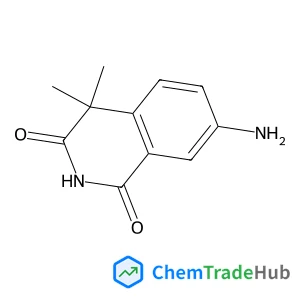
1,3(2H,4H)-Isoquinolinedione, 7-amino-4,4-dimethyl-
CAS Number:
14576-22-8
Molecular Formula:
C11H12N2O2

cis-3-Amino-1-(trifluoromethyl)cyclobutanol hydrochloride (1:1)
CAS Number:
1408075-16-0
Molecular Formula:
C5H9ClF3NO
Recommended Suppliers





Disclaimer
This page provides academic journal information for reference and research purposes only. We are not affiliated with any journal publishers and do not handle publication submissions. For publication-related inquiries, please contact the respective journal publishers directly.
If you notice any inaccuracies in the information displayed, please contact us at support@chemtradehub.com. We will promptly review and address your concerns.